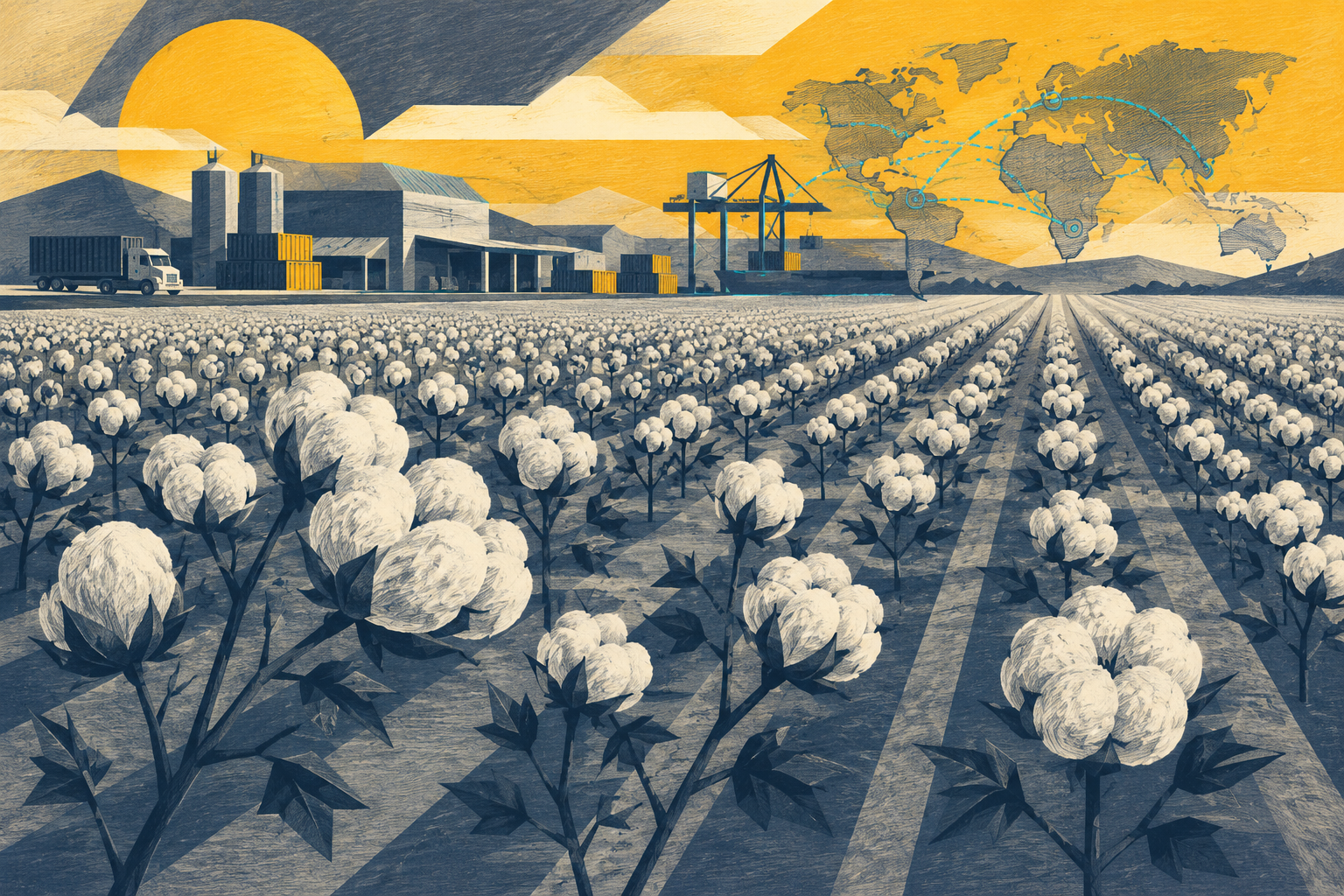
Oritain says exposure to prohibited cotton rose sharply in 2025, reversing several years of improvement and reopening a supply-chain compliance problem that many retailers and manufacturers had hoped was becoming easier to contain.
In its 2026 Global Supply Chain Intelligence Report, published on 20 May, the forensic origin verification company said 90% of brands analysed recorded at least one result consistent with prohibited cotton in 2025, up from 64% a year earlier. The findings draw on more than 5,000 garments tested, together with survey work across industry participants and consumers in major markets including the UK and Europe.
The report presents a more complicated picture than a simple return to earlier sourcing patterns. As brands continue to move manufacturing across new jurisdictions in response to tariff pressures, cost shifts, geopolitical tension, and freight disruption, Oritain says upstream material risk is reappearing through more complex production chains, including in countries often regarded as lower risk at finished-goods level.
Alyn Franklin, chief executive of Oritain, said: “The data tells a clear story: risk isn’t disappearing, it is re-emerging.”
Although tracing programmes have become more common, the report argues that documentation and supplier declarations are not providing enough assurance on their own. Oritain says 94% of UK companies surveyed and 87% of US companies now trace their cotton supply chains, yet 80% of UK brands said they had still faced regulatory or compliance challenges. Consumer confidence remains weak as well, with 85% of respondents saying they do not trust labels and 60% saying they would not buy a product with an untrustworthy country of origin.
That unease sits alongside a tougher enforcement environment. In the US, Customs and Border Protection expanded its Uyghur Forced Labor Prevention Act dashboard earlier this year with more detailed shipment-level reporting, including industry and product filters. In Europe, the Forced Labour Regulation entered into force in December 2024 and will begin applying from 14 December 2027, with European Commission guidance and a forced-labour database due by 14 June 2026.
Once cotton is blended, spun, woven, cut, sewn, and relabelled across several jurisdictions, the weakness in a paper-based system becomes much easier to see. A sourcing shift at factory level does not necessarily remove raw-material exposure, and when goods are stopped at the border or a supplier review expands unexpectedly, intake plans, launch dates, margin assumptions, and working-capital cycles can move with it. What begins as a traceability issue can, within days, turn into a commercial one.
Recent supply-chain strategy has often favoured diversification, nearshoring, or the addition of parallel sourcing hubs to reduce concentration risk, yet Oritain’s findings suggest that this approach does not resolve origin assurance on its own. A broader manufacturing footprint may improve resilience in one part of the chain while making verification harder in another, particularly where raw materials pass through multiple intermediaries before assembly and export.
The report also shows how the compliance conversation is shifting from whether a company can map a chain of custody on paper to whether it can verify the physical origin of the material moving through that chain. As customs authorities, regulators, and consumers look beyond declarations and ask for a higher standard of proof, that distinction is becoming increasingly difficult to sidestep.
Set out in fuller detail in Oritain’s full report, the pattern is one of dispersion rather than containment. Cotton sourcing risk is spreading across a wider geography of production, and as businesses continue to rebalance their global footprints, origin verification is moving closer to the centre of procurement, compliance, and commercial planning.