As a multi-generational, global engineering business that remains family-owned, SEW-EURODRIVE has historically always looked inward when it comes to finding new leaders, identifying talent that has risen from our own ranks.
With over 22,000 employees globally, and nearly 100 years of manufacturing under our belt, there’s always been solid progression planning in place, focused on nurturing leadership skills and sharpening strategic thinking across our teams, from shopfloor engineers through to technical operations.
I’m a classic example of this myself, having joined SEW-EURODRIVE UK 18 years ago as an external area sales manager, before moving internally and up through the ranks to my current role as managing director.
I feel grateful that I’ve always had managers who’ve looked out for me, pushing me to challenge myself and keep moving forwards. In a sense, each role I’ve held up till now has almost acted as an audition for the next opportunity, soaking up knowledge from the people around me, while proving I can step up and deliver results.
But are people like me now a dying breed? Does the younger generation lack the ambition to reach upper management?
When I started out as an apprentice engineer and fitter after leaving school, I couldn’t have imagined being the MD of an engineering firm 25 years later. I, like others around me, strived to progress, attracted to the perceived career longevity and less physically taxing work a white-collar job could bring as I advanced my career.
Attitudes have changed in the past decade though, with Employment Hero reporting that more Gen Zs are turning to blue collar work, searching for stability and immunity from AI, particularly in skilled trades and hands-on manufacturing roles. I’ve witnessed it myself in the business – young people simply don’t want the responsibility of middle management roles anymore, viewing them as not worth the additional pressure without much added benefit.
This lack of ambition marks a clear generational gap in attitudes to work, a worrying trend when you account for the constant stream of retirees leaving the engineering industry. When senior teams lack hands-on experience, companies risk losing operational credibility, hindering growth and widening skills gaps.
It’s a flawed strategy to rely on defaulting to external hires to address poor succession planning, when you can upskill your own teams, just by setting time aside for mentoring and training.
Leaders who’ve ‘got the t-shirt’ make decisions informed by in-depth practical knowledge. They understand the day-to-day pressures of manufacturing and how those pressures affect performance, earning respect from the shopfloor and identifying potential issues before they spiral.
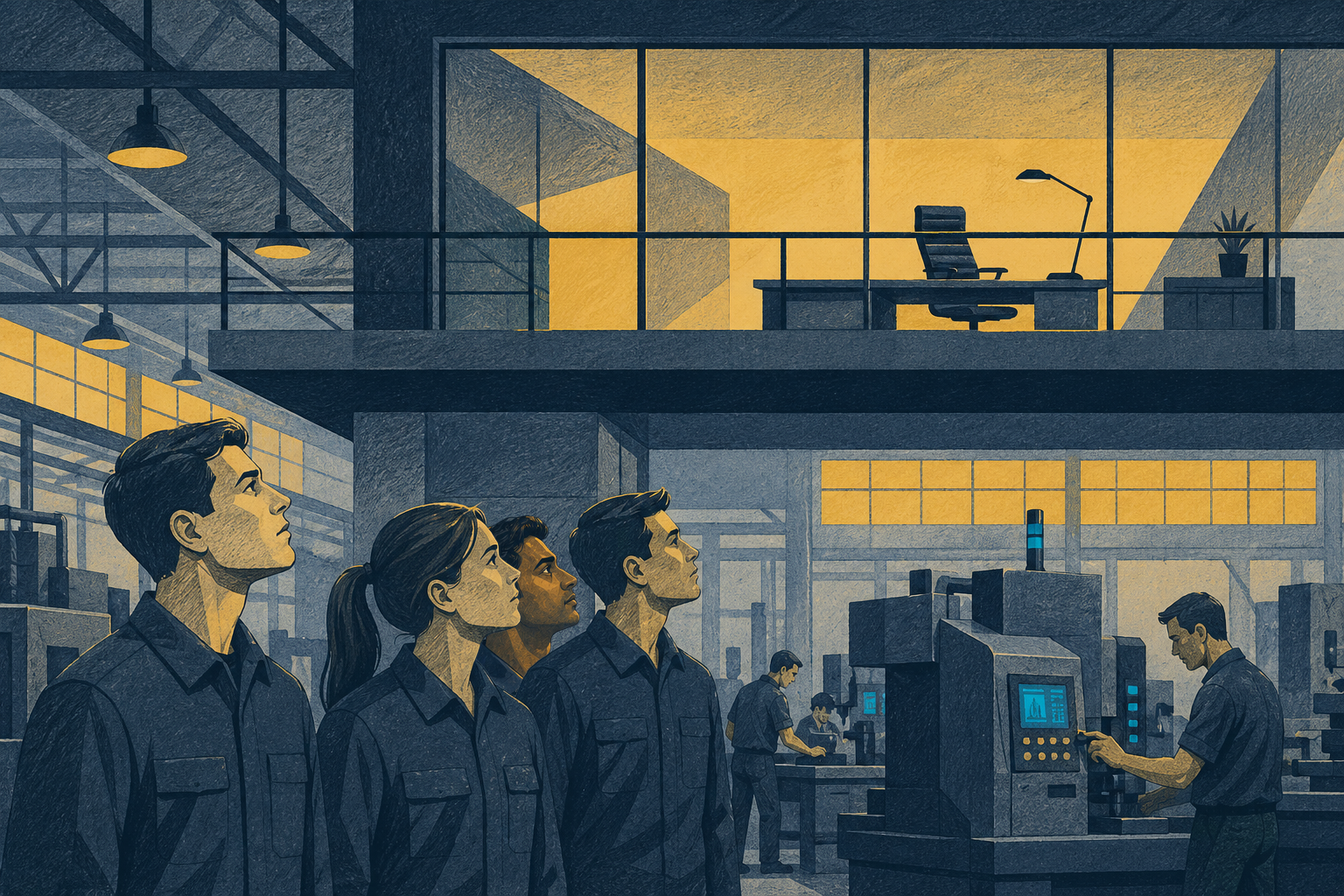
My ground-up perspective, of starting out on the factory floor, has taught me the value of hands-on leadership, and the importance of understanding the operational realities of production. It’s made me consider that rather than a lack of aspiration, perhaps Gen Zs just lack the perspective to see the bigger picture of where their careers could head – something which can be fixed through strong, bottom-up management, and better visibility of internal promotions.
I didn’t see myself in a high-level leadership role, but other people did. I learnt from strong teams around me, and managers who gave me the opportunity to step up. It’s easy to hide behind a role you’re comfortable in, especially in structured industrial settings where unchanging daily processes can feel like a safety net. But, with the right support in place, those big decisions start to feel less daunting, and management is a natural next step.
If we want to ensure the next generation is equipped to step into senior decision-making roles in the engineering industry, learning has to begin at apprenticeship level. Technical skills are of course important, but knowing how to handle risk, guide strategy, and motivate a team can’t be taught in a week-long course.
Investing in your team at every stage of their careers sends the message that you care, improving loyalty and helping you keep the key talent that can scale up your operations. While hiring externally can bring you fresh perspectives, you risk disrupting your team’s dynamic, or even worse, lowering morale across the board, reducing staff retention and seeing productivity fall.
In the long run, promoting from within is how you keep your operations sustainable, creating a robust leadership pipeline of people that understand your company’s values, and know what works.
This is a call for manufacturers to stop searching endlessly for ready-made leaders, and put in the time and effort to build them themselves.

Andy Turner is the managing director of the UK & Ireland division of global drive technology and automation solutions leader SEW-EURODRIVE, overseeing sales and production across these markets, as well as steering long-term business planning.
He’s responsible for managing, motivating, and developing a team of 160 people, working with cross-sector clients ranging from Manchester Airport Group to Coca-Cola and Amazon.