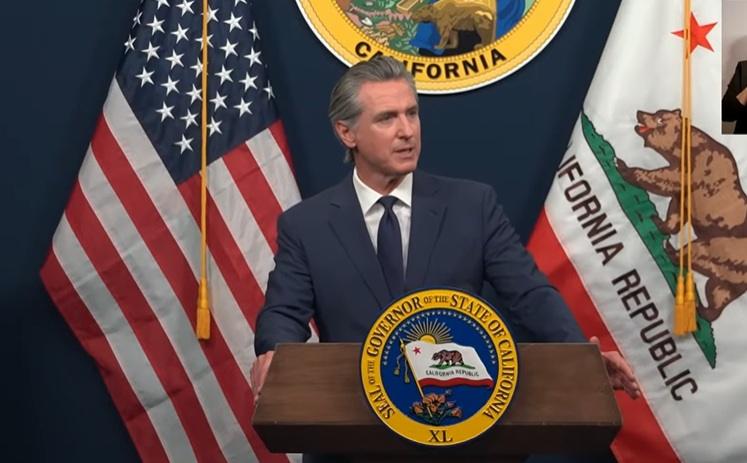
California Governor Gavin Newsom has unveiled a revised proposal for the state’s 2025–2026 budget, which includes a significant extension of its signature climate policy, the “Cap-and-Invest” programme. Under the plan, the scheme—which compels major industrial emitters to purchase allowances for carbon emissions that exceed an annually decreasing threshold—would be extended through to 2045. It had previously been scheduled to expire in 2030.
The Cap-and-Invest programme, formerly known as Cap-and-Trade, is expected to generate an estimated $60 billion over the course of the proposed extension. The system, first implemented in 2006 under California’s Global Warming Solutions Act (AB 32), requires companies in sectors such as energy, cement, fuel distribution and food processing to either purchase emissions allowances at auction or acquire them by trading with firms that emit below their assigned quotas. The programme creates an economic incentive to lower emissions, with the cap shrinking over time to align with the state’s broader net-zero ambitions.
Revenue from the scheme has historically been used to fund environmental initiatives, and the extension is projected to channel tens of billions of dollars more into “transformative climate projects.” Among these is California’s high-speed rail initiative, a long-term infrastructure project aimed at reducing transportation-related emissions and increasing sustainable connectivity between urban centres.
Governor Newsom’s commitment to extending the programme comes despite increased political resistance at the federal level. In April, US President Donald Trump issued an executive order mandating the Department of Justice to identify state and local regulations that purportedly obstruct the production or use of domestic energy resources. The order specifically targets laws addressing “climate change,” “environmental, social, and governance” (ESG) policies, and “greenhouse gas” regulations, describing such laws as potentially unconstitutional. You can read more about the executive order here: https://www.esgtoday.com/trump-issues-order-to-stop-state-laws-fining-oil-companies-for-greenhouse-gas-emissions/
President Trump has singled out California’s Cap-and-Invest programme, as well as recently enacted statutes in states such as New York and Vermont that impose penalties on fossil fuel firms for their historical contributions to climate change. Earlier this year, the Trump administration, joined by 24 Republican-led states, launched legal proceedings against New York and Vermont, challenging the legality of such climate accountability laws. Coverage of the lawsuit can be found here: https://www.esgtoday.com/trump-24-states-sue-new-york-and-vermont-over-laws-charging-fossil-fuel-companies-for-climate-change/
Despite the mounting legal and political challenges, California continues to pursue climate leadership at the state level. Since the inception of its emissions trading scheme, the state has directed roughly $33 billion into green investments, including renewable energy, environmental justice projects, clean vehicle rebates, and climate resilience efforts in vulnerable communities.
The revised state budget also attempts to address a projected $12 billion deficit, which Governor Newsom attributes to what his office calls the “Trump Slump.” This downturn, according to the governor’s team, has been spurred by economic uncertainty linked to federal policy volatility, including trade tariffs, financial market instability, and a decrease in international tourism to the United States.
In a statement accompanying the budget release, Newsom defended California’s progressive trajectory:
“California’s fundamental values don’t change just because the federal winds have shifted,” he stated. “Even as the Trump Slump slows the economy and hits our revenues, we’re delivering bold proposals to build more housing, lower costs for working families, and invest in our kids.”
The proposal will now be subject to negotiation with California’s state legislature ahead of the adoption of the final budget, which must be passed by mid-June. California’s continued leadership on emissions reduction and climate finance stands in stark contrast to ongoing efforts at the federal level to roll back environmental regulations and limit state autonomy in setting climate policy.