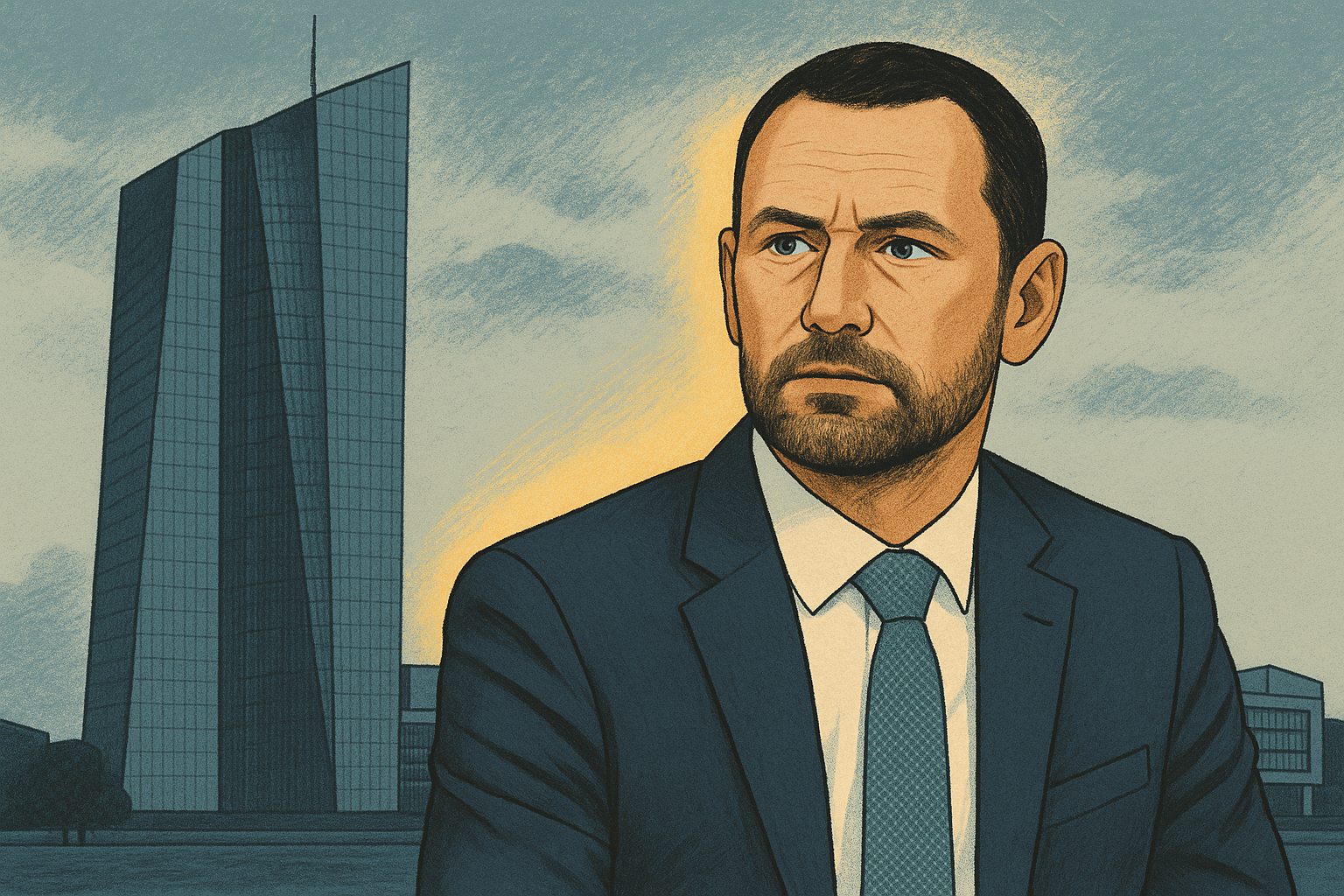
European Central Bank policymakers should refrain from additional rate cuts unless new shocks hit the eurozone economy, acting Slovenian central bank governor Primož Dolenc said on Thursday.
Speaking in Ljubljana, Dolenc said the ECB’s current stance “neither fuels inflationary pressures nor restricts economic growth,” and described the balance of risks around inflation as “broadly symmetric.” He cautioned against overreliance on distant projections, saying that long-term forecasts — such as those extending to 2028 — should not drive short-term policy decisions.
The ECB has lowered rates by two percentage points since the start of 2024, bringing the deposit rate to 2.25 per cent, but has left policy unchanged since June. Dolenc said that level “appears appropriate” given the slowdown in price growth and the resilience of the bloc’s labour markets.
“Further cuts should be considered only if new shocks materialise and pose a clear threat to growth or financial stability,” Dolenc said, adding that the euro area had so far “absorbed recent turbulence in France and global markets without dislocation.”
His remarks echo recent Governing Council minutes showing that most members favour keeping the bar high for any further easing. The October account stated that the current rate “provides sufficient insurance against both inflation persistence and renewed weakness,” while maintaining flexibility if the outlook darkens.
Dolenc also played down the potential spillovers from external factors such as a stronger euro and slower Chinese demand, noting that “financial conditions remain stable and transmission through the banking system continues to function well.”
Market reaction was muted. The euro edged slightly higher against the dollar and short-term money-market pricing indicated traders now expect no additional cuts before mid-2026. Ten-year German Bund yields held steady around 2.4 per cent.
Other ECB officials have struck a similar tone. Belgium’s Pierre Wunsch said in May that the central bank may eventually need to move below 2 per cent if the inflation outlook deteriorates, but more recently described policy as “well positioned.”
The ECB’s next policy meeting is scheduled for 24 October, with investors widely expecting rates to remain unchanged.