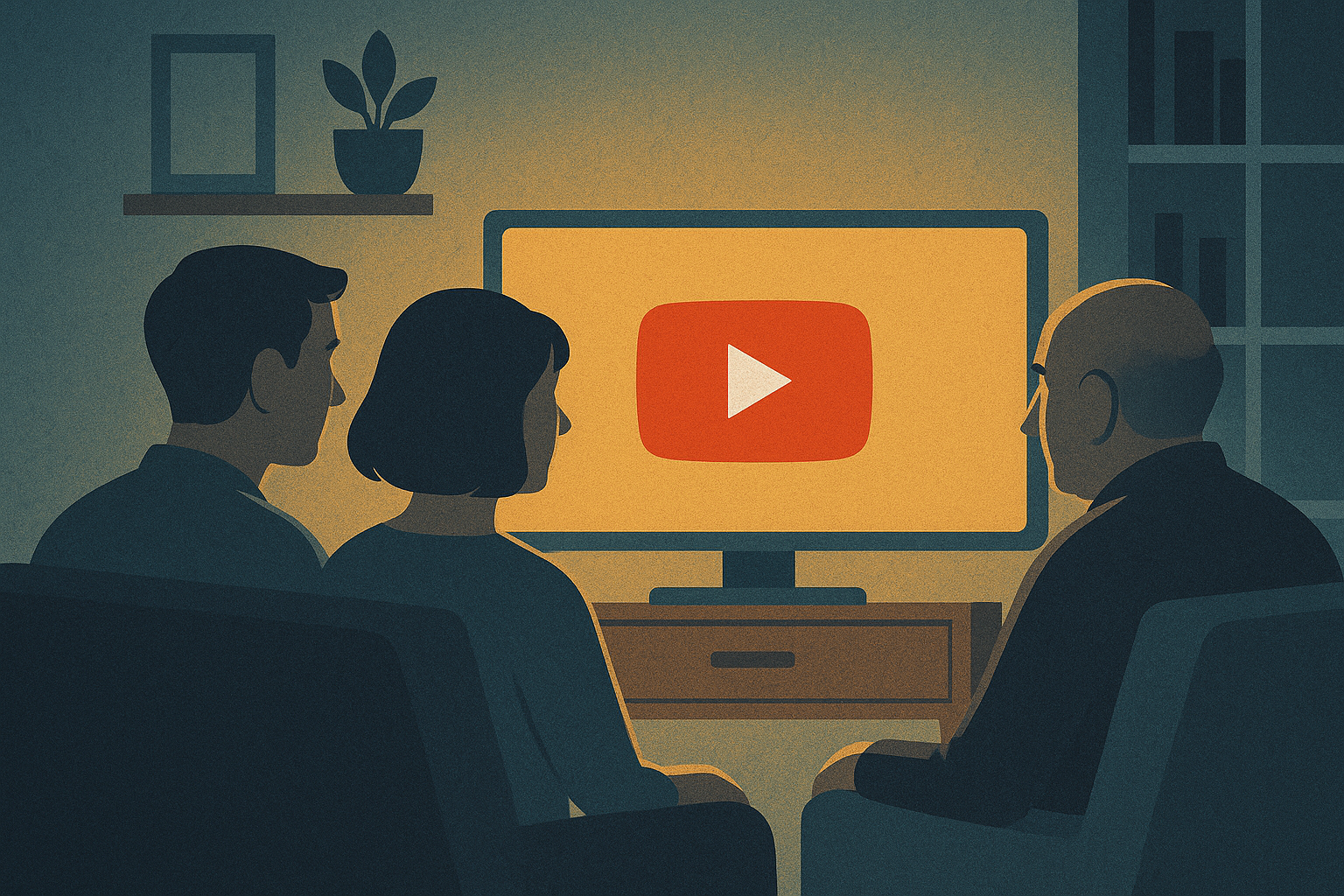
YouTube has overtaken ITV to become the UK’s second most-watched media brand, driven by increasing loyalty from younger audiences, according to an annual report by Ofcom. The media regulator revealed that viewers spent an average of four hours and 30 minutes daily watching TV or other video content in 2024, with 56% of viewing hours dedicated to linear broadcast TV. However, the average time spent watching broadcast TV decreased by 4% from the previous year, as all age groups, except those aged 75 and over, showed increased interest in on-demand television.
Major streaming platforms continued to erode the market share of traditional broadcasters, with YouTube notably “leading the charge” in capturing British viewers’ attention. On average, viewers spent 39 minutes a day watching the Google-owned platform at home, with 16 minutes viewed on smart TVs. Younger audiences, particularly those aged 16 to 34, were significant contributors to this trend, spending an average of 18 minutes daily on YouTube.
Even older demographics showed increased engagement with YouTube. Viewers over 55 doubled their usage of the platform on TV sets, watching 11 minutes of content per day, according to Ofcom. Ed Leighton, Ofcom’s interim group director for strategy, noted, “Scheduled TV is increasingly alien to younger viewers, with YouTube the first port of call for many when they pick up the TV remote. But we’re also seeing signs that older adults are turning to the platform as part of their daily media diet too.”
The expanding role of YouTube as a broadcaster has drawn scrutiny from the media regulator. In a recent report on the future of public service broadcasting, officials urged the platform to give more prominence to public service content to protect the future of the UK’s publicly owned broadcasters. Ofcom suggested that traditional broadcasters should “work urgently” with YouTube executives to ensure their content remains “prominent and easy to find” amid the vast array of content uploaded daily.
Ofcom also cautioned public service broadcasters that their future is “at risk” if they fail to produce more content tailored to online platforms. The most-watched TV programmes and films of 2024 included “Gavin & Stacey,” “Wallace & Gromit: Vengeance Most Fowl,” and “Mr Bates vs The Post Office.”
Additionally, Ofcom reported significant changes in listening habits last year, with over nine in ten adults engaging with some form of audio content weekly, particularly among younger audiences.