Sustainability must remain squarely on the agenda for both government and business, and Earth Day acts as a valuable reminder of the importance of this. However, achieving meaningful, consistent progress remains a challenge.
The British Business Bank’s recent Net Zero Census highlights how this applies to UK SMEs where progress remains uneven. While ambition is high, limited resources and inconsistent reporting requirements continue to slow action. As a result, responsibility for progress often falls on individuals rather than the systems designed to support them. Across a business’s many functions, business travel stands out as one area where this challenge is particularly visible.
The gap between intent and outcome —
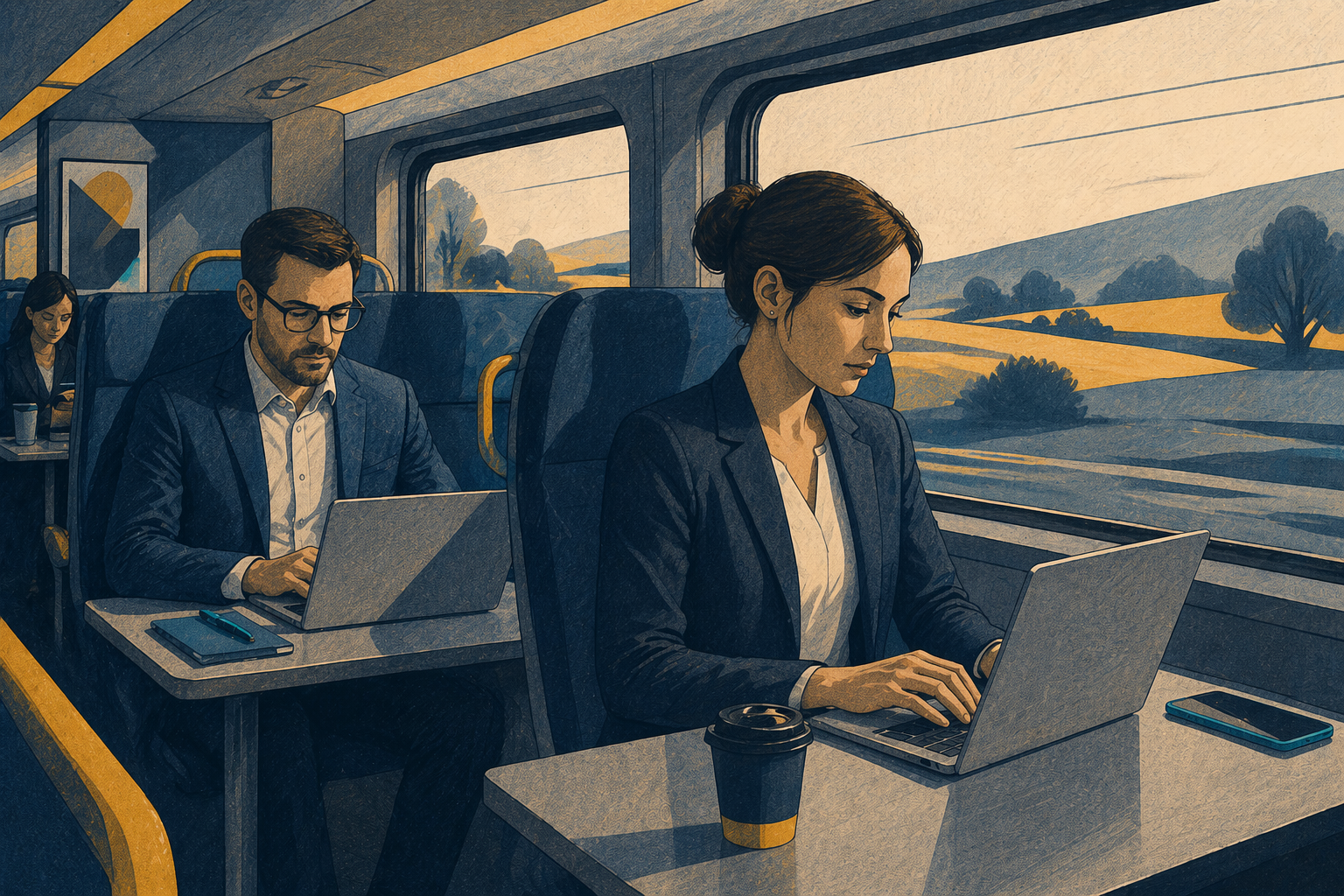
Nearly two thirds (64%) of business travellers prefer to book rail travel where possible, signalling a clear appetite to choose what is often the most sustainable option. Yet this intent does not always translate into action.
Travel decisions are frequently made under time pressure, balancing cost, schedules and internal policies. When booking systems are fragmented or unclear, even well intentioned travellers gravitate towards the most straightforward options. In these moments, complexity, not attitude, dictate behaviour. For businesses, this is a critical insight. Sustainable outcomes depend less on persuading employees and more on the tools they are given at the point of decision.
Reducing friction at the point of booking —
Travel habits are shaped the moment choices appear on screen. At this point, system design has a greater influence on booking decisions than company policies or even intent.
Appetite for greener travel already exists, but complexity often gets in the way. Our research shows that 28% of travellers would be more willing to book trips when opportunities arise if their booking system offered unified recommendations and clearer guidance. When information is simpler and more clearly presented, employees find it easier to identify and act on greener booking options in the moment.
This is where SMEs face a practical challenge. While sustainability goals are increasingly common, translating them into consistent day to day decisions is far harder. For time poor teams, any choice that requires extra steps, manual judgement or additional context quickly becomes difficult to sustain.
Streamlined, rail first booking systems help close this gap. By unifying routes, carriers and prices, and surfacing emissions data alongside cost and journey time, they make greener options visible and easy to compare within the normal booking flow.
When systems are designed this way, employees are not required to think harder or change their behaviour. Instead, better choices become the natural outcome, reinforcing more sustainable travel habits over time without adding friction or workload.
From action to accountability —
Earth Day often prompts renewed focus on targets, pledges and public commitments. These statements matter, but their value lies in how effectively they translate into measurable progress.
Embedding better choices into booking systems is a critical first step, but it is not enough on its own. To sustain momentum, businesses also need visibility into how those decisions add up over time. This is where systems move beyond enabling action to providing accountability.
Access to consistent emissions data, sustainability insights and reporting allows organisations to track progress, identify patterns and make more informed decisions at a strategic level. Rather than relying on assumptions, businesses can understand where they are making an impact and where further change is needed.
For SMEs in particular, this shift matters. Moving from written policies to practical systems allows sustainability to become part of how the business operates, not just something it aspires to. Progress is no longer dependent on individuals remembering to do the right thing, but on tools that make responsible choices easier by default.
Final thoughts —
Greener business travel is a systems challenge, rather than a people problem. For SMEs, the path forward lies in simplifying a fragmented market and embedding sustainability into the tools teams already use. When booking platforms are designed to be frictionless, greener habits follow.
Following Earth Day, the most effective action businesses can take is not to ask employees to try harder, but to ensure their systems are built to support smarter, lower carbon travel every day.

Sophie Fleming is Global Head of Trainline Business.