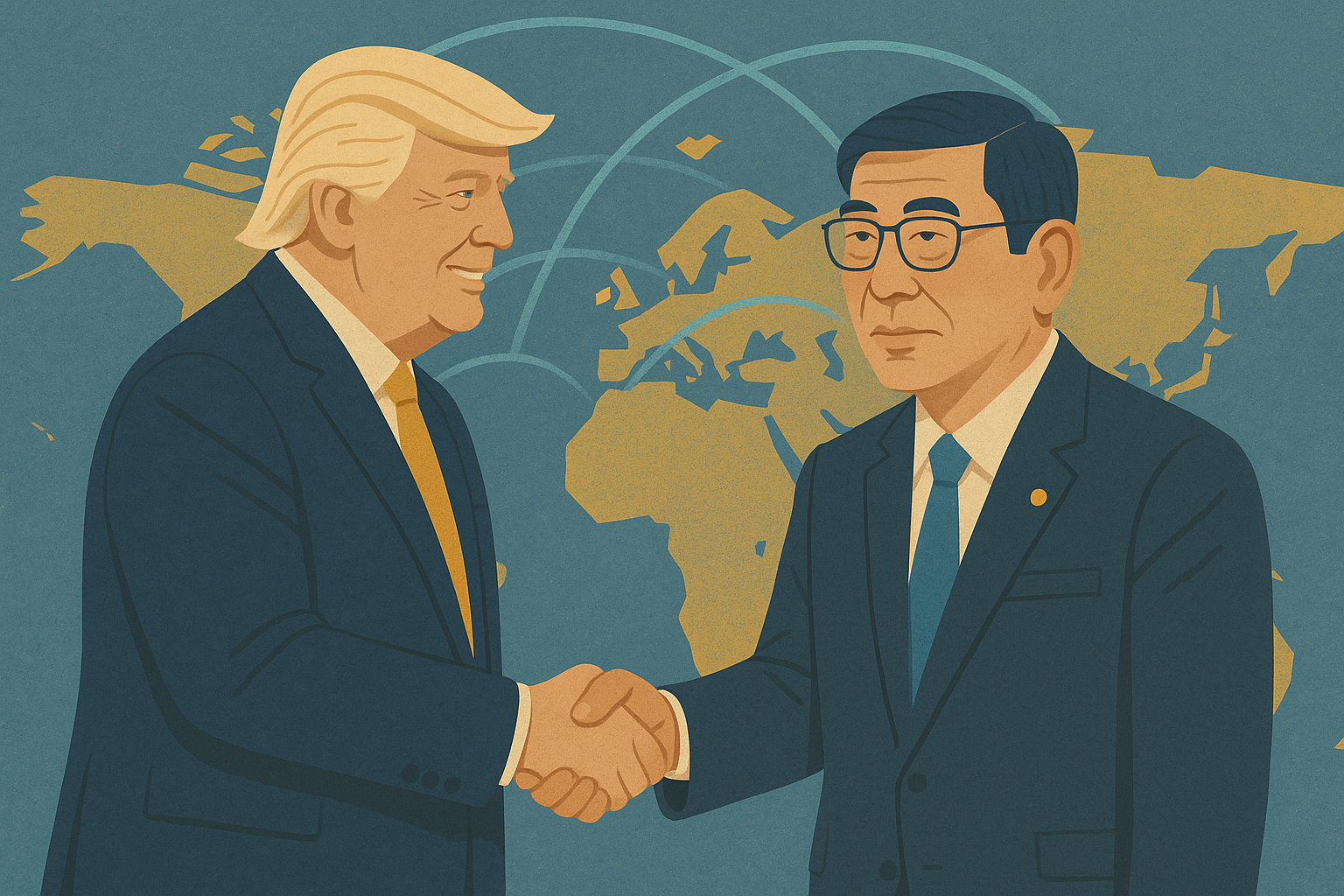
The U.S. and Japan have defused a looming trade standoff with a surprise agreement that trims planned auto tariffs and unlocks a multibillion-dollar investment pledge. President Trump announced the deal via Truth Social at 07:00 UTC on Wednesday, calling it “the largest bilateral trade pact in U.S. history”.
Under the terms, the U.S. will impose a flat 15 % tariff on all Japanese goods, including autos, rather than raising rates to 25 % on 1 August as previously announced. In return, Japan has committed to a cumulative US $550 bn package of investments and loans over five years. The funds will target U.S.-based projects in semiconductors, electric vehicles, and pharmaceuticals.
Toyota and Mazda shares jumped 13.6 % and 17 % respectively on the news, helping the Nikkei 225 index climb 3.7 % to a one-year high. Analysts estimate the average tariff savings for Japanese carmakers at roughly US $1,300 per vehicle. Market value gains for Japan’s automakers totalled around US $45 bn by mid-session.
U.S. industry reactions, however, were sharply divided. While agricultural exporters welcomed Japan’s commitment to increase quotas for U.S. rice, pork, and cherries, domestic auto manufacturers were critical.
“This deal charges lower tariff rates on vehicles with zero U.S. content than those assembled in North America,” said the U.S. Automotive Policy Council in a statement. General Motors warned the 15 % rate will still reduce its 2025 profits by US $1 bn, prompting an 8.1 % drop in its share price.
The agreement leaves in place a punitive 50 % tariff on Japanese steel and aluminium exports, and does not address broader U.S. plans to raise duties on European and Mexican goods. A 1 August deadline looms for tariffs of 30 % on Mexico and 35 % on Canada and the EU if no similar arrangements are struck.
Market watchers were cautiously optimistic. “There’s no export volume cap here — that sets a template for talks with Korea and the EU,” Citi analysts noted. European carmakers gained 2–4 % on hopes for comparable deals, while the S&P 500 edged up 0.3 % to a fresh record.
In currency markets, the yen spiked on the announcement before retreating to ¥146.9 amid rumours of political instability in Tokyo. Japanese bond yields rose 7 basis points to 1.60 %, their highest level since 2008, as investors weighed the fiscal implications of the investment pledge.
The political calculus in Tokyo remains unsettled. Prime Minister Shigeru Ishiba’s Liberal Democratic Party suffered local election setbacks last week, and some factions remain sceptical of his “investment over tariffs” strategy. Leadership tensions could complicate ratification and delivery of the promised funds.
Strategically, both governments framed the deal as a counter to Chinese influence in high-tech supply chains. TSMC-style fabrication facilities in Arizona and Texas could be among the first beneficiaries of Japanese capital under the accord.
A review clause is scheduled for mid-2026 to assess compliance and renew terms. Until then, the deal serves as a benchmark for upcoming trade talks with Canada, Mexico, and the European Union — all of whom face the same deadline for higher tariffs.