Tableau has unveiled what it calls an Agentic Analytics Platform, recasting its role from business intelligence software to what Salesforce describes as a knowledge and decision engine for enterprise AI.
Announced at Tableau Conference, the platform is built around six core elements: a knowledge engine, conversational analytics, headless analytics, a decision engine, a command centre, and a security and governance layer tied closely to Salesforce infrastructure. Salesforce said the shift is designed to let users move from insight to action in the applications and surfaces where work already happens, rather than inside a dashboard alone.
At the centre of the announcement is the proposition that trusted business context should become the foundation for AI action. Salesforce said Tableau’s knowledge engine is built on 33 million semantic models developed over more than a decade, providing the logic, definitions, and relationships behind answers delivered by agents. Conversational analytics extends natural-language interaction across Tableau Server, Cloud, and Next, while headless analytics uses an open MCP server architecture to push governed insights into Slack, Salesforce, Microsoft Teams, Claude, ChatGPT, and other work surfaces. The decision engine then links those insights to workflows, allowing actions such as case creation or escalation to be triggered directly from analytical output.
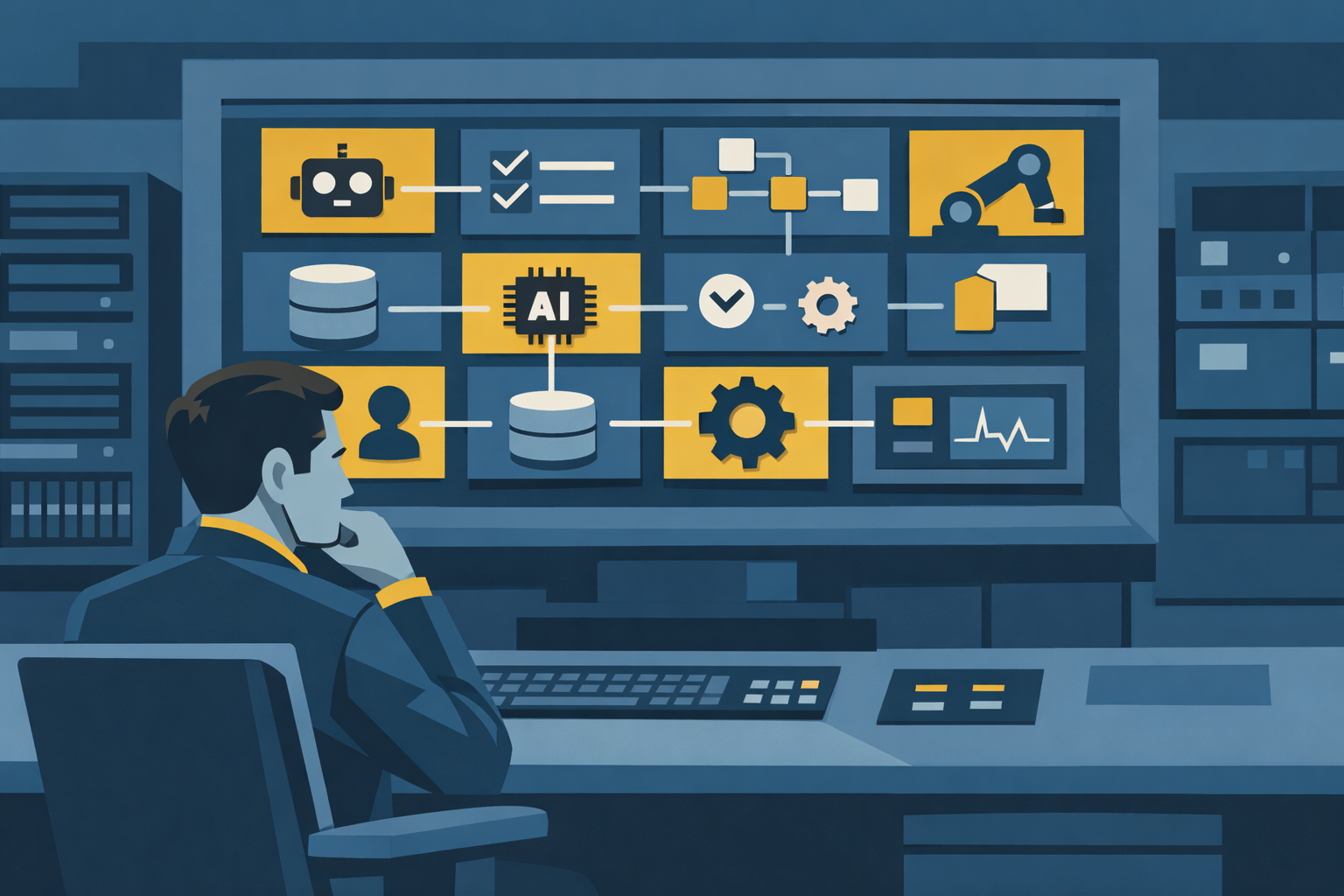
The platform’s command centre is designed to provide oversight of which agents are running, what data they are touching, and whether outputs remain compliant with internal policy. Tableau is also leaning on Salesforce’s wider platform controls to keep the move into agentic analytics governed rather than free-form.
Mark Recher, GM of Tableau at Salesforce, said: “But we’ve reached a turning point — seeing the truth is no longer enough. Organisations need to act on it instantly.”
Availability is phased across the year: Tableau said Auto Knowledge Graph becomes generally available in June; new conversational capabilities for dashboards also arrive in June; Tableau MCP servers are generally available now for Next, Cloud, and Server; new integrations for Microsoft Teams, Slack, and Google Workspace are available now; and the Agentic Analytics Command Center is due in the autumn.
Salesforce has been moving Tableau in this direction for more than a year. In April 2025 it introduced Tableau Next as an agentic analytics product built on the Salesforce platform, with workflow execution, semantic modelling, and pre-built analytical skills such as Data Pro, Concierge, and Inspector. The latest update carries that model further. Tableau is being positioned as infrastructure for how human users and software agents interact with business knowledge, govern outputs, and trigger action.
That repositioning sits against continued strain inside enterprise data estates. In Salesforce’s latest data and analytics research, 89% of data and analytics leaders said a strong data foundation is the most critical factor for successful AI.
The same study said leaders estimate 19% of company data is siloed, inaccessible, or otherwise unusable, while the average enterprise uses 897 applications and only 29% are connected. Nearly half of data and analytics leaders said their companies sometimes draw incorrect conclusions from data that lacks business context. Those figures help explain why Salesforce is putting semantic models, zero-copy access, and governed orchestration at the centre of Tableau’s product direction.
The role of analytics software is changing alongside those conditions. Dashboards and reports remain essential, but competition is increasingly centred on whether analytics can supply trusted context to agents and workflows without creating another layer of duplication or manual translation. That places more weight on semantic layers, metadata, connector depth, governance, and workflow integration than on visualisation alone.
Salesforce says Tableau Next is built on Data 360, Hyperforce, and an AI-infused semantic layer called Tableau Semantics, with support for a broad connector base and continued support for Tableau Cloud, Tableau Server, and CRM Analytics alongside the newer platform.
Salesforce is also trying to give customers a route into agentic systems without forcing them to rebuild their analytics estates from scratch. In a market where AI projects are increasingly judged on operational fit as much as novelty, a platform that can carry business logic into collaboration tools, case systems, and automated workflows has a broader role than one that stops at insight delivery. Tableau is now being positioned as a live decision layer inside enterprise software, where outputs are expected to carry context, stand up to scrutiny, and move directly into action.