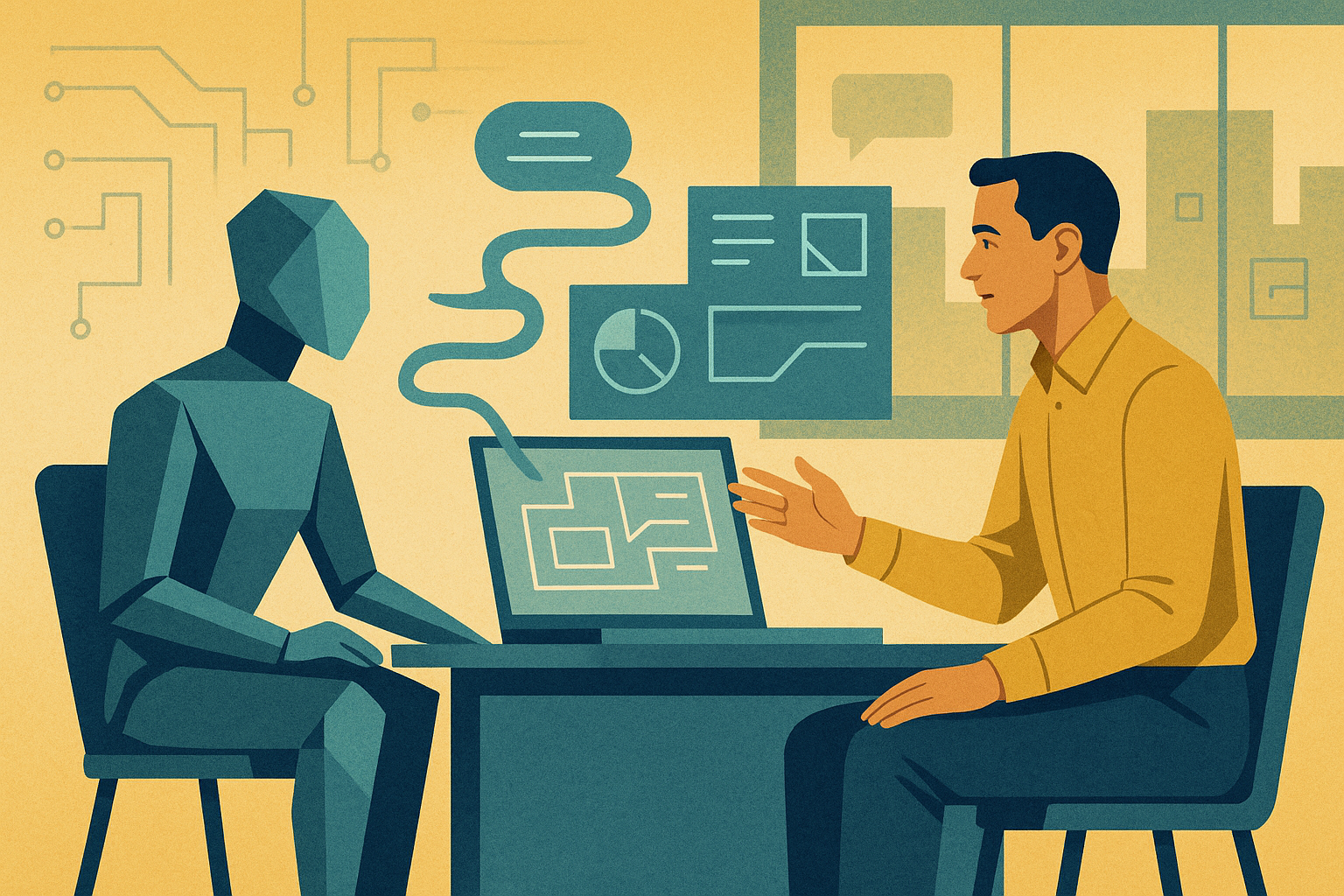
Andrej Karpathy sparked renewed interest in a novel approach to software creation that prioritises what software does rather than how it’s built, when he coined the term “vibe coding”. Rather than writing traditional code, vibe coding guides AI agents with natural language prompts, in a shift that empowers product managers, designers and founders to build software without deep coding expertise.
However, vibe coding is more than a flashy tool; it’s an important shift from implementation to outcomes. Yet, misconceptions around vibe coding, and how it fits into software development as we know it, remain a barrier to adoption. Let’s debunk the three most persistent myths to help organisations unlock the true value of vibe coding.
Myth #1: Vibe coding undermines engineering expertise —
The Reality: It refocuses engineers to solve the right problems
Critics claim that vibe coding is a case of lazy developers avoiding the “real work” of coding, but they miss the key point. Software development is about understanding business needs and automating solutions, not just writing code. Code is simply the representation of that learning. If you understand what’s needed to solve a business challenge, then code is secondary.
Like good software engineering, vibe coding relies on clear specifications, acceptance criteria, and iterative refinement. Unsurprisingly, general prompts like “build me a dashboard” yield unusable results.
Rather than focusing on repetitive tasks like CRUD operations, data mapping, and UI forms that suck up precious time, developers can leverage AI agents to automate these time-consuming requests. As a result, developers can focus on creative work that requires critical human insight, such as system architecture and novel problems.
Myth #2: AI coding threatens developer roles —
The Reality: It enhances developer expertise
Fears that AI will replace developers overlook vibe coding’s true impact. Instead, this new approach enables more people within an organisation to create software while making experienced developers more valuable.
By reducing bottlenecks and handling routine tasks, vibe coding gives developers more space to apply their expertise where it counts: shaping architecture, enforcing quality, and guiding AI agents to better outcomes. This shift not only accelerates delivery, it deepens the influence of skilled engineers across the stack.
When software components are well-defined, development becomes easier to test, scale, and evolve; reinforcing the value of experienced technical leadership.
Myth #3: AI-written software can’t be trusted —
The Reality: Trust is built through responsible governance, not avoidance
We can’t overlook that AI-generated code carries security and reliability risks, and can be prone to hallucinations, vulnerabilities, and bugs that can multiply in complex systems. But dismissing vibe coding entirely isn’t the answer. The key is to manage AI-generated code responsibly.
This means applying zero-trust principles and robust testing practices. Unit, integration, and system tests to help validate code behaviours and reduce security risks. What’s more, security scanning tools can also detect vulnerabilities, while code reviews ensure compliance with standards and intended functionality. A test-driven approach keeps risks manageable by ensuring code meets specifications and performs reliably.
AI code must also be grounded in context to help reduce risk. When AI agents have access to rich, connected data – like information stored in knowledge graphs – they make better decisions aligned with real business needs.
Vibing with this new approach —
With the right context, rigorous testing, and experienced oversight, vibe coding enables more effective software delivery. It’s clear that the future of software development isn’t about choosing between human expertise and AI but about integrating both to meet real-business challenges at speed.

Michael Hunger is VP of Product Innovation at Neo4j.