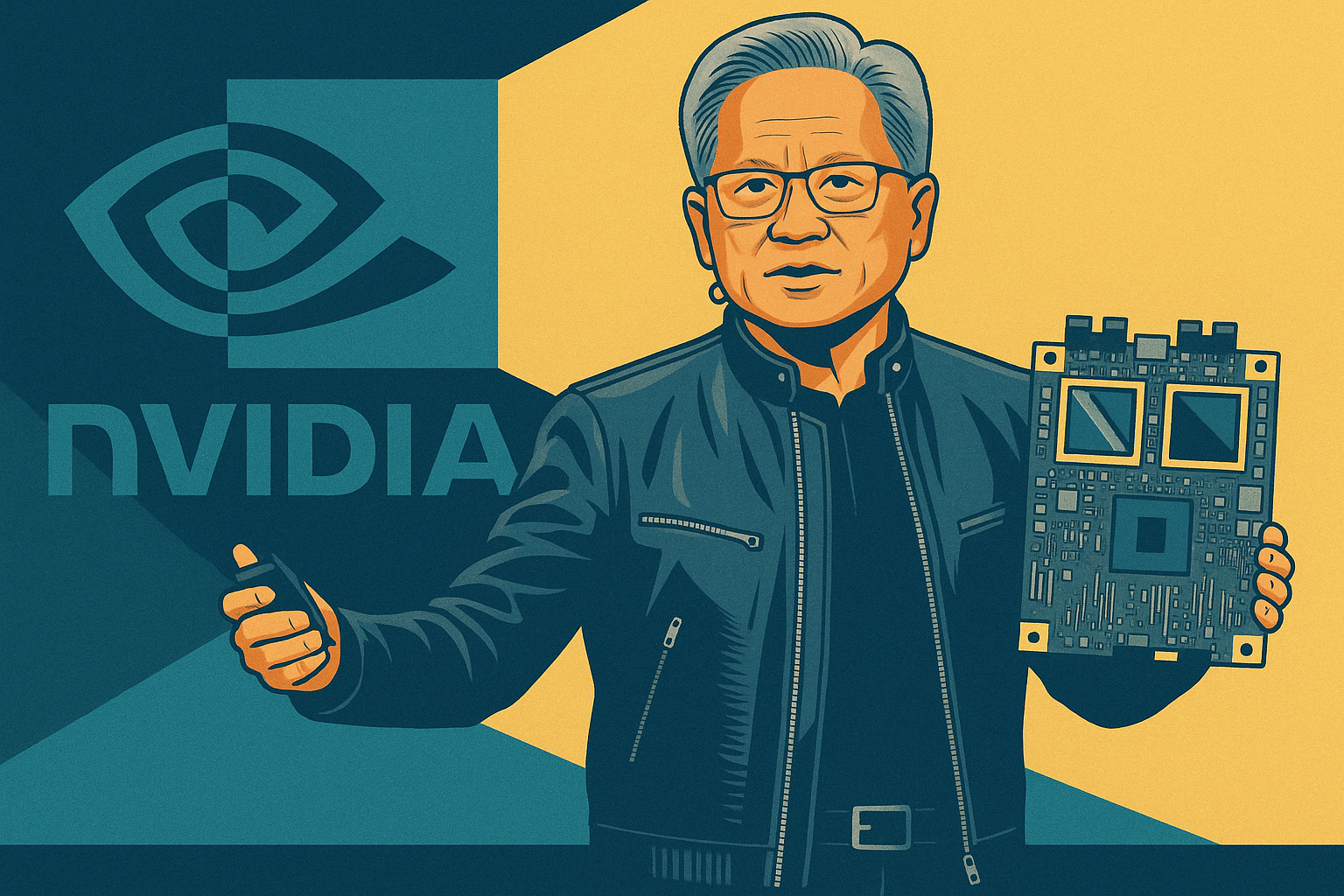
Nvidia has completed a $5 billion investment in Intel, acquiring 214.7 million shares under a private placement first disclosed in September 2025. The deal, approved by the US Federal Trade Commission earlier this month, positions Nvidia as one of Intel’s largest institutional shareholders and signals a strategic convergence between the two companies.
The transaction closed at $23.28 per share, in line with the terms agreed three months ago, and comes as Intel continues to pursue an extensive turnaround plan. The company’s share price has since risen more than 20 percent, reflecting renewed market confidence following a series of capital infusions and government-backed incentives for US semiconductor production.
In a joint statement confirming completion of the transaction, the companies said the arrangement would “advance cooperative development of high-performance computing platforms, integrating CPU and GPU technologies to deliver next-generation AI infrastructure and PC solutions.”
For Nvidia, the move represents a diversification of its strategic reach beyond AI accelerators and into the broader chip ecosystem. The investment ties the company to Intel’s x86 manufacturing capacity and foundry network at a time when global chip supply remains under scrutiny. Analysts see the collaboration as an opportunity to align the performance of Nvidia’s NVLink interconnect with Intel’s forthcoming server-grade CPUs — a combination aimed at closing efficiency gaps in AI workloads and high-performance computing.
Intel, meanwhile, gains a much-needed balance-sheet boost. The company has faced escalating costs tied to fab expansion in Arizona, Ohio, and Germany, and has undertaken a multi-year restructuring plan to stabilise cash flow. The Nvidia investment follows a December announcement of further support from the US government under its advanced manufacturing initiative — part of Washington’s effort to reinforce domestic chipmaking capacity.
Regulatory approval of the stake underscores that policy intent. The FTC’s clearance suggests growing comfort with collaborative equity arrangements among American semiconductor leaders, provided they bolster competitiveness without distorting market access. While both companies remain direct rivals in several product categories, the agreement stops short of any formal merger or joint-venture structure.
Market reaction has been measured. Nvidia shares dipped slightly in pre-market trading on Monday, while Intel’s remained steady, reflecting investor recognition that the deal is less about immediate returns and more about long-term ecosystem integration.
In practical terms, the investment enables both companies to pursue joint research in AI-optimised architectures and to prototype data-centre systems combining Nvidia GPUs with Intel CPUs. Early development work is already under way, with initial hardware expected to enter pilot testing in late 2026.
The scale of the transaction — and its timing within a highly politicised semiconductor landscape — marks a significant statement of industrial intent. For Intel, it offers financial stability and strategic alignment. For Nvidia, it opens access to complementary technologies and manufacturing depth. Together, the two could define the next phase of US-led semiconductor collaboration.