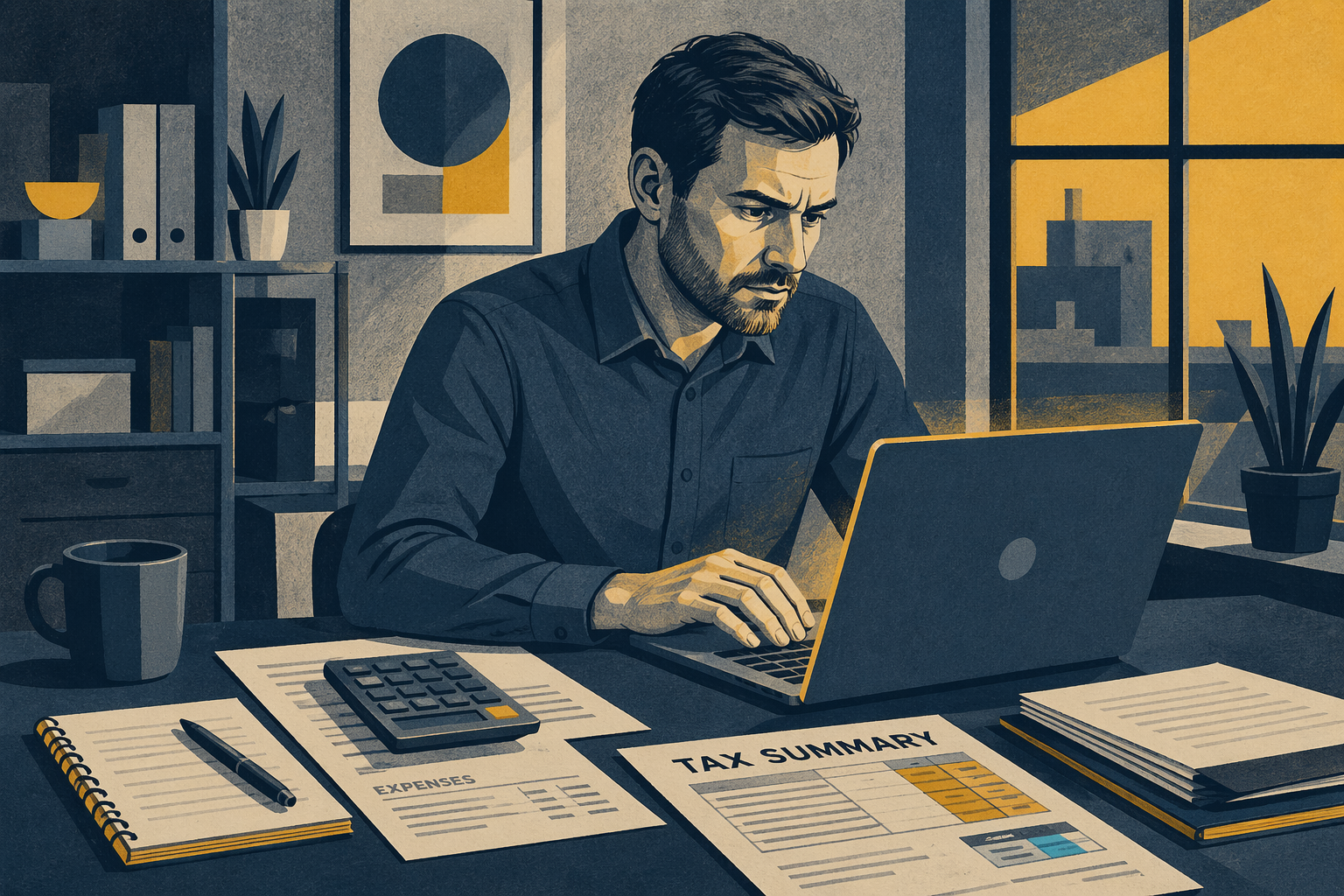
The Accountancy Partnership says the rollout of Making Tax Digital for Income Tax is adding pressure for self-employed creatives, as many adjust to more frequent reporting, mandatory software, and a more demanding administrative routine alongside project-based work.
From 6 April 2026, sole traders and landlords with qualifying income above £50,000 have been required to use Making Tax Digital for Income Tax, keep digital records, and send quarterly updates using compatible software. HMRC says those updates are not extra tax returns, but the change still marks a significant shift for people used to managing tax on an annual basis.
For workers across creative industries, the transition can be particularly awkward. Income is often uneven, work can run across multiple clients at once, and record-keeping may sit behind deadlines and delivery. The Accountancy Partnership said many creatives are concerned about the additional admin, the cost of software, and the risk of getting things wrong.
Lee Murphy, Managing Director at The Accountancy Partnership, said: “On paper, Making Tax Digital is about improving accuracy and making the system more efficient. But for many self-employed creatives, this is a significant mindset shift.
“Instead of reviewing everything once a year, they now need to stay organised throughout the year, which can be challenging when income isn’t always consistent or predictable.”
Recent data from the company found 30.3% of freelancers in creative industries said tax administration has negatively impacted their business. Murphy said a large part of the concern centres on inaccurate submissions and missed deadlines while managing client work. HMRC has said it will not issue penalty points for late quarterly updates in the first year for those mandated into the system from April 2026, although penalties can still apply for late tax returns and late payment.
Murphy said: “A lot of the concern we’re hearing is around getting things wrong, whether that’s submitting incorrect figures or missing deadlines.
“Even though there is some flexibility in the early stages, people are understandably cautious, particularly when managing multiple clients, projects, and income streams at once.”
Making Tax Digital has been in development for several years, but the practical adjustment is now landing on freelancers who need to choose software, adapt their record-keeping, and build tax administration into busier, less predictable schedules.