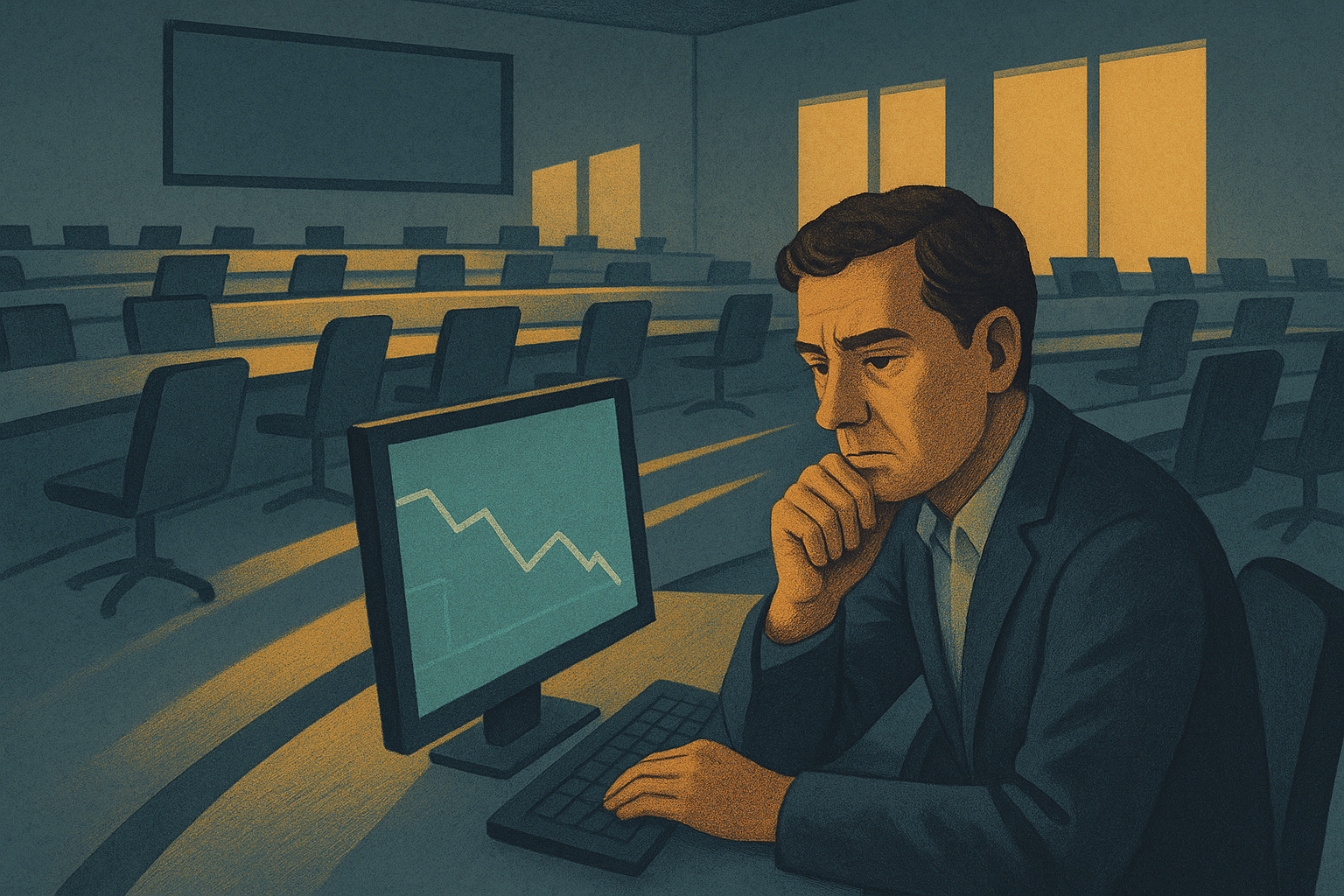
The FTSE 100 experienced its steepest decline since April on Friday as a sell-off in US regional banks caused global equities markets to become unsettled. Banks were at the forefront of the losses on the UK’s blue-chip index amid a worldwide risk-off sentiment, with bond yields declining and the price of gold reaching an unprecedented high of $4,347 before receding.
Barclays’ shares dropped by as much as 6.75% on Friday morning, though they recovered some ground to close down 4.3%. Shares of Lloyds, HSBC, and Standard Chartered also fell, each losing at least 2.5%. This sell-off in the banking sector resulted in the FTSE 100’s worst performance since the imposition of reciprocal tariffs by Donald Trump in April. The downturn coincided with a surge in the VIX, a volatility index commonly referred to as Wall Street’s ‘fear gauge’.
The losses were preceded by a severe downturn in US banks on Thursday, following several lenders revealing their exposure to substantial defaults, heightening investor concerns about banks’ vulnerability to loans at risk of default. Recent failures of companies like First Brands and Tricolor, both due to debt-related issues, have prompted a re-evaluation of the US credit market’s health, leaving investors particularly sensitive to defaults.
Zions Bancorporation, a medium-sized bank based in Utah, informed its shareholders of a $50 million loss on two commercial loans, leading to a market capitalisation drop of over 13%, equating to nearly $1 billion (£750 million) in a single day. Western Alliance’s share price also fell by more than 10% following news of dealings with a fraudulent borrower. The sell-off extended to banks across Europe and Asia, with Deutsche Bank, Societe Generale, and Mizuho all experiencing significant declines.
Kathleen Brooks, research director at XTB, commented, “Fears are rising that the rush into credit in the last two years will lead to a wave of bad loans and write-downs, which could affect the banking sector, similar to what happened with Silicon Valley Bank in 2023.” She added that combined with concerns over a potential trade war between the US and China, investors are withdrawing risk as the week concludes.
Last week, JP Morgan’s chief executive Jamie Dimon raised concerns about the state of certain areas within the private credit and shadow banking markets, which had experienced prolonged growth until the notable collapse of First Brands. Several private credit specialists faced significant losses following First Brands’ administration, with Jefferies, a mid-sized Wall Street lender, particularly exposed, holding $715 million of the car part maker’s bad debt. Dimon’s JP Morgan also disclosed its $170 million exposure to Tricolor’s failure.
Dimon remarked on an analyst call earlier this month, “My antenna goes up when things like that happen. I probably shouldn’t say this but when you see one cockroach, there’s probably more. And so everyone should be forewarned at this point.”