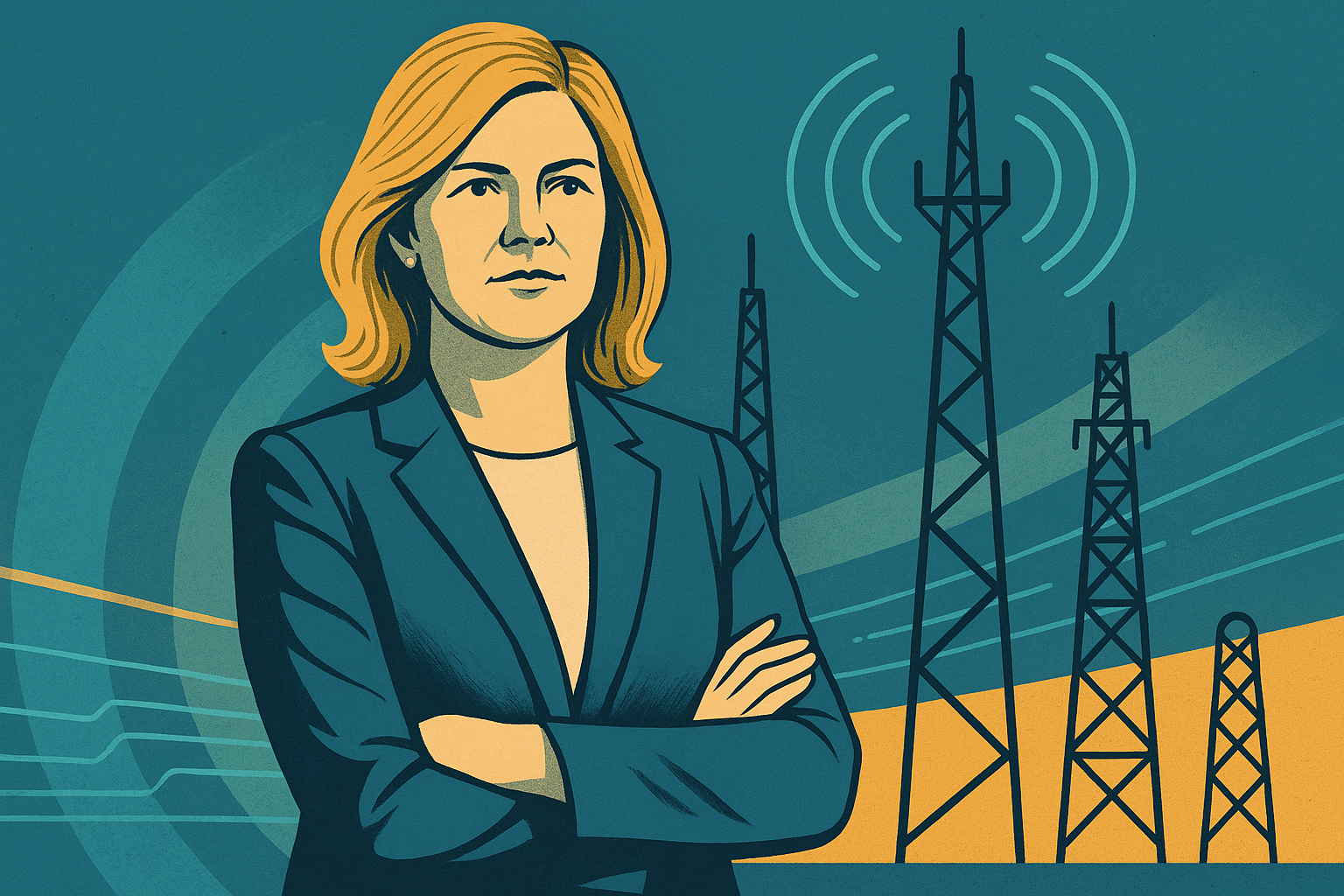
The CEO of BT has joined other business leaders in urging the Chancellor to refrain from increasing business costs in the upcoming Budget, highlighting that the telecoms sector is already burdened with significant government-imposed costs. In an interview at the Connected Britain conference, Allison Kirkby stated that BT pays significantly more in business rates, energy levies, and regulatory compliance costs compared to counterparts in countries like Germany and the Netherlands.
Kirkby emphasised the importance of providing investors with certainty regarding returns on their investments, which can be achieved through stable regulatory and fiscal policies. She expressed concern about the potential challenges of the forthcoming Budget, stressing the need for returns on substantial infrastructure investments that will benefit the economy in the future.
The BT chief’s comments come amid concerns over potential tax increases in the upcoming Budget. Economists anticipate that Chancellor Rachel Reeves may need to raise at least £20bn to adhere to fiscal rules, with businesses likely facing increased costs following Labour’s decision to rule out income tax changes in its manifesto.
This follows warnings from AO World’s CEO about the possible recessionary impact of rising inflation and Labour’s proposed workers’ rights legislation. John Roberts noted that businesses are finding it increasingly difficult and costly to recruit, suggesting another recession may be on the horizon.
The OECD has also highlighted “uncertainty” and a “tighter fiscal stance” as factors likely to dampen demand, reducing the UK’s growth forecast from 1.4% in 2025 to just 1% next year, with UK inflation expected to be the highest among G7 economies at 3.5%.
Kirkby further noted that the UK lags in telecoms and mobile infrastructure upgrades compared to European peers, calling for government planning reforms to expedite the deployment of mobile technologies.