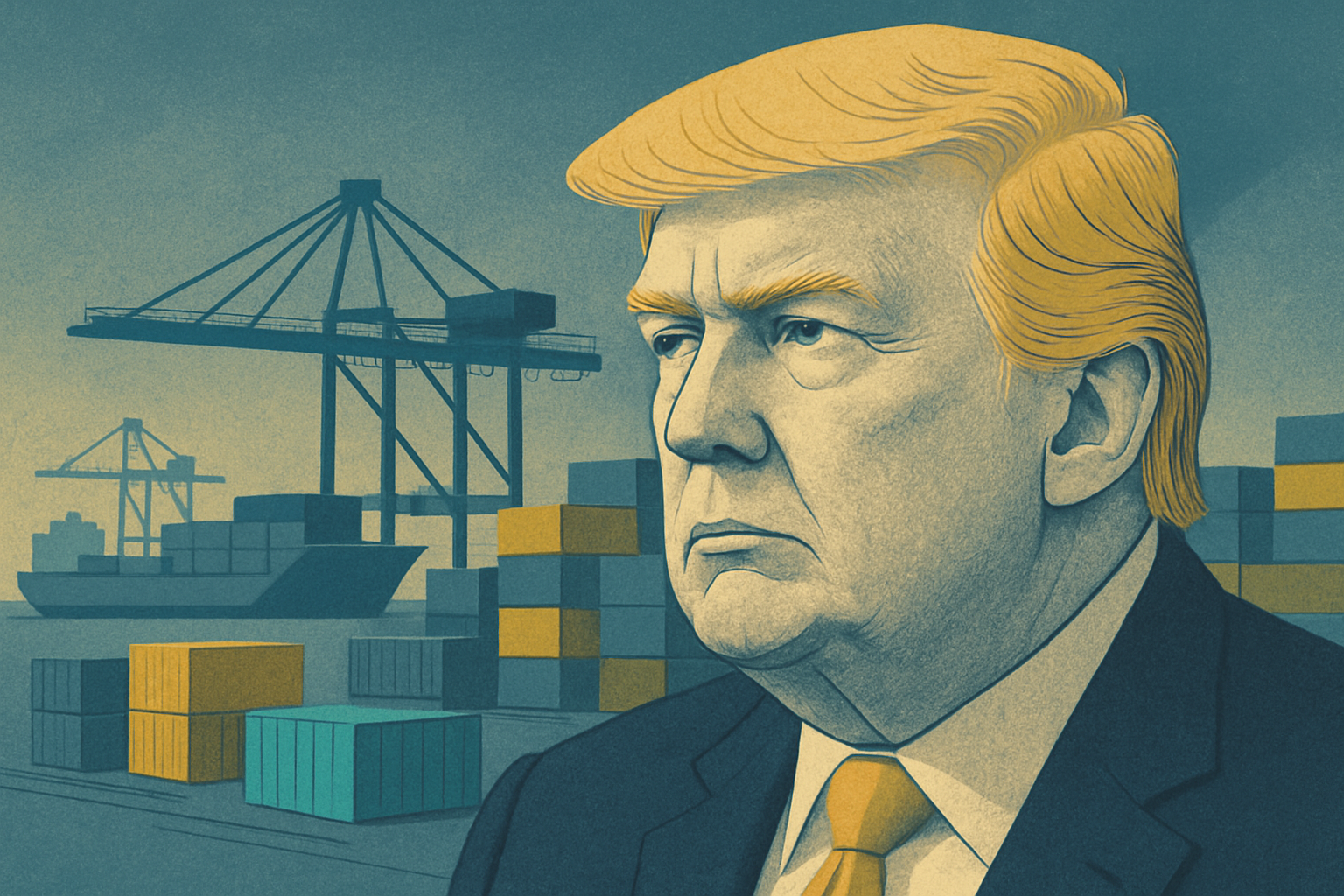
The United States Supreme Court signalled this week that it may curb presidential authority to impose tariffs unilaterally, casting doubt on the legality of President Donald Trump’s wide-ranging import duties.
During oral arguments on 5 November 2025, both conservative and liberal justices expressed unease with the administration’s interpretation of the International Emergency Economic Powers Act (IEEPA) — the statute invoked to justify the current “global tariff” regime.
Chief Justice John Roberts pressed the government’s lawyer on whether the duties amounted to a tax, reminding the courtroom that “the power to tax generally lies with Congress.” Justice Neil Gorsuch — one of Trump’s own appointees — asked whether the IEEPA could be stretched to cover tariffs “on everything from toys to turbines” without a clear congressional mandate.
Solicitor General D. John Sauer argued that the measures were regulatory, not fiscal, and therefore permissible under presidential emergency powers. But several justices appeared unconvinced. “If everything can be an emergency, then nothing is,” Justice Elena Kagan remarked, underscoring concern that such interpretation could hand the executive unchecked economic authority.
At stake is the scope of presidential trade power — and potentially hundreds of billions of dollars in duties. Analysts estimate that if the Court finds the tariffs unlawful, the Treasury could face refund claims from importers around the world, affecting revenue forecasts and trade balances.
The case builds on earlier rulings from the US Court of International Trade, which found that some of the administration’s previous “Liberation Day” tariffs exceeded statutory powers. The broader legal question — whether a president can use emergency declarations to reshape trade policy — invokes the “major questions” doctrine, under which courts require Congress to speak clearly when granting sweeping regulatory powers.
A White House spokesperson said the government’s position “is grounded in long-standing statutory authority” and that the tariffs “protect American industry in a volatile global economy.” The administration has maintained that its approach aligns with historic executive powers under the IEEPA.
Markets responded with caution: the US dollar dipped slightly against the euro, while futures in major export sectors, including metals and machinery, traded lower amid uncertainty. Analysts said that a ruling to strike down the tariffs could shift global supply-chain planning and prompt renewed trade negotiations between Washington, Beijing, and Brussels.
For multinational businesses, the case highlights how domestic legal interpretations can shape international economic risk. Should the Court side against Trump’s approach, future administrations — Republican or Democrat — may be forced to seek explicit congressional approval before imposing wide-scale trade barriers.
A decision is expected in mid-2026. Until then, global companies will be watching closely: the outcome could redefine the balance of power between the White House, Congress, and the international trading system itself.