
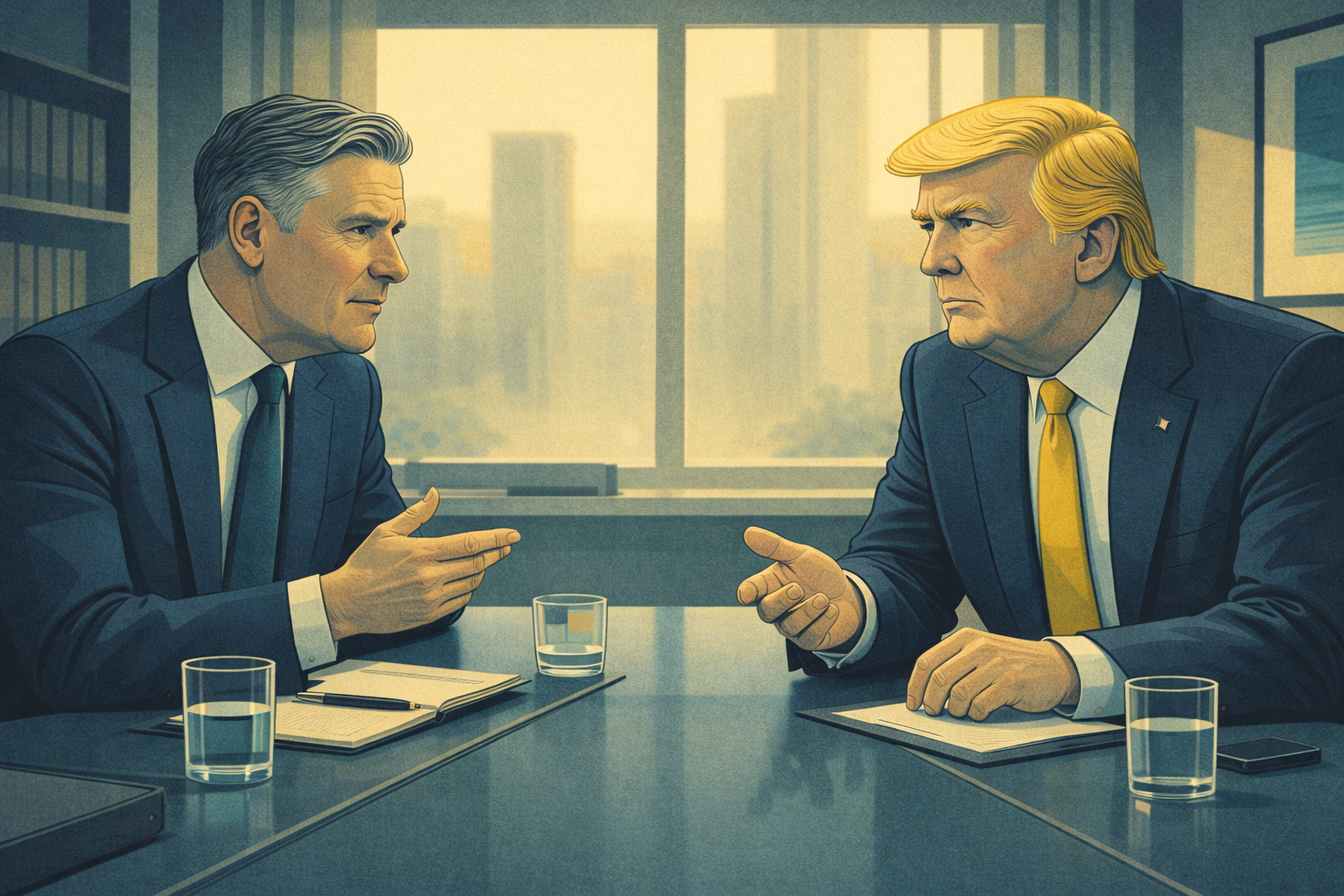
The United Kingdom is currently engaged in discussions with the United States regarding President Donald Trump’s recent decision to increase tariffs, as confirmed by a cabinet minister. This comes amid growing concerns from businesses over the heightened tariff rates.
On Saturday, President Trump announced an increase in the base global tariff rate to 15% following a ruling by the US Supreme Court, which invalidated the authority he used to implement the ‘Liberation Day’ tariffs last year. In a statement on his TruthSocial platform, Trump criticised the court’s decision, describing it as “ridiculous, poorly written, and extraordinarily anti-American,” before revealing his new “fully allowed, and legally tested” 15% tariff.
The UK had previously negotiated a preferential 10% tariff rate, a notably lower rate compared to other countries, but now finds itself impacted by Trump’s latest trade measures. Education Secretary Bridget Phillipson expressed hope on Sunday that the “preferential deal” would persist, noting that “discussions are ongoing.”
Speaking to Sky News, Phillipson stated, “This is an evolving situation. But of course, we want to get the best possible deal for British businesses. I understand the uncertainty it does cause for them, but they can be assured that we will always be working to make sure they get everything that they need.”
Meanwhile, Liberal Democrats leader Ed Davey has urged Sir Keir Starmer to consider legal action against President Trump, seeking $100 billion in damages over the tariffs. “It’s the only language he understands,” Davey told the Press Association.
Speculation has arisen that the Trump administration could face claims amounting to $120 billion if businesses seek refunds for duties paid under the tariffs. The US Treasury has collected approximately $240 billion in customs duties over the past year, a significant increase from the same period in 2024.
Concerns among UK businesses have intensified with the latest tariff escalation. William Bain, head of trade policy at the British Chambers of Commerce, remarked, “We had feared the president’s plan B response could be worse for British businesses and so it is proving.”
Bain highlighted that the additional 5% increase in tariffs, excluding those covered under the Economic Prosperity Deal such as steel and aluminium, would be detrimental to trade, US consumers, and businesses, ultimately weakening global economic growth. “Businesses on both sides of the Atlantic need a period of clarity and certainty. Higher tariffs are not the way to achieve that,” he added.



You must be logged in to post a comment.