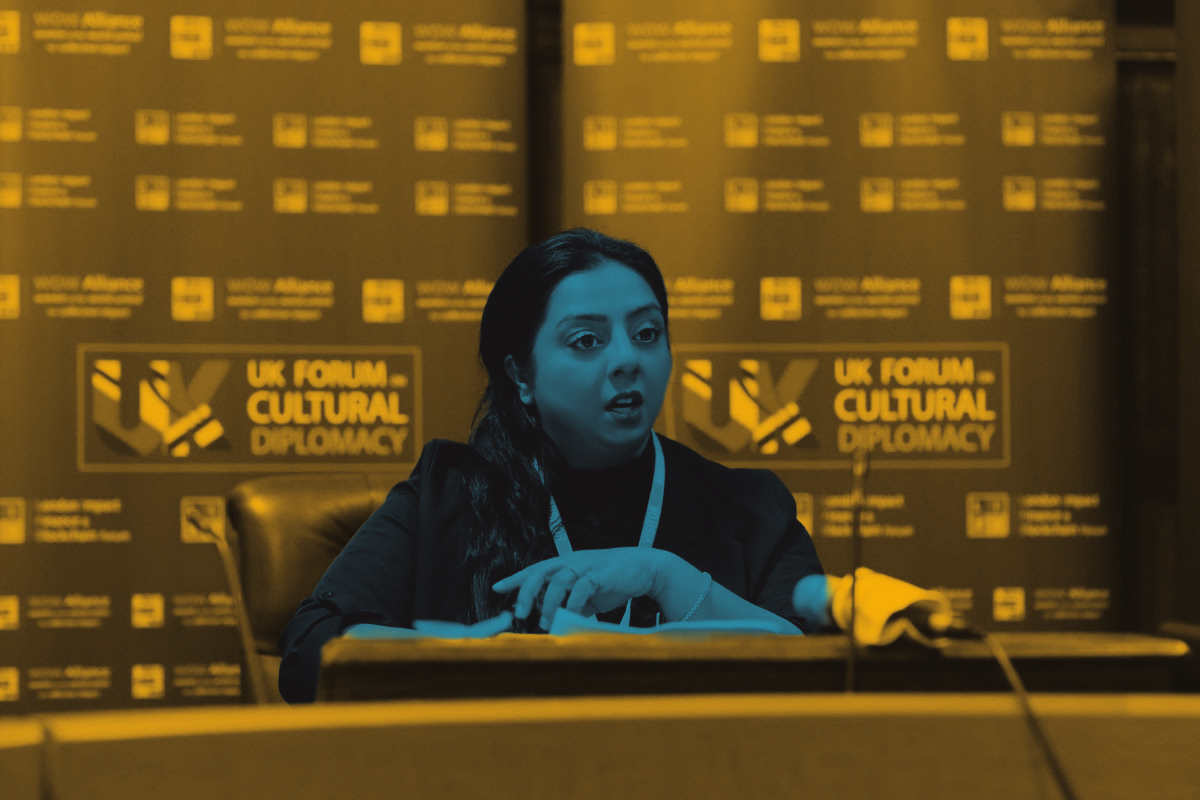
Scottish entrepreneur and investor Veenoo Sharma has launched The Power Diaspora Forum, a global platform intended to increase women’s access to capital, influence, and decision-making roles, following its unveiling at the Houses of Parliament earlier this month.
The initiative was introduced during the UK Forum on Cultural Diplomacy, held across both the House of Commons and the House of Lords, in partnership with the WOW Alliance. The event brought together former European prime ministers, MPs, Lords and Baronesses, diplomats, academics, and senior policymakers for discussions on leadership, power, and global responsibility.
Sharma presented The Power Diaspora Forum as a long-term global wealth and leadership platform operating at the intersection of capital, policy, and economic influence. The structure is designed to address barriers that continue to limit women’s economic advancement, particularly access to capital, elite networks, global markets, and senior decision-making environments.
“Women operate at the centre of economies, institutions and global systems,” Sharma said. “The Power Diaspora Forum is designed to ensure women are not only present in those systems, but structurally positioned to influence outcomes — economically, politically and culturally.”
The platform is organised around three core pillars: capital deployment and investment access; curated mentorship and leadership pathways; and a global think tank focused on policy, power, and long-term economic stability. Through this framework, the Forum aims to connect women founders, investors, and leaders with institutional capital, policymakers, and cross-border commercial opportunities.
Sharma said that structural access, rather than capability, remains the primary constraint on women’s progression into senior economic and political roles.
“You can be the strongest leader in business, but without access you cannot progress,” she said. “Real power is structural, economic and strategic. When women collaborate across borders and markets, capital moves differently, institutions evolve, and future generations benefit.”
The Westminster launch was supported by Tasmina Ahmed-Sheikh OBE, former MP and Head of the UK Forum on Cultural Diplomacy and Women of the World Alliance.
“True collaboration begins with how we bring women together and who we choose to include at the table,” Ahmed-Sheikh said. “Veenoo Sharma embodies that principle and I was delighted to hear her powerful words and plans for The Power Diaspora Forum. I look forward to continuing our work together.”
Following its parliamentary unveiling, The Power Diaspora Forum is set to roll out an international programme of strategic partnerships, leadership forums, capital initiatives, and policy-focused thought leadership, positioning women as central actors in global markets, economic growth, and policy formation across the UK and internationally.