Pound weakens, marking worst month since September

Pound weakens, marking worst month since September

The British pound is experiencing its sharpest monthly fall. Sterling has fallen 3.6% against the US dollar in July, pressured by UK economic challenges and changing global sentiment, marking its worst monthly performance since September 2023. Analysts expect continued pressure due to fiscal concerns.


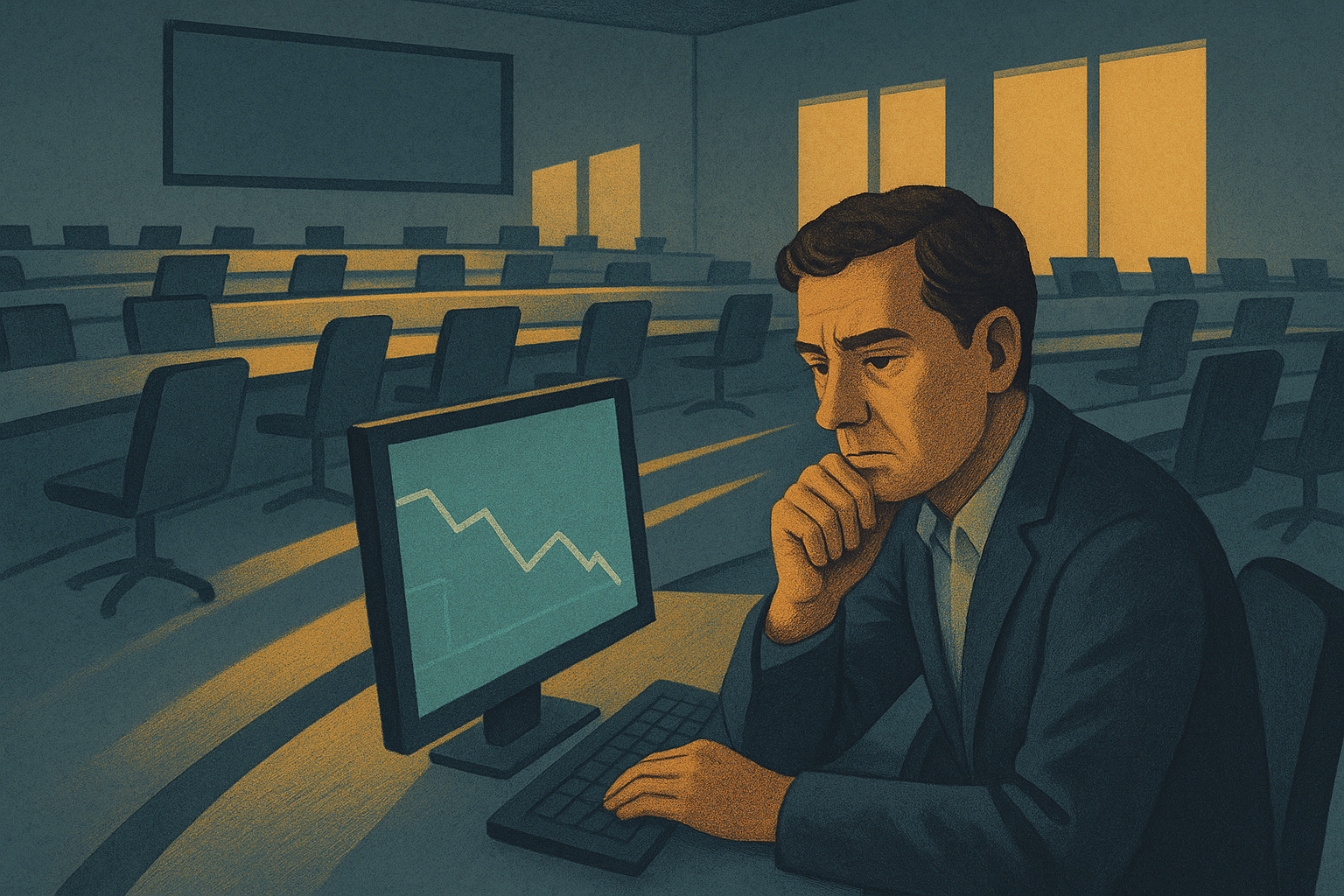
The British pound is on track for its sharpest monthly decline in nearly two years, having fallen 3.6% against the US dollar in July. This decline is attributed to economic challenges within the UK and shifting global sentiment. Sterling’s drop represents its worst monthly performance since September 2023, when it fell 3.7%, and closely follows the 4% plunge in September 2022, which was triggered by market upheaval following Liz Truss’s mini-budget.

In contrast, the US dollar has strengthened throughout July, supported by renewed optimism from recent trade agreements and a series of positive US economic data. This combination has driven a recovery in the dollar after a slow start to the year. Consequently, the Federal Reserve has maintained interest rates, aligning with market expectations.

The Bank of England is anticipated to reduce UK interest rates next week from 4.25% to 4%, which would widen the disparity with US borrowing costs and exert further pressure on the pound. Sterling has also experienced a slight decline against the euro, dropping 0.7% this month to approximately €1.156.

Analysts at Oxford Economics have indicated that the outlook for the pound remains subdued, citing ongoing fiscal concerns as a factor affecting sentiment. They have communicated to clients that “fiscal concerns will remain in the foreground, undermining the ability of relatively elevated rates to sustain the pound.”

The recent decline of the pound adds to the uncertainty facing investors as the UK grapples with slower growth, significant government borrowing, and an unpredictable global environment.



  • How the right tech can stop workplace burnout

    How the right tech can stop workplace burnout

    Workplace burnout is rising as digital overload reshapes employee experience. Tristan Shortland, Chief Technology Officer at Infinity Group, argues that poorly designed digital environments are accelerating fatigue, while smarter, more intentional technology ecosystems can restore focus, reduce cognitive strain, and improve long-term organisational performance.


  • How business leaders can turn compliance into a competitive edge

    How business leaders can turn compliance into a competitive edge

    Compliance is shifting from cost centre to strategic business advantage. Lee Bryan, founder and CEO of Arcus Compliance and author of The Compliance Edge, outlines how embedding agility, risk awareness, and culture into compliance systems can accelerate growth, strengthen trust, and position businesses ahead of less structured competitors.


  • Financial services comms turnover risk spikes

    Financial services comms turnover risk spikes

    Financial services communicators face mounting churn as regulation pressure intensifies. Murray McIntosh says 62% plan to move roles within six months, raising concerns over continuity, messaging, and specialist capability as UK regulatory reform gathers pace.