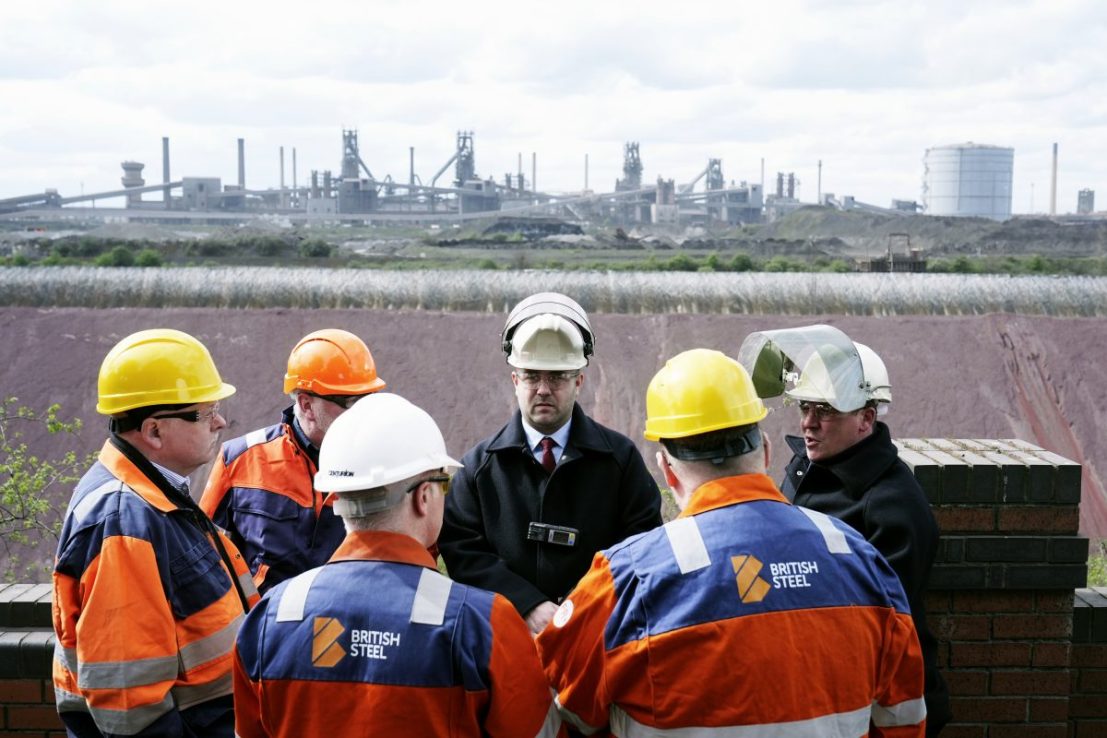
The UK’s statistics authority has begun evaluating the financial burden of running British Steel following the government’s intervention to save the struggling firm, in a move that could further strain Rachel Reeves’ already tight fiscal headroom.
Professor Sir Ian Diamond, the UK’s top statistician, revealed that the Office for National Statistics (ONS) is assessing whether to classify British Steel as a public body following the Labour government’s decision to assume control of the company’s Scunthorpe plant, which was on the brink of collapse earlier this month.
A preliminary estimate from the ONS indicates that government borrowing exceeded the Office for Budget Responsibility’s (OBR) forecast by £14.6bn in the year to March. This overshoot has put Chancellor Reeves’ modest £9.9bn fiscal buffer under pressure, increasing the likelihood that she will need to either raise taxes or reduce spending in the months ahead.
In a letter seen by City A.M., Diamond confirmed that the ONS would provide cost estimates related to the operation of British Steel before the end of May. “The ONS has begun an assessment of the sector classification status of British Steel Limited,” he wrote, adding that the outcome, along with the corresponding fiscal impact, would be published on 22 May as part of the Public Sector Classification Guide.
Diamond noted that while the ONS handles the analytical process, any administrative or policy implications stemming from the classification would fall under HM Treasury’s purview.
The move follows pressure from shadow business secretary Andrew Griffith, who urged the ONS to examine the implications of the government’s intervention, arguing it would have a “significant impact” on the nation’s finances. Griffith criticised Reeves for underestimating fiscal risks in last month’s Spring Statement and failing to provide transparent estimates of the cost to taxpayers.
“She’s overshot the latest borrowing figures and the UK economy continues to weaken,” Griffith said. “The taxpayer is clearly shouldering the costs of Scunthorpe, yet so far Labour have refused to provide a single figure for these costs. It is only right that the public accounts now properly reflect their choices with integrity.”
The government passed emergency legislation to take over the Scunthorpe site in mid-April. Sources suggest that the intervention will be financed from within existing departmental budgets, with no fresh borrowing planned.
British Steel, previously owned by Chinese firm Jingye, was losing around £700,000 per day in March according to the company, which labelled the blast furnaces as “financially unsustainable”. The firm recorded a pre-tax loss of £231m in 2023, highlighting the economic difficulties posed by high energy prices and costly raw materials.
Although the steelworks recently received shipments of iron ore to keep operations running, Business Secretary Jonathan Reynolds has not ruled out keeping the plant under state ownership indefinitely. The Labour Party has stated its broader commitment to the sector, pledging £2.5bn for UK steel as part of a push to revitalise domestic manufacturing and support national defence capabilities.
Despite the potential for the British Steel takeover to increase fiscal strain, no political party opposed the Labour government’s emergency measure. Reform UK has previously called for complete nationalisation of the country’s steel industry.
A spokesperson for the Department for Business and Trade reiterated the government’s commitment to adhering to its fiscal rules. “The Chancellor and Prime Minister have made clear the UK’s fiscal rules remain non-negotiable and that funding required for the Scunthorpe site will come out of existing budgets,” they said.
With economists from the Institute for Fiscal Studies and EY suggesting that Reeves may have to raise taxes in the autumn to rebuild her financial leeway, any additional current or future costs related to British Steel could weigh heavily on an already uncertain fiscal trajectory.