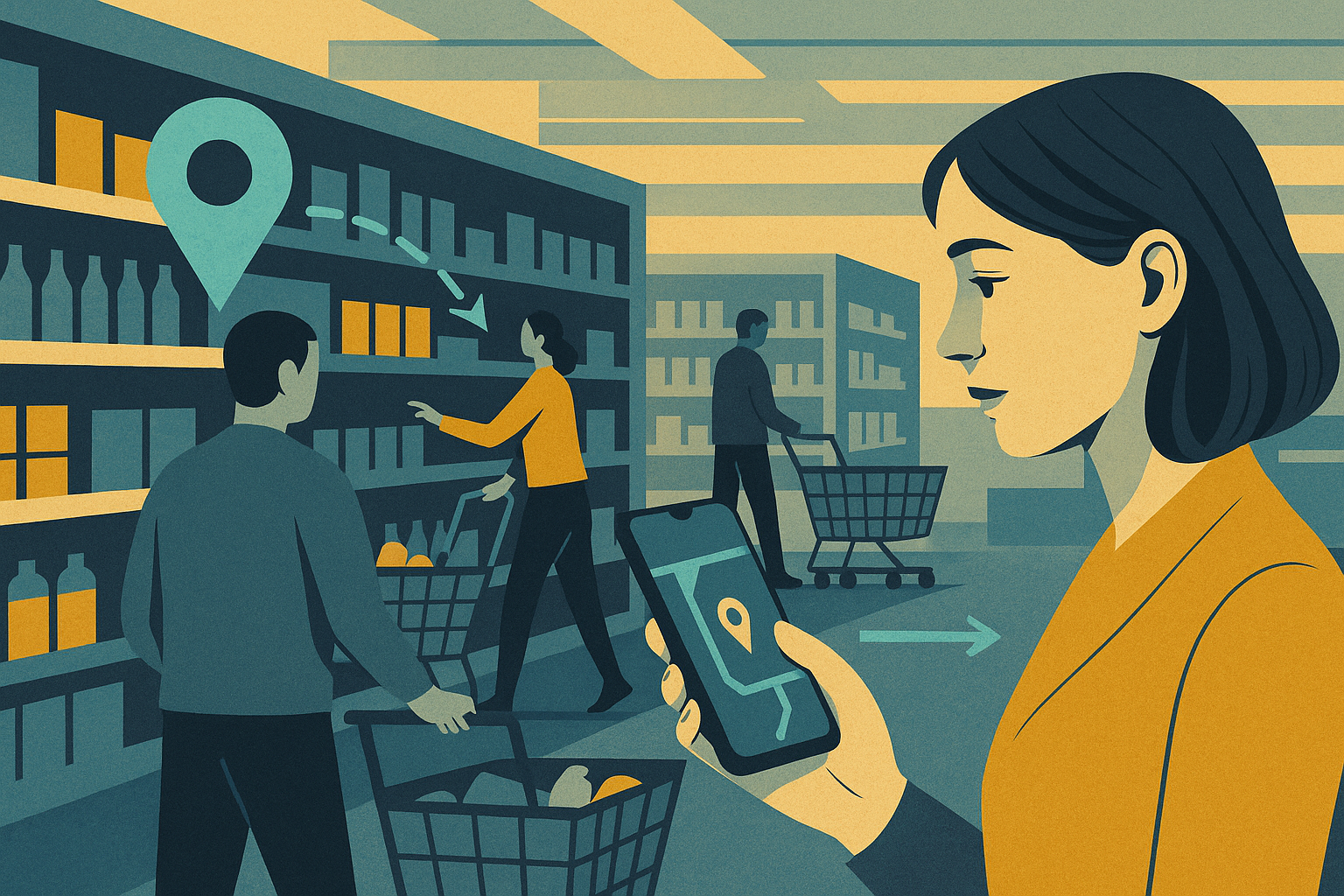
Morrisons, one of the UK’s largest supermarket chains, has unveiled an AI-driven Product Finder to enhance the shopping experience for its ten million weekly customers. The new tool, embedded within the Morrisons app, is designed to help shoppers quickly locate products in-store — even during busy periods and frequent layout changes — by providing precise, real-time guidance.
The Product Finder leverages Gemini AI models, running on Google Cloud’s advanced infrastructure, including BigQuery and Cloud Run functions. Shoppers can simply type a product name into the app to receive instant information about the item’s aisle and specific location within their chosen store. The system proved its effectiveness during the recent Easter period, when it handled 50,000 searches per day, guiding customers through temporary store rearrangements and high-traffic times.
Peter Laflin, Chief Data Officer at Morrisons, said: “Having all our data in BigQuery has allowed Morrisons to create new solutions for customers that wouldn’t have been possible before. The Product Finder is a prime example of how we’re leveraging technology to make shopping easier and more efficient for our customers.”
Behind the scenes, Cloud Run functions process the search terms entered by customers. Gemini AI models then interpret these queries and match them to Morrisons’ comprehensive product codes. The correct code is passed to BigQuery, which holds detailed information on product availability and location for each supermarket. Within seconds, the app relays this information back to the shopper, providing a seamless and accurate in-store experience.
Mauren Costello, Vice President, UKI and SSA at Google Cloud, commented: “The retail landscape is being transformed by AI, and supermarkets like Morrisons are embracing this technology to place the customer at the heart of their operations. The in-app Product Finder is a brilliant example of this in action. By combining the power of Google Cloud’s data platform with the reasoning capabilities of Gemini, Morrisons can now directly answer a customer’s most immediate need — ‘Where is this item?’ — in a simple and intuitive way. This is about removing friction from the shopping journey, and we are proud to provide the technology that helps make that possible.”
The launch of this technology marks Morrisons’ latest step in using digital innovation to streamline operations and improve customer service. As AI-driven tools become more prevalent across UK retail, supermarkets are increasingly focused on using advanced data platforms to simplify the in-store experience and respond directly to shifting shopper expectations.