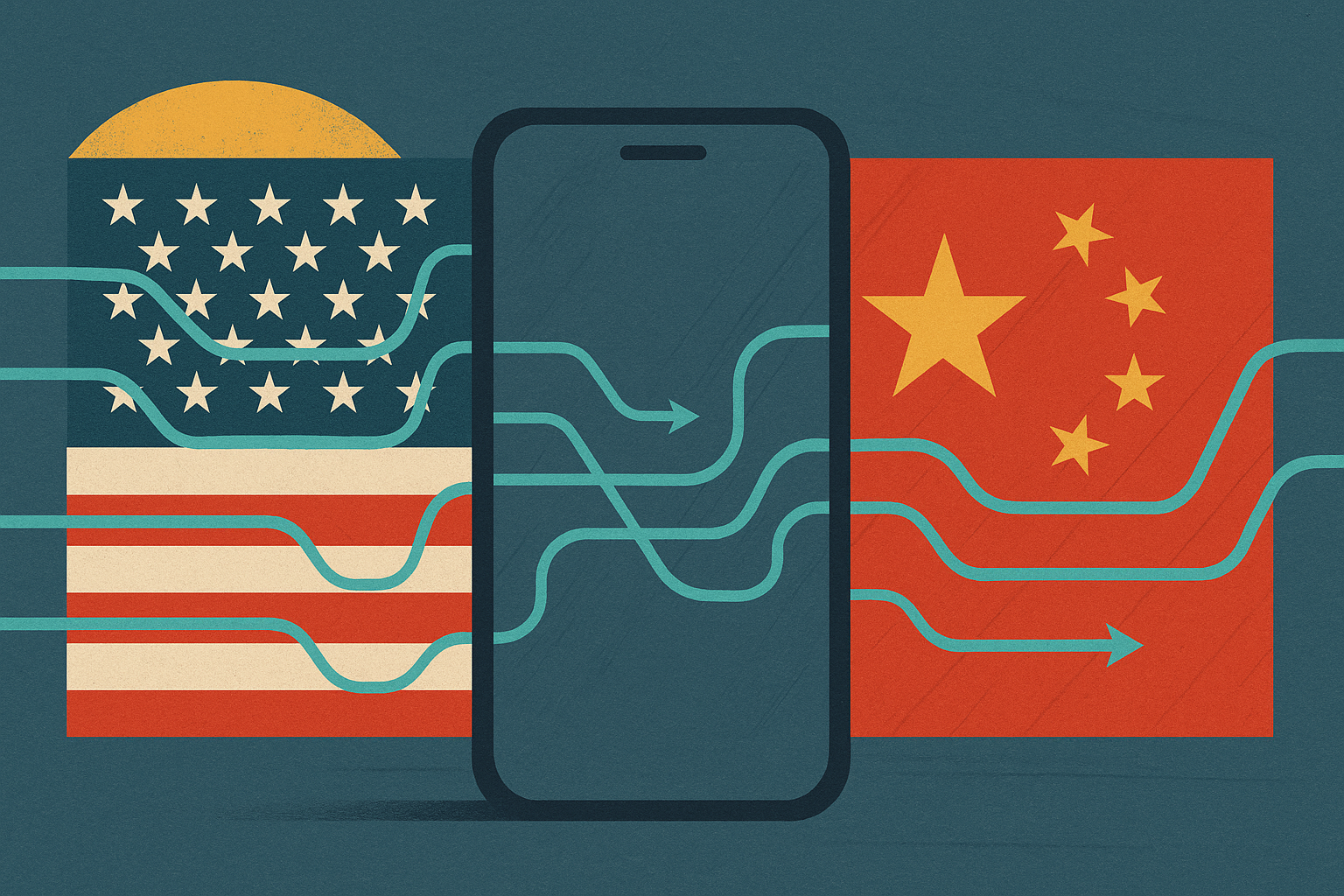
The future of TikTok in the United States appears more stable after Washington and Beijing reached a framework deal to transfer majority ownership of the app’s U.S. business to American investors. But beneath the headline, questions remain over what “U.S. control” will really mean.
The agreement, finalised in Madrid earlier this week, extends ByteDance’s deadline to divest its U.S. operations by 90 days to December 16. It sets out a structure in which U.S.-led investors will hold roughly 80 per cent of TikTok’s U.S. business, while ByteDance retains a non-controlling stake of just under 20 per cent. A U.S.-dominated board will oversee the restructured entity, with reports suggesting Washington could even appoint a representative to monitor operations.
At first glance, the arrangement looks like a decisive step to secure TikTok’s future in America. President Donald Trump had repeatedly threatened to ban the app unless it was separated from Beijing’s influence, citing national security risks. The new framework appears to address those concerns. Yet closer scrutiny suggests that critical issues remain unresolved.
Algorithm and data in the balance —
Foremost among them is TikTok’s recommendation algorithm, widely regarded as the company’s most valuable intellectual property. The algorithm is the engine that drives engagement on the app, tailoring video feeds to user preferences with uncanny precision. It is also the source of Washington’s deepest anxieties. The framework does not make clear whether the algorithm will be fully transferred to the new U.S. entity or remain licensed from ByteDance.
If the latter, it could leave the Chinese parent with indirect leverage over the platform’s operations. Beijing has already signalled that any transfer of algorithmic technology will require regulatory approval, treating it as a sensitive export.
The fate of U.S. user data is another flashpoint. Lawmakers have long argued that ByteDance’s ownership structure exposes 170 million American users to the risk of their information being accessed by Chinese authorities. Previous initiatives, such as Oracle’s “Project Texas”, attempted to ringfence data by storing it on U.S.-based servers under domestic oversight. The new framework hints at similar arrangements but offers little detail on implementation. Until these specifics are clarified, the claim of “U.S. control” will remain contested.
Congressional scrutiny adds further complication. Several lawmakers have already signalled that leaving ByteDance with any stake, however small, undermines the purpose of the divestment. Licensing arrangements for the algorithm could prove especially contentious, inviting accusations that the deal is cosmetic rather than substantive. With technology and national security increasingly intertwined, TikTok’s future will remain a touchstone issue in Washington.
This is not the first time governments have intervened in the structure of foreign-owned technology platforms. India banned TikTok outright in 2020, citing security concerns. The U.S. itself has previously restricted Huawei’s access to American markets and imposed export controls on advanced semiconductors to China. These precedents underline that Washington’s concerns are part of a broader trend: national governments asserting sovereignty over digital infrastructure and data. In that context, TikTok’s case may be less an exception than a model for how future disputes will be managed.
For TikTok’s vast U.S. user base, the Madrid deal offers temporary relief from the threat of a nationwide ban. For advertisers and creators, it reduces immediate uncertainty. But for policymakers, it opens a new chapter rather than closing the book. The unanswered questions—about algorithm ownership, data sovereignty, and political oversight—will determine whether U.S. control of TikTok is meaningful or nominal. With the deadline now pushed to December, the coming months will be decisive in clarifying what control really looks like in practice.