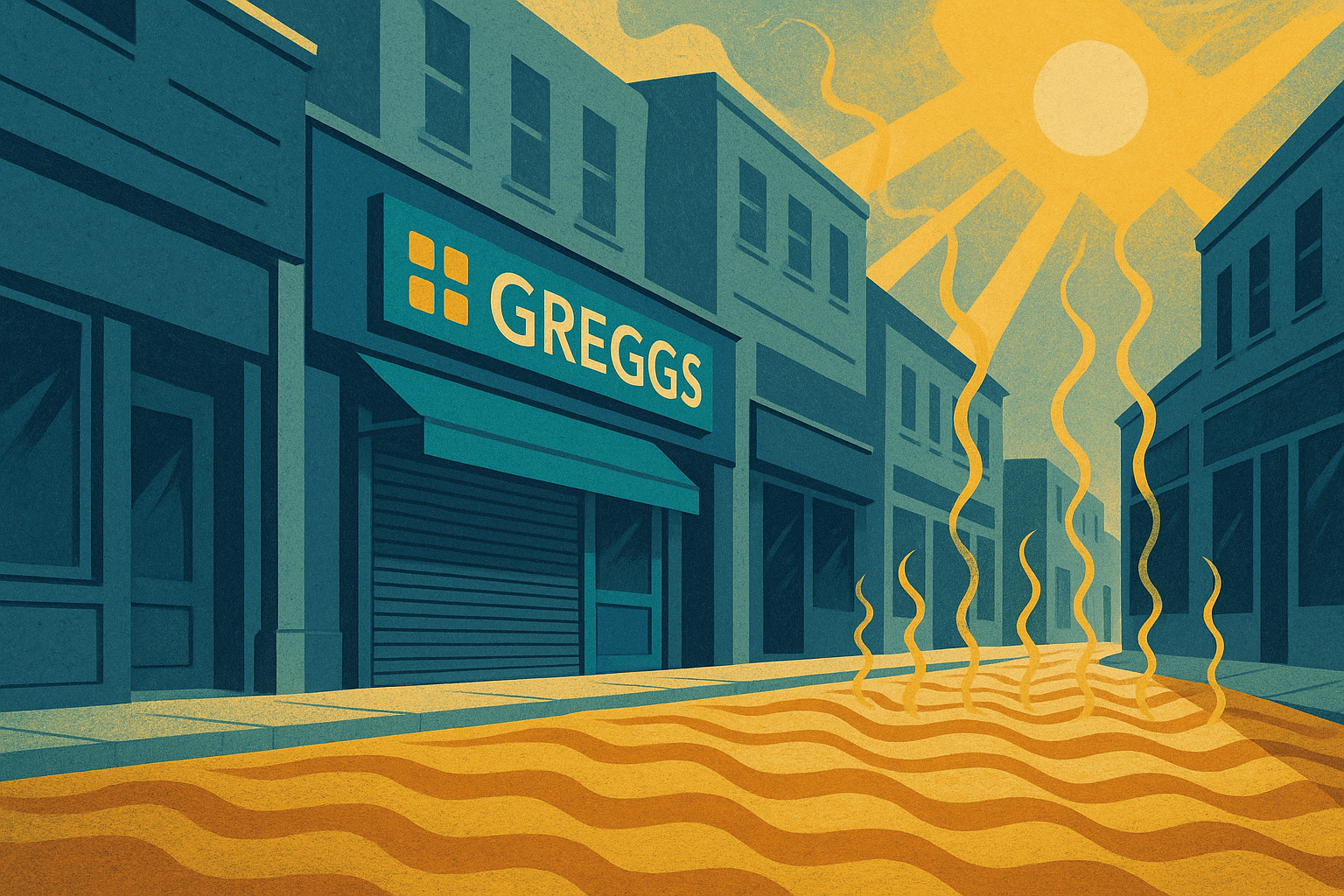
Greggs has cautioned that its full-year profits will fall below last year’s figures after a heatwave in June reduced customer footfall and overall sales, causing the bakery’s shares to drop by over 13% in early Wednesday trading. The company reported a 6.9% increase in total sales to £1.3 billion for the first half of the year, with like-for-like sales rising by just 2.6%. However, momentum slowed in June as record-breaking temperatures in Britain deterred customers from visiting its outlets.
While sales of cold drinks improved during the hot weather, demand for Greggs’ core baked products was weaker than anticipated. Last month was England’s hottest June on record, with average temperatures reaching 16.9°C, the UK’s second hottest since records began in 1884.
In a trading update, the FTSE 250 firm stated: “Very high temperatures reduced overall footfall, leading to a modest shortfall in sales relative to our plan.” Consequently, Greggs now expects its operating profit for 2025 to be “modestly” below last year’s level. The company also highlighted ongoing cost pressures, including wage costs, refurbishment investments, and higher employer national insurance contributions, which are impacting margins.
Despite these challenges, Greggs continues with its store expansion and refurbishment programme, having opened 87 new stores so far this year and aiming for 140 to 150 net openings by year-end. It has completed 108 shop refits in the first half of 2025, with 50 more planned before the year’s end.
Analysts have expressed caution regarding Greggs’ outlook. Panmure Liberum reiterated its ‘sell’ rating and reduced its profit before tax forecast by 8%, citing a slowdown in sales volumes and limited success from new initiatives. Analysts also warned that strategic moves such as evening trading and delivery show limited momentum, and increasing store overlap could hinder the company’s ability to sustain volume growth to counter rising costs.
Greggs has extended late-night trading hours at selected outlets, with some locations now open until 2am, as part of a strategy to attract a broader customer base beyond its traditional breakfast and lunchtime core. Mark Crouch, an analyst at eToro, remarked that the brand might be “feeling the heat, but not in the way it hoped,” noting that its affordability appeal may no longer be sufficient to sustain growth amid a cost-of-living squeeze. “Sure, it’s harder to sell a hot sausage roll in a heatwave,” said Crouch. “But a stretched consumer may be part of the bigger picture.”
Greggs’ share price has fallen nearly 30% year-to-date and is now down 37% from its August 2023 peak, reflecting growing investor concerns over slowing growth and inflationary pressures. The company stated that its cost inflation outlook for the rest of 2025 remains unchanged.