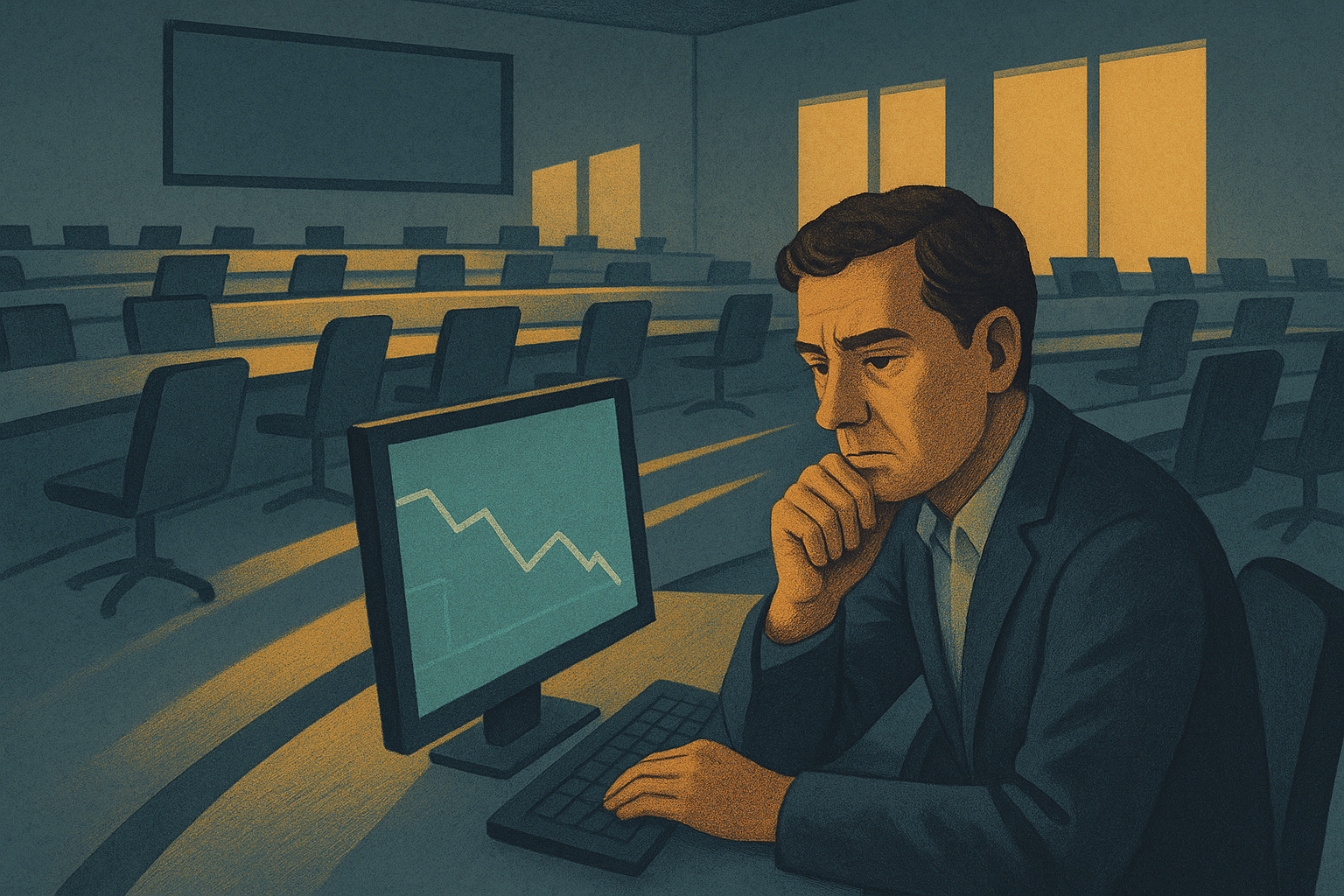
European companies that have embraced artificial intelligence lost significant market value this week, after the introduction of more advanced AI models raised concerns about their competitive position. Shares in SAP, Dassault Systèmes, London Stock Exchange Group (LSEG), Sage, and Capgemini all declined, with some falling more than 6% in just two days.
The sell-off followed the release of OpenAI’s GPT-5 and Anthropic’s Claude for Financial Services — models described by investors as significantly more capable than previous versions. Kunal Kothari, a fund manager at Aviva Investors, told Reuters that each new iteration of GPT or Claude appears “multiple times more capable than the previous generation,” challenging the sustainability of existing business models and highlighting potential disruption to providers like LSEG.
Market data shows the drop was concentrated in AI-linked firms. Between mid-July and mid-August, shares in LSEG, Sage, and Capgemini fell 14.4%, 10.8%, and 12.3% respectively. Over the same period, the FTSE 100 rose 2.5% and the STOXX 600 gained 0.6%, supported by gains in U.S. technology stocks.
Analysts note that the high valuations of European AI-adopter stocks leave them more exposed to negative sentiment. The STOXX 600 trades at an average price-to-earnings ratio of around 17, while SAP alone trades at about 45 — even after its steepest daily drop since late 2020.
Some investors see the decline as a possible buying opportunity, provided these companies can prove their AI strategies deliver measurable earnings growth. Others remain cautious, pointing to uncertainty over how quickly returns will be realised.
The episode has reinforced the challenges of sustaining a competitive advantage in rapidly evolving technology markets, where early adoption is no guarantee of long-term leadership.