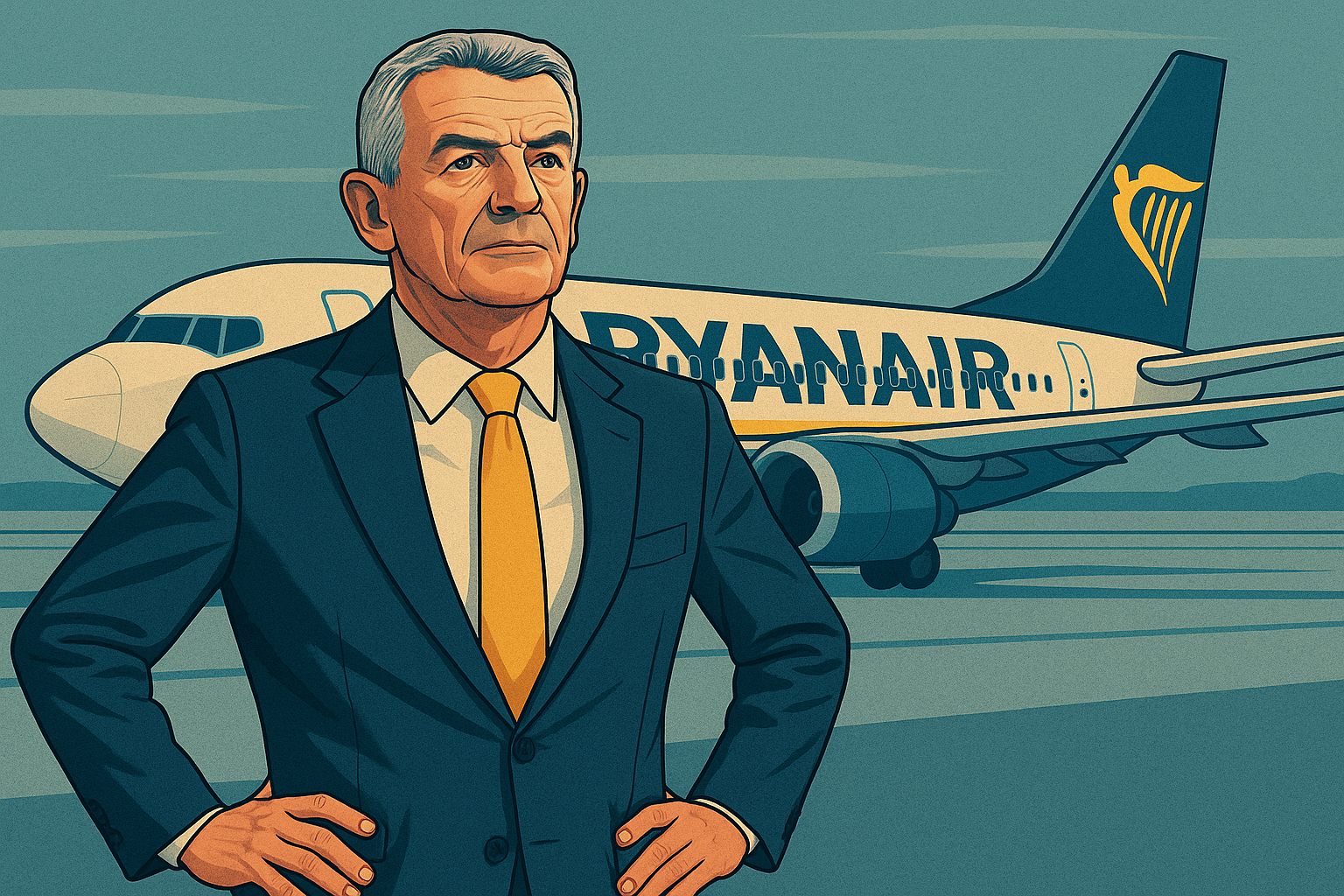
Ryanair CEO Michael O’Leary has strongly criticised Chancellor Rachel Reeves, accusing her tax policies of undermining the UK economy, even as Ryanair reports record half-year profits driven by increased ticket prices and passenger numbers.
During the airline’s results presentation, O’Leary targeted the Labour government for implementing policies that he believes will deter investment and stifle growth. He stated, “Rachel Reeves is on the wrong path. The UK economy is, under the current leadership, doomed. I hold very little faith in Rachel Reeves or the current economic strategy of the Labour government.”
The outspoken Irish executive condemned Labour’s decision to tax wealth and increase air passenger duty (APD), arguing these measures would harm tourism, business, and the broader economy. He remarked, “You are not going to grow the UK economy by taxing wealth or by taxing air travel. You need to reverse those taxes as quickly as possible.”
O’Leary urged Reeves to “learn from her mistakes” and focus on promoting tourism and spending rather than penalising it. He added, “The way to grow is not by increasing entry taxes, which is what APD is. Eventually, even a dumb Labour government will work out that for an island on the periphery of Europe, the way to grow — and the way to increase tax revenue — is to get tourists on to the island first and then tax them.”
When asked whether he thought Reeves might change course, O’Leary bluntly responded, “She’ll f*** it up some more.”
Ryanair’s record results for the six months to September include a 42 per cent profit surge to €2.54 billion, driven by a 13 per cent increase in average ticket prices and strong summer demand. Pre-tax profits rose 40 per cent to €2.89 billion, exceeding market forecasts of €2.5 billion.
Revenue climbed 13 per cent to €9.8 billion, with passenger numbers up 3 per cent to 119 million. The average fare per passenger reached €65, reflecting higher demand and reduced competition in short-haul European travel.
The airline anticipates carrying 207 million passengers by March 2026, an increase from a prior forecast of 206 million, due to strong bookings and early Boeing 737 Max aircraft deliveries. Nearly one-third of Ryanair’s 636-strong fleet now comprises the fuel-efficient Max jets, enabling more cost-effective passenger transport.
Despite slower growth in add-on charges for extras like baggage, which rose just 3 per cent, Ryanair described its performance as “record-breaking” and expects to recover from last year’s 7 per cent decline in fares. “We cautiously expect to recover all of last year’s fare decline, which should lead to reasonable net profit growth for the full year,” the company stated.
O’Leary’s remarks underscore the growing tension between corporate leaders and the Labour government ahead of the November Budget, where Reeves is expected to introduce measures aimed at boosting growth while addressing a £27 billion fiscal gap.
While businesses have praised her focus on stability, several high-profile executives — including Mulberry’s Andrea Baldo and Ryanair’s O’Leary — have warned that Labour’s tax-heavy approach risks deterring investment at a critical moment for the UK economy.
Ryanair’s results highlight the strength of post-pandemic travel demand, but also the sensitivity of airlines to government fiscal policy and fuel costs. With its profits soaring and fleet expansion accelerating, the company is poised for another record year — even as its combative chief executive continues to criticise Westminster.
As O’Leary remarked, “For the UK, you don’t fix a growth problem by taxing the people and industries that drive it.”