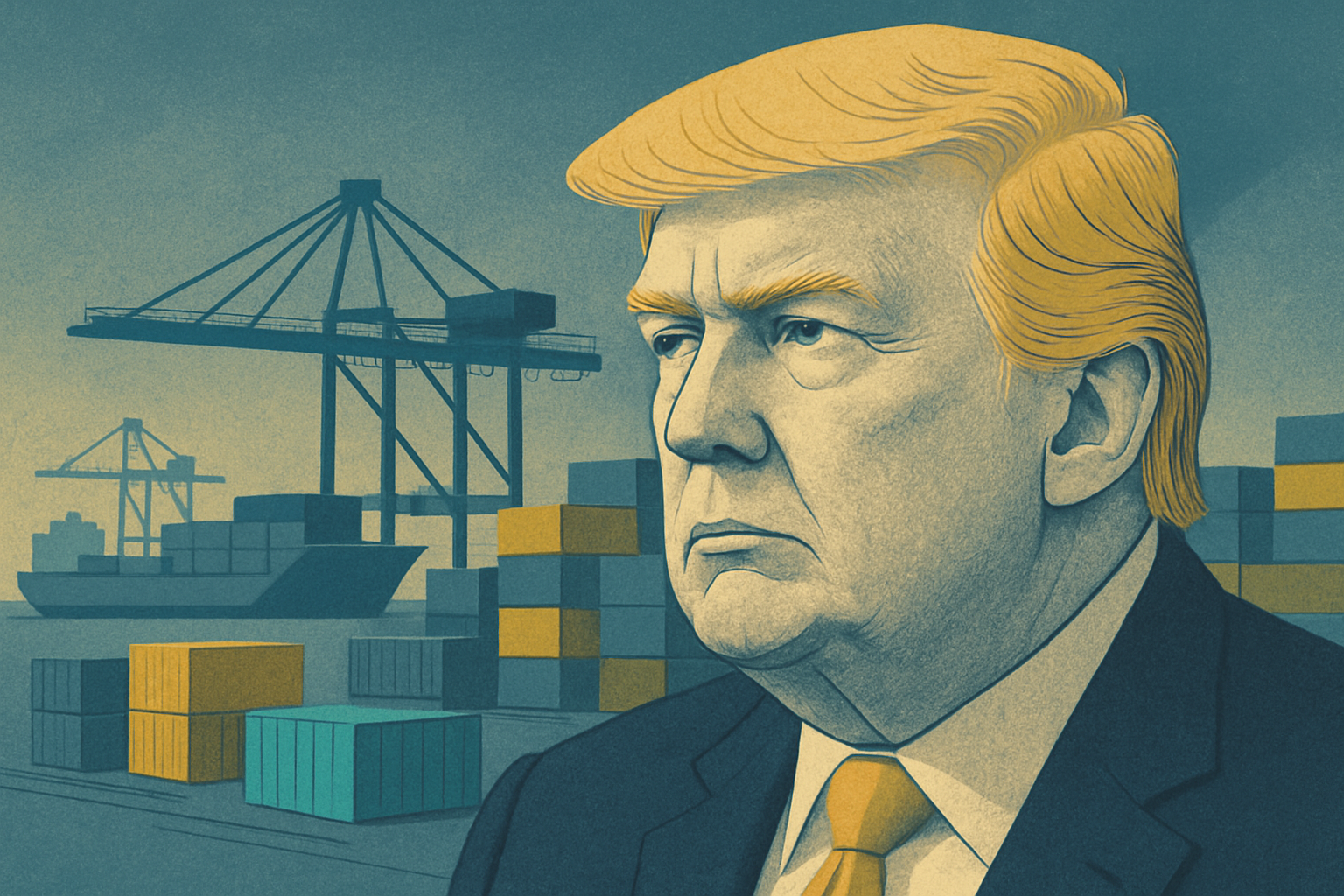
U.S. president Donald Trump renewed his criticism of Federal Reserve Chair Jerome Powell on Tuesday, accusing him of being too slow to cut interest rates as the central bank heads into one of its most uncertain meetings in years.
Speaking at the APEC CEO Summit in Gyeongju, South Korea, Trump mocked Powell as “Jerome ‘Too Late’ Powell,” a jab at what he described as the Fed’s delayed response to slowing economic growth. “We’d be growing a lot faster if the Fed just did its job,” Trump said, predicting U.S. GDP growth of 4 per cent in the first quarter of 2026.
The remarks came as the Federal Reserve prepares to lower its benchmark rate by another 25 basis points — likely bringing it to 3.75–4.00 per cent — at its policy meeting this week. Yet policymakers face a rare blind spot: the ongoing U.S. government shutdown has halted the release of key economic data, leaving the central bank “in a fog,” according to reports from Reuters.
Without official labour and inflation figures, the Fed is relying on private-sector data and anecdotal evidence to guide its decision. Internal debate has sharpened in recent weeks, with some officials warning that inflation — still hovering near 3 per cent — remains too high to justify easing, while others see the risk of a sharper downturn if rates stay elevated.
The combination of political pressure and economic opacity has placed the Fed in a difficult position. Investors overwhelmingly expect a cut this week, with futures markets pricing in a probability above 90 per cent and an additional move in December. However, the timing and tone of Trump’s remarks — alongside renewed speculation over Powell’s future — have amplified market sensitivity to the central bank’s next signal.
The White House has not formally commented on Trump’s latest remarks, but his ongoing attacks have revived concerns about the Fed’s independence. Powell’s term as chair runs until 2026, and while the Federal Reserve traditionally operates at arm’s length from political influence, the president retains the power to appoint its leadership.
Markets reacted cautiously on Tuesday, with the dollar softening slightly against major currencies and Treasury yields edging lower. Equity futures remained flat as investors awaited further clarity from the Federal Open Market Committee’s post-meeting statement.
As policymakers weigh their options, the central question is whether the Fed can navigate this moment without losing credibility. For now, it faces a confluence of economic uncertainty and political scrutiny — a combination that could define the final stretch of Powell’s tenure.