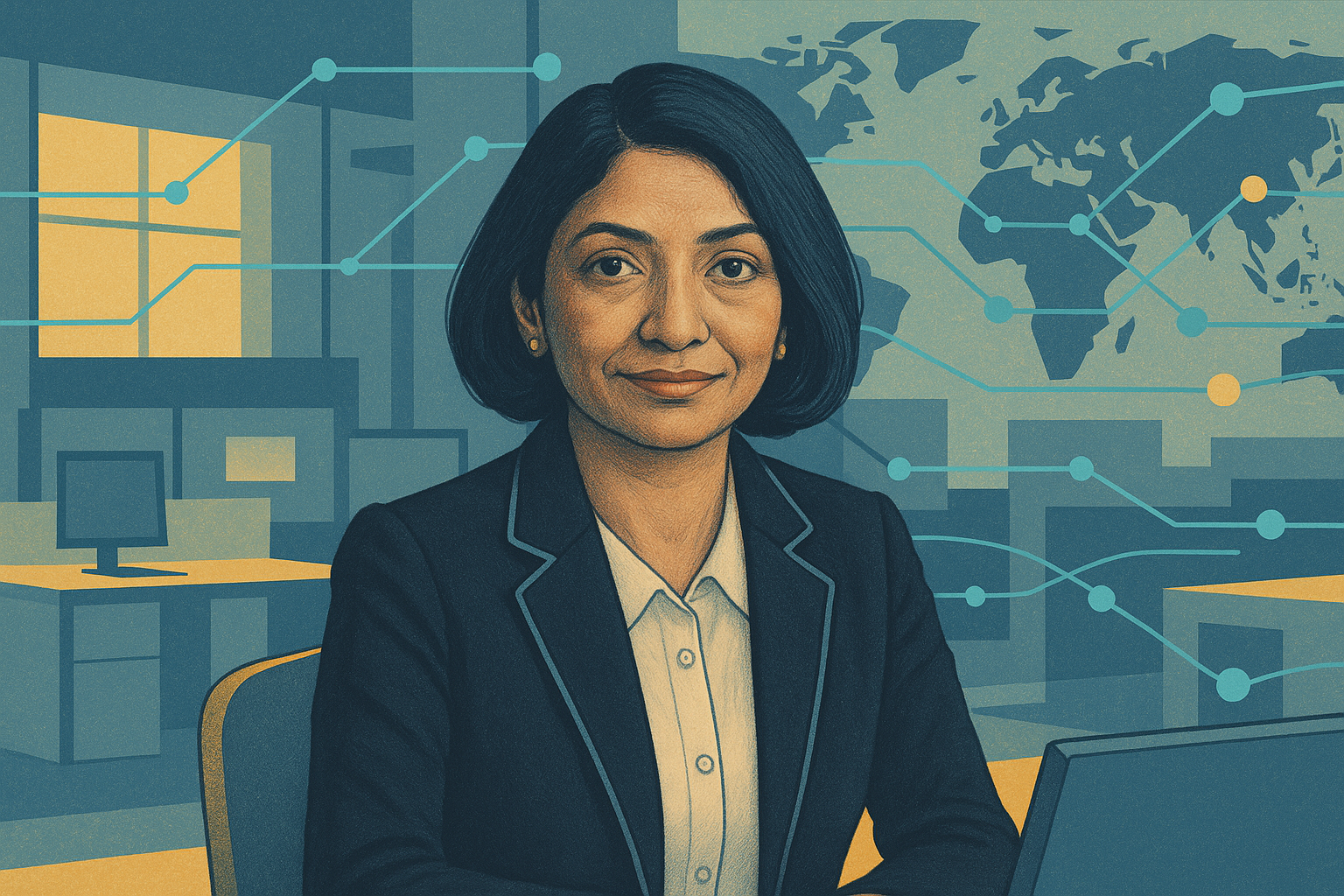
Dr Megha Kumar’s career is defined by a fascination with the lines that connect — and sometimes blur — the worlds of technology, governance, and human behaviour. Now Chief Product Officer and Head of Geopolitical Risk at CyXcel, she stands at the crossroads of these disciplines, helping some of the world’s largest organisations build digital resilience in an environment where risk rarely fits inside a single box.
Kumar’s journey to the upper echelons of digital risk leadership began far from cybersecurity’s front lines. As a historian and journalist, she explored how systems of power and law shape society — and how unintended consequences play out in real lives. “Interdisciplinarity — or connecting the dots between seemingly unconnected themes — has always been fascinating to me,” she says. That perspective remains her hallmark. After a doctorate at Oxford as a Rhodes Scholar, Kumar went on to advise C-suite leaders across Fortune 500 and FTSE 100 companies, working with governments and international bodies from the United Nations to the World Bank.
At CyXcel, Kumar’s approach is grounded in both technical fluency and an insistence that digital risks are never just technical. “The future of AI and digital infrastructure cannot be left to technologists alone,” she explains. “We need interdisciplinary thinkers who can anticipate unintended consequences, scrutinise power dynamics, and design governance frameworks that serve democratic and ethical interests, not just commercial or nationalistic ones.”
Her leadership philosophy is equally shaped by the tension between what can be measured and what must be understood. In CyXcel’s recent research, nearly three in ten UK organisations reported a lack of trust in third-party vendors managing critical digital risks. For Kumar, this is more than a vendor problem. “Organisations are stuck between needing external support and not having enough partners they truly trust. Without stronger internal understanding, risk leaders are flying blind, placing responsibility in the hands of vendors they can’t fully vet.”
That insight comes from years of advising on everything from technology policy and AI regulation to country-level cyber resilience. In her view, complexity isn’t the enemy — opacity is. “What’s needed now is a shift toward integrated intelligence, not just compliance checklists. Businesses must empower their teams to assess threats clearly and select partners confidently.”

Kumar’s work at CyXcel has focused on bridging silos that, until recently, seemed immovable: cyber risk, legal frameworks, and geopolitical analysis. “Today’s digital threats don’t respect traditional silos,” she notes. “A supply chain attack might originate in a hostile jurisdiction, exploit a software vulnerability, and result in regulatory scrutiny or legal liability. By unifying geopolitical intelligence, cyber and tech risk analytics, and legal foresight, our platform enables businesses to make informed, integrated decisions, not just reactive ones.” That philosophy is also reflected in her investment in cross-disciplinary training, building teams that can speak the language of both law and code, risk and strategy.
Asked what drives her, Kumar returns to the questions that shaped her early career — who sets the rules, and how can those rules embed resilience, ethics, and inclusion? She sees the “Accountability Phase” of digital transformation as an opportunity for leaders to step forward, not just react. “Regulators, shareholders, and customers are demanding transparency on how AI is used, how data is secured, and how geopolitical risks are mitigated. Our focus will be on building modular, adaptive risk governance frameworks that can scale and serve a wide sectoral cohort for smaller and larger organisations.”
For Kumar, the journey is not just about outpacing the next cyber threat, but about shaping the systems that govern technology for the better. The risks — from escalating geopolitical tensions to the misuse of AI — are significant. But so, she believes, are the opportunities: “Smarter risk models, automated compliance, and a more transparent, inclusive digital economy.”
In a field where answers are rarely final, Kumar’s leadership stands out for its commitment to clarity, connection, and a curiosity that never quite switches off.