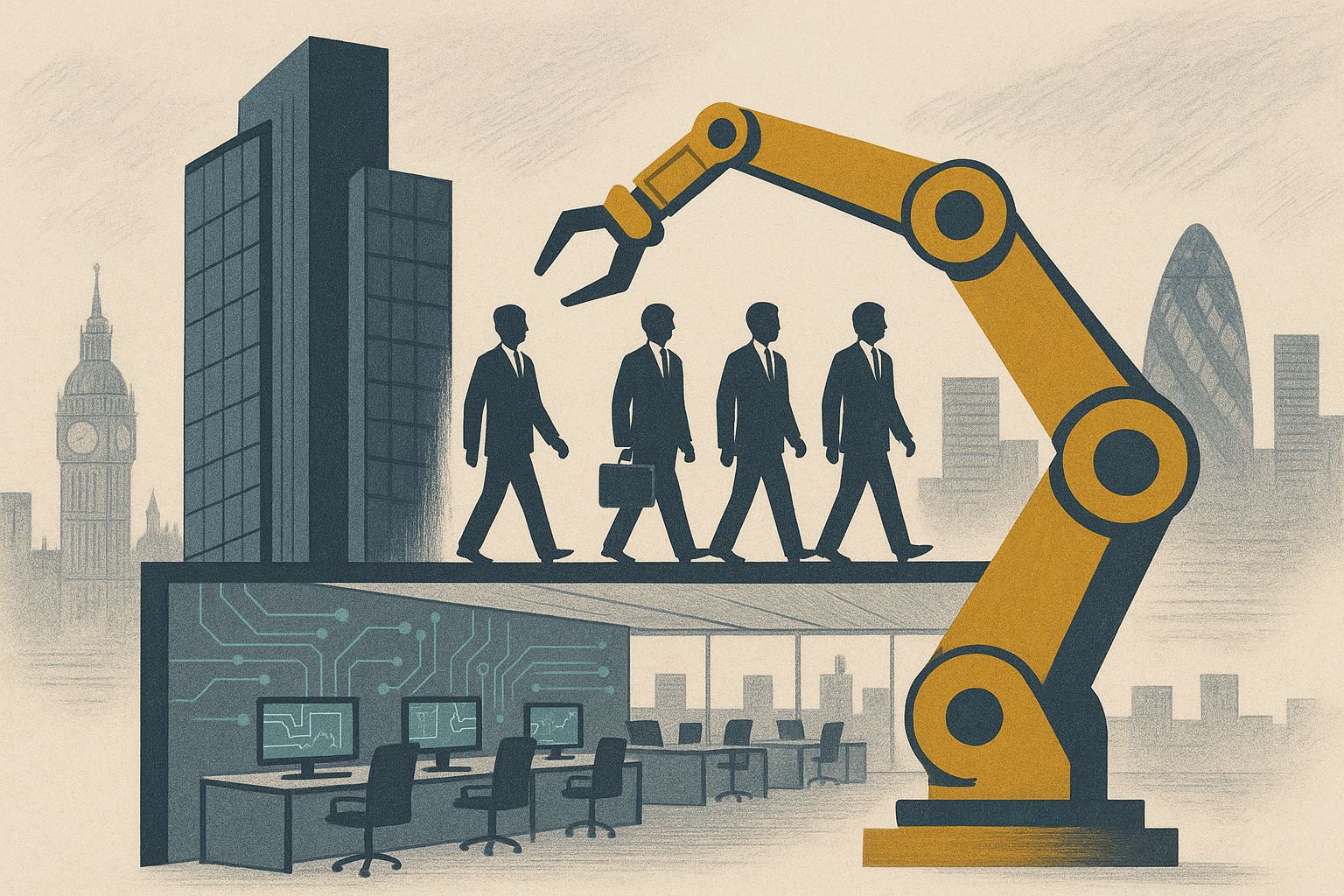
The UK’s Big Four accountancy firms — Deloitte, EY, KPMG, and PwC — have significantly reduced graduate recruitment and early-career roles as artificial intelligence increasingly automates tasks traditionally assigned to school-leavers and university graduates. Together, these firms employ approximately 100,000 staff across the UK and have scaled back their graduate and school leaver intake over the past two years, with some reducing hiring by nearly a third.
KPMG has made the most substantial cuts, reducing its graduate cohort from 1,399 in 2023 to 942, marking a 33 per cent reduction. Deloitte has decreased its scheme by 18 per cent, while EY and PwC have cut theirs by 11 and 6 per cent, respectively.
This decline in hiring is driven by an industry-wide shift towards cost-cutting, as firms strive to maintain seven-figure partner payouts amid a post-Covid slump in consulting and tighter client budgets. Increasingly, these reductions are facilitated by generative AI tools like ChatGPT, which can automate tasks that were once a training ground for junior analysts. “The Big Four are looking at AI very seriously to replicate junior work more cost-effectively,” said James O’Dowd, managing partner at executive search firm Patrick Morgan.
In tandem with AI expansion, all four firms are intensifying their offshoring efforts, relocating work to lower-cost locations such as India, Malaysia, and the Philippines, further diminishing the traditional pipeline for UK-based entry-level roles. Job listings in the sector reflect this trend, with graduate job adverts in accountancy dropping 44 per cent year-on-year, significantly outpacing the wider downturn in graduate vacancies.
Despite reducing recruitment, the Big Four are striving to lead in the AI economy. Deloitte, PwC, and EY are now developing AI assurance services — tools that audit and validate the performance, safety, and bias levels of AI models. Deloitte audit partner Richard Tedder described AI assurance as “critical to adoption,” while PwC is reportedly close to launching its own service.
This move aligns with broader ambitions to position the UK as a global AI hub. Government data suggests that AI could contribute £200 billion to the UK economy, with SME adoption alone potentially adding £78 billion over the next decade. However, challenges remain, particularly regarding public confidence. KPMG’s research indicates that only 42 per cent of UK adults currently trust AI, and nearly three-quarters report having no formal training in it.
As firms pivot to capitalise on the AI boom, many in the graduate job market are left questioning the future of roles. While AI creates opportunities in some areas, it is swiftly eliminating others, especially at the entry-level. With fewer initial job opportunities and increasing automation, a critical question arises: if AI is replacing entry-level positions, where will the next generation of partners emerge from?