
Energy risk is not a fresh boardroom discovery. Executives have spent the past several years relearning that lesson through pandemic disruption, the Ukraine war, Europe’s power shock, and repeated warnings about critical infrastructure. What the latest Middle East escalation has done is alter the route by which that risk enters the business. Brent settled at $112.19 a barrel on Friday, its highest level since July 2022, after Washington and Tehran exchanged threats over the Strait of Hormuz and Gulf energy infrastructure. Iran has also threatened desalination and energy systems in neighbouring states if US strikes hit Iranian power plants.
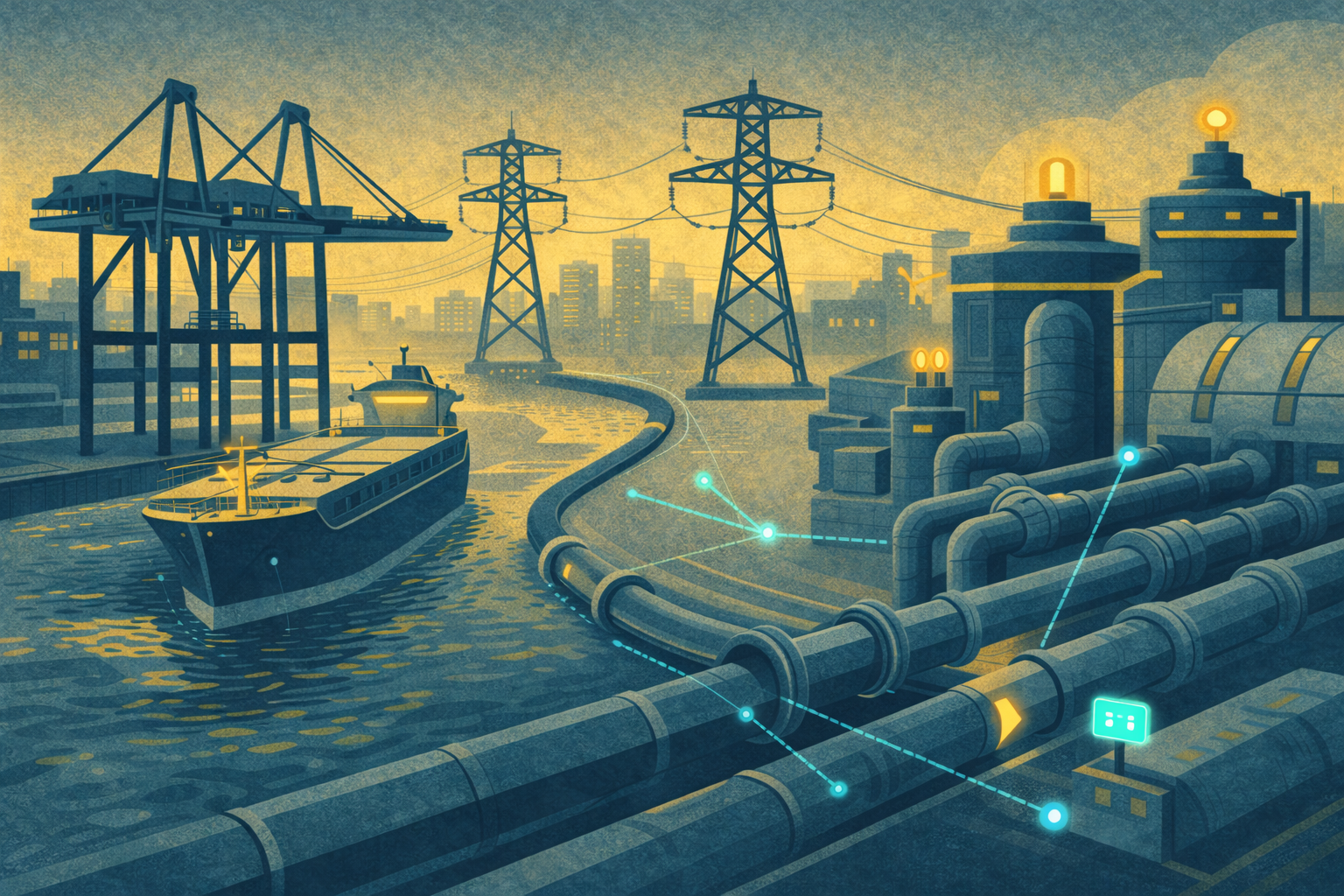
That shift matters because this phase of disruption is not only about the price of crude. It is about the interdependence of energy, water, shipping, and industrial continuity. The threat picture now extends beyond exports and refineries to desalination plants, transmission networks, marine insurance, and transport corridors. When those systems sit inside the same crisis map, the consequences spread faster across supply chains than a standard commodity shock would suggest.
For companies outside the energy sector, that changes the emphasis of contingency planning. The last major energy shock was widely experienced as a pricing crisis — a story of hedging, procurement, and inflation. This one has a more physical edge. A manufacturer may first feel the disruption through inputs, a retailer through freight costs, an airline through fuel, and a lender through renewed inflation pressure and rate volatility. The problem is not merely that energy is expensive. It is that infrastructure stress compounds across systems.
That wider stress is already visible in the tone around CERAWeek in Houston. Saudi Aramco chief Amin Nasser withdrew from the event to remain in Saudi Arabia as the crisis deepened, a notable signal at a conference where Gulf producers usually set the tone for global energy conversations. Other senior regional figures have scaled back travel or shifted to virtual participation as attacks and counter-threats continue to reverberate through the market.
The practical implication is that scenario planning needs to move beyond the commodity chart. A risk committee that looks only at the oil price is likely to miss the more awkward questions. What happens to outbound logistics if a port remains open but insurers retreat? Which suppliers rely on facilities in vulnerable corridors? How much working capital is tied up in longer shipping cycles or emergency inventory? Which customer contracts can absorb transport surcharges, and which cannot? Those are not theoretical exercises. They sit close to cash flow. The Strait of Hormuz remains central to this assessment, carrying roughly a fifth of global oil flows, while the current disruption has already removed an estimated 440 million barrels from the market over 22 days.
The communications challenge is just as important. Staff do not need another round of vague assurances about the situation being monitored. They need clarity about exposure, decision rights, and thresholds for action. Investors need to know whether management understands the difference between a temporary spike and a systems problem. Customers need early notice when delivery assumptions change. The most effective crisis communication in this environment is specific, measured, and operational. It does not perform calmness. It shows command of the facts that matter.
There is also a temptation, especially during a fast-moving geopolitical crisis, to sort risks into neat categories — energy over here, supply chain over there, treasury somewhere else. This moment argues against that. Restoring disrupted Gulf supplies could take up to six months, while higher energy prices are already feeding through to inflation expectations and transport costs. A threat to one corridor can move quickly from the commodity market to freight, financing, and consumer pricing.
That is why the real lesson is less dramatic than many headlines suggest. Energy has long been a boardroom issue. What changes from crisis to crisis is the fault line. This time, the exposed points are not limited to barrels and benchmarks. They sit in the connective tissue — water, wires, ports, insurance, and timing. Companies that treat those links as part of the same risk map will be better placed than those still reading the problem as a fuel bill.



You must be logged in to post a comment.