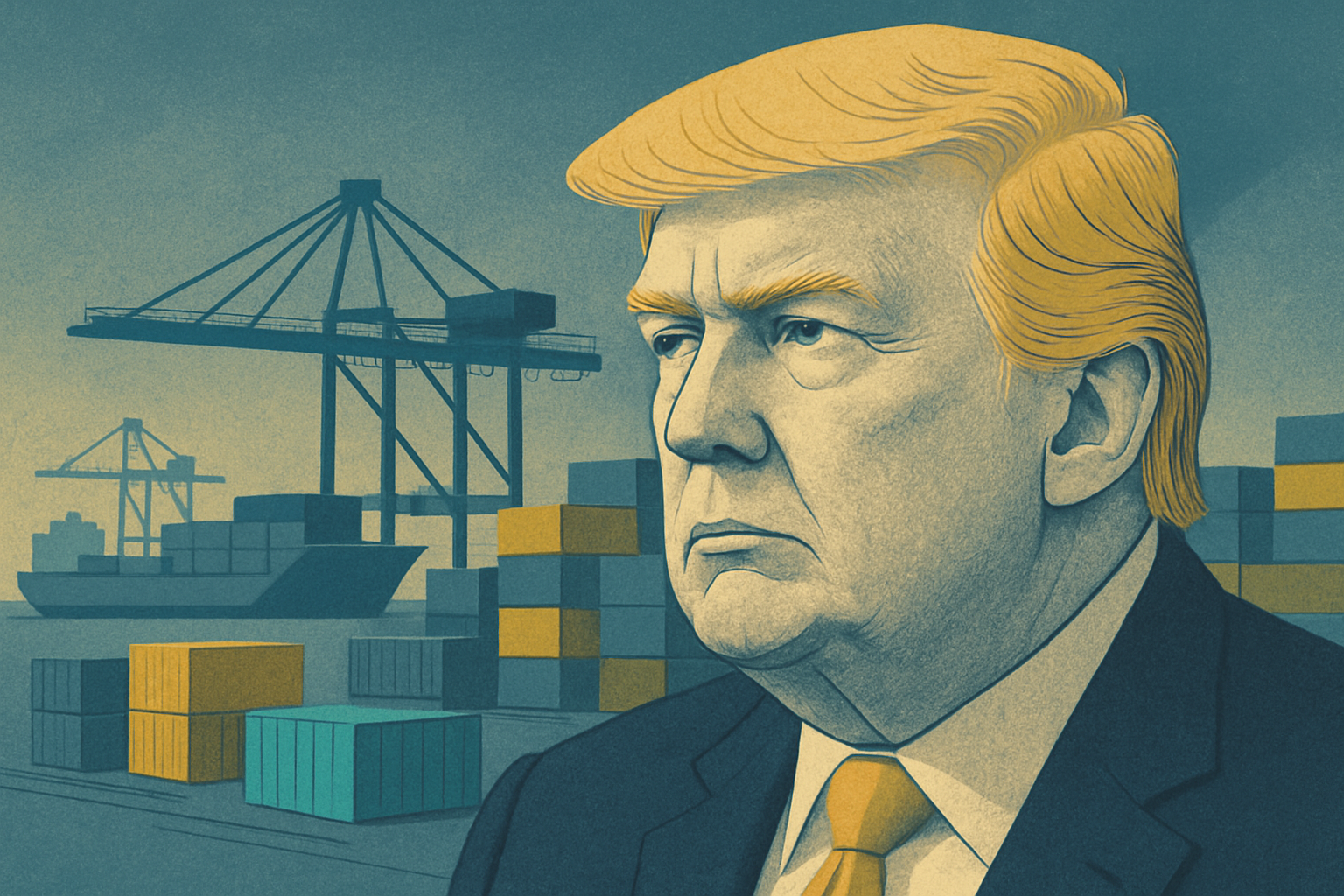
U.S. President Donald Trump has announced that any nation conducting business with Iran will face a 25% tariff on trade with the United States, in a move that could reshape global supply chains and reignite trade tensions with major partners.
The declaration, issued on Truth Social rather than through formal policy channels, came as protests continued across Iran and Washington sought to intensify pressure on Tehran. “Effective immediately, any country doing business with the Islamic Republic of Iran will pay a tariff of 25% on any and all business being done with the United States of America,” Trump wrote on Monday.
No executive order or legal directive accompanied the statement, leaving officials and markets uncertain about its scope and enforcement. The U.S. Trade Representative’s office has yet to release implementation guidance, and no timeline has been published for how the tariffs would be assessed or collected.
The policy, if enacted, would affect several of the world’s largest economies. China, India, Turkey, and Germany remain among Iran’s principal trading partners, with Beijing accounting for an estimated 80% of Iranian crude exports last year. India maintains active trade across sectors from chemicals to agriculture. Both nations now face pressure to recalibrate their commercial ties to avoid disruption to U.S. access and investment.
China’s Ministry of Commerce criticised the announcement as unilateral and coercive, urging Washington to “refrain from politicising economic cooperation.” Japan and South Korea have said they are monitoring developments closely.
Markets reacted cautiously, with Brent crude edging up amid concerns that tighter sanctions could constrain global oil supply. Analysts noted parallels to the 2018 re-imposition of U.S. sanctions on Iran, which triggered a similar wave of compliance reviews across international banks and shipping companies.
For multinational businesses, the proposed tariff raises practical questions about compliance risk, contract exposure, and supply chain continuity. Tariffs of this nature are typically collected at U.S. ports of entry, meaning that even indirect connections to Iran could expose importers to penalties.
Energy analysts warn that refiners in Asia — particularly those blending Iranian oil through intermediaries — may be forced to seek alternative suppliers, potentially driving short-term price volatility. U.S. manufacturing and logistics networks could also face cost increases if enforcement sweeps in intermediated goods assembled in third countries.
Economists have noted that the announcement reflects Trump’s broader use of trade policy as an instrument of geopolitical leverage. While tariffs have long served as a domestic economic tool, they are increasingly being deployed to achieve foreign policy objectives, particularly where traditional sanctions regimes have failed to deter adversaries.
Legal experts caution that the White House may lack clear statutory authority to impose tariffs of this scope without congressional approval or a national emergency declaration. Challenges to Trump’s previous tariff initiatives remain before the Supreme Court, creating further uncertainty about enforceability.
For now, global businesses are taking a wait-and-see approach. With no formal mechanism yet published, the practical impact of Trump’s declaration remains untested — but the diplomatic and market reverberations have already begun.