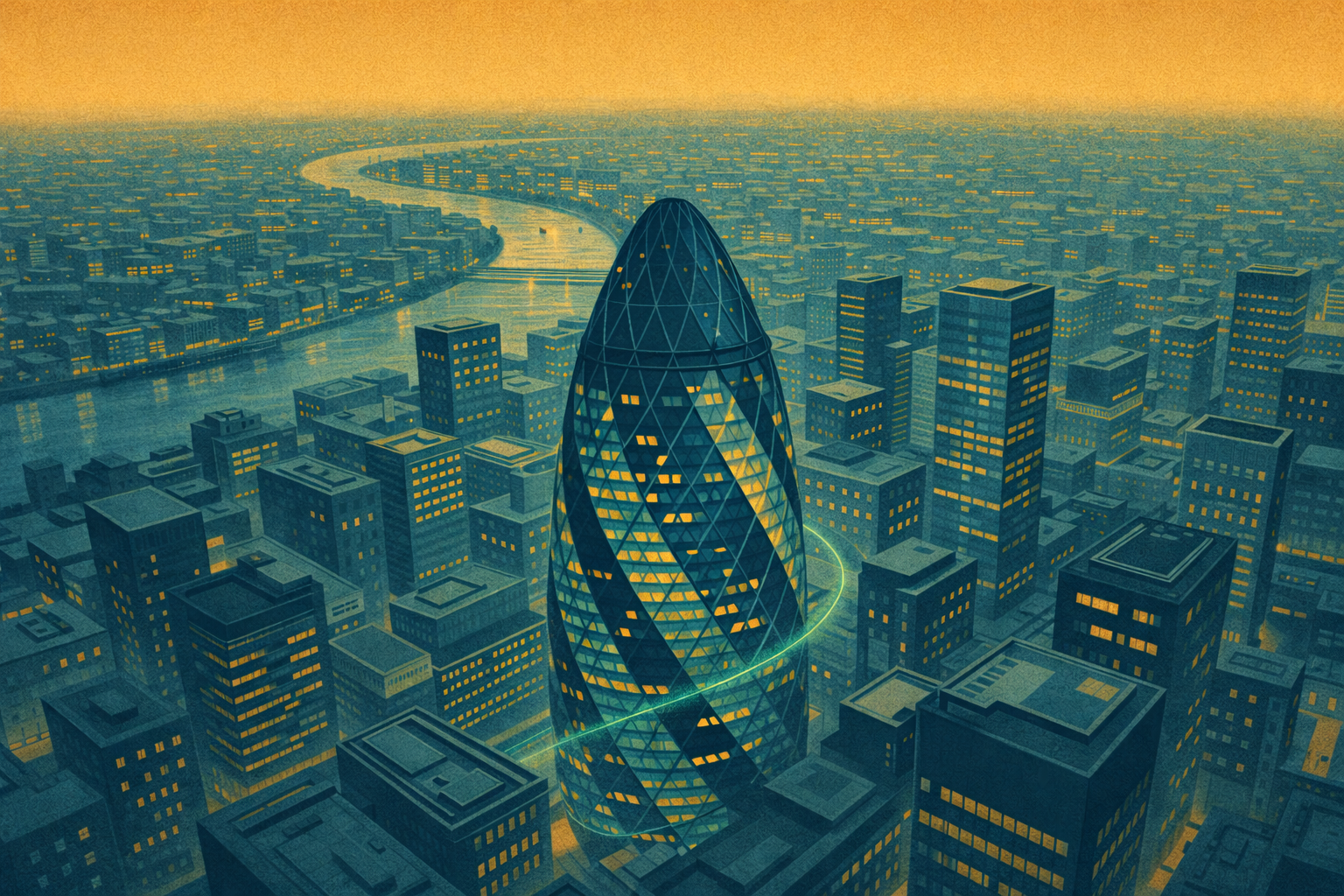
2026 will not be the year of flying cars or techno-utopian daydreams. It will be the year of grown-up innovation. A shift from spectacle to substance. From performative sustainability to pragmatic regeneration. From business as theatre to business as infrastructure. The world is moving too fast, and breaking too visibly, for anything less.
What follows is not a list of trends. It is a set of fault lines that will define how companies survive, how capital flows, and how culture decides what it values next.
Civilisational prototyping becomes a global mandate —
The world is no longer content with abstract climate pledges. In 2026, companies will be judged by the prototypes they build to keep civilisation functioning. Concrete that absorbs carbon rather than emits it. Buildings that breathe. Food grown without stripping soil. Local energy loops. Adaptive logistics.
This is not the territory of futurists. It becomes the baseline expectation of serious businesses. Investors stop funding talk and start funding prototypes that look suspiciously like tomorrow’s essential services. Innovation becomes civic, not cosmetic.
Cognitive design takes the wheel —
Craft is not dying; it is evolving. The next era combines the human hand with the machine mind.
Artisans will shape materials and experiences with the intuition of centuries, while cognitive systems do the heavy lifting behind the scenes: optimising carbon pathways, simulating supply chain stress, predicting failure points, and refining materials at the molecular level.
The premium shifts from nostalgia to intelligence. The signature of 2026 is not handmade. It is hand-and-mind-made; Human instinct guided by computational foresight.
Contextual intelligence overtakes AI —
AI becomes background infrastructure, not the headline act. The competitive edge moves from brute processing power to contextual intelligence: systems that understand nuance, culture, geography, psychology, and ecological constraints.
Companies that build dumb AI will collapse under their own hype. Companies that build intelligent context engines will redefine entire sectors: localised agriculture that adapts to microclimates, energy systems that self-optimise, logistics that behave like living organisms.
The question for leaders becomes simple. Does your AI know the world it is acting in? If not, it is not intelligent.
Time becomes the ultimate consumer currency —
The rarest luxury becomes the simplest: time without friction.
In 2026, the most successful businesses will be those that give people back hours, not objects. AI-run admin. Seamless logistics. Homes that run themselves. Workflows that eliminate pointless noise.
Aspirational living becomes unburdened living. The brands that return time to people become more valuable than the brands that give them things. Efficiency becomes existential.
The valley of green death —
Across sectors, the corporate landscape begins to shake itself out.
2026 becomes the first real wave of businesses failing because they cannot answer a basic question: why does your company deserve to exist in a world that is burning?
Planetary indifference becomes a strategic liability. Regulation tightens. Insurance costs rise. Supply chains buckle. Consumers turn away not for ethical reasons, but because irresponsibility looks stupid.
Companies without a planetary thesis will not be punished. They will be ignored.
Regeneration becomes the primary metric of performance —
Sustainability is no longer a competitive edge. It is expected. Regeneration becomes the differentiator.
People ask: what did this business fix. Investors ask: what natural capital did this product create. Governments ask: what did this company restore that would otherwise collapse.
Regenerative metrics enter dashboards. Product packaging carries ecological impact tags as casually as nutrition labels. A new era begins where repair, restoration, and net benefit determine cultural relevance.
Capital swings toward the infrastructure of continuity —
In 2026, investment finally aligns with reality. Capital shifts away from dopamine apps and overhyped consumer tech, and moves into the hard, unglamorous backbone of civilisation.
- Decarbonised materials.
- Hydrogen networks.
- Closed-loop manufacturing.
- Precision fermentation.
- Agricultural autonomy.
- Resilient microgrids.
- Self-healing infrastructure.
The next unicorns are not software platforms. They are survival platforms. The quiet giants of 2026 are engineers, agronomists, and systems designers.
Behaviour becomes the biggest market —
The businesses that dominate 2026 are those that successfully change behaviour at scale. Diet. Mobility. Consumption. Energy use. Finance.
Not through shame. Not through moral theatre. Through design.
Smooth. Intuitive. Unavoidable. Behaviour change as a service.
This becomes the foundational business model of the decade: the companies that shift how millions of people live each day, without them noticing, inherit the future.
What 2026 ultimately signals —
These predictions do not describe a sci-fi horizon. They describe a world running out of excuses.
A world that knows performance without planetary alignment is failure.
A world that expects intelligence, not complexity.
A world that values time over possessions.
A world that elevates ideas above objects.
A world that rewards businesses not for extracting value, but for creating it.
2026 will be the year humanity begins designing its second chance. Not with optimism. Not with doom. With competence.

Cyrus Vantoch-Wood is Founder at Insurgent.