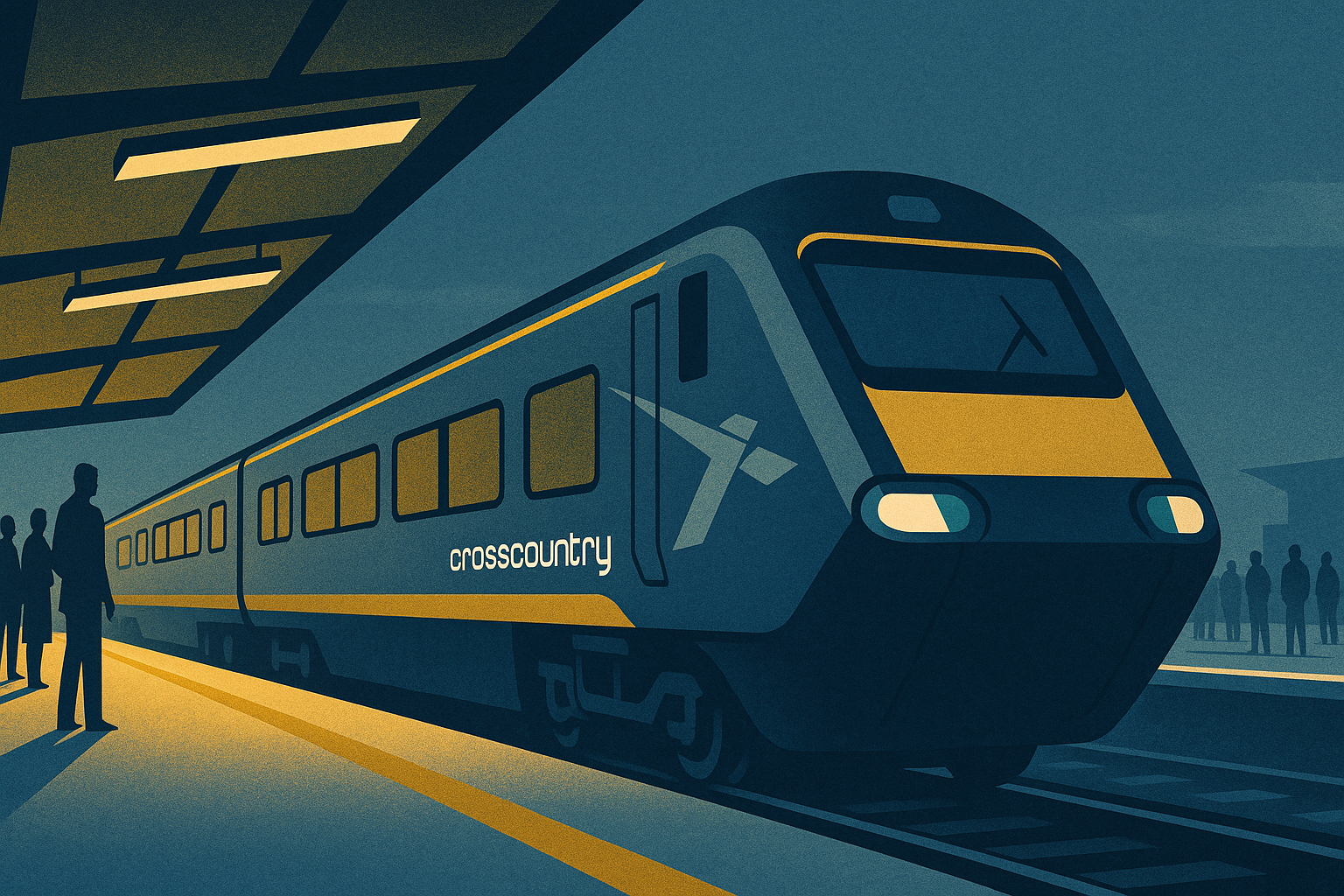
Train drivers at CrossCountry have voted overwhelmingly for industrial action in a dispute over the company’s handling of grievance and disciplinary processes. The Aslef union confirmed that members will stage a strike on Friday, 3 October, following a ban on non-contractual overtime from Sunday, 21 September.
Of the 632 drivers balloted, nine in ten supported strike action, with 96 per cent also backing other forms of industrial action. Turnout in the vote reached 83 per cent.
Union leaders say the dispute stems from management’s repeated failure to uphold agreements and procedures negotiated with staff. Andy Hourigan, Aslef’s lead officer at CrossCountry, said the company “constantly breaks agreements, arrangements, and procedures” and accused managers of misusing disciplinary processes.
Aslef general secretary Mick Whelan added: “We only walk out when we have been pushed too far by a belligerent management.”
CrossCountry, operated by Arriva UK Trains, runs long-distance services linking the Midlands, South West, Wales, North East and Scotland. A strike on a Friday — one of the busiest travel days of the week — is expected to cause significant disruption across the network, with most services likely to be cancelled.
Managing director Shiona Rolfe said the operator was “disappointed for passengers” but remained open to talks: “We remain committed to reaching an agreement with Aslef that avoids disruption for passengers.”
The action comes less than a year after Britain’s rail unions ended a two-year national standoff over pay. In September 2024, Aslef members accepted a three-year, 15 per cent pay deal, which drew a line under a prolonged period of strikes across the sector. While the settlement addressed pay, today’s dispute at CrossCountry highlights ongoing tensions over workplace procedures and trust between drivers and management.
With negotiations still possible, the outcome will depend on whether the company and union can resolve differences before the strike date. Until then, passengers planning long-distance travel face uncertainty, with overtime bans already threatening to reduce service levels from late September.