
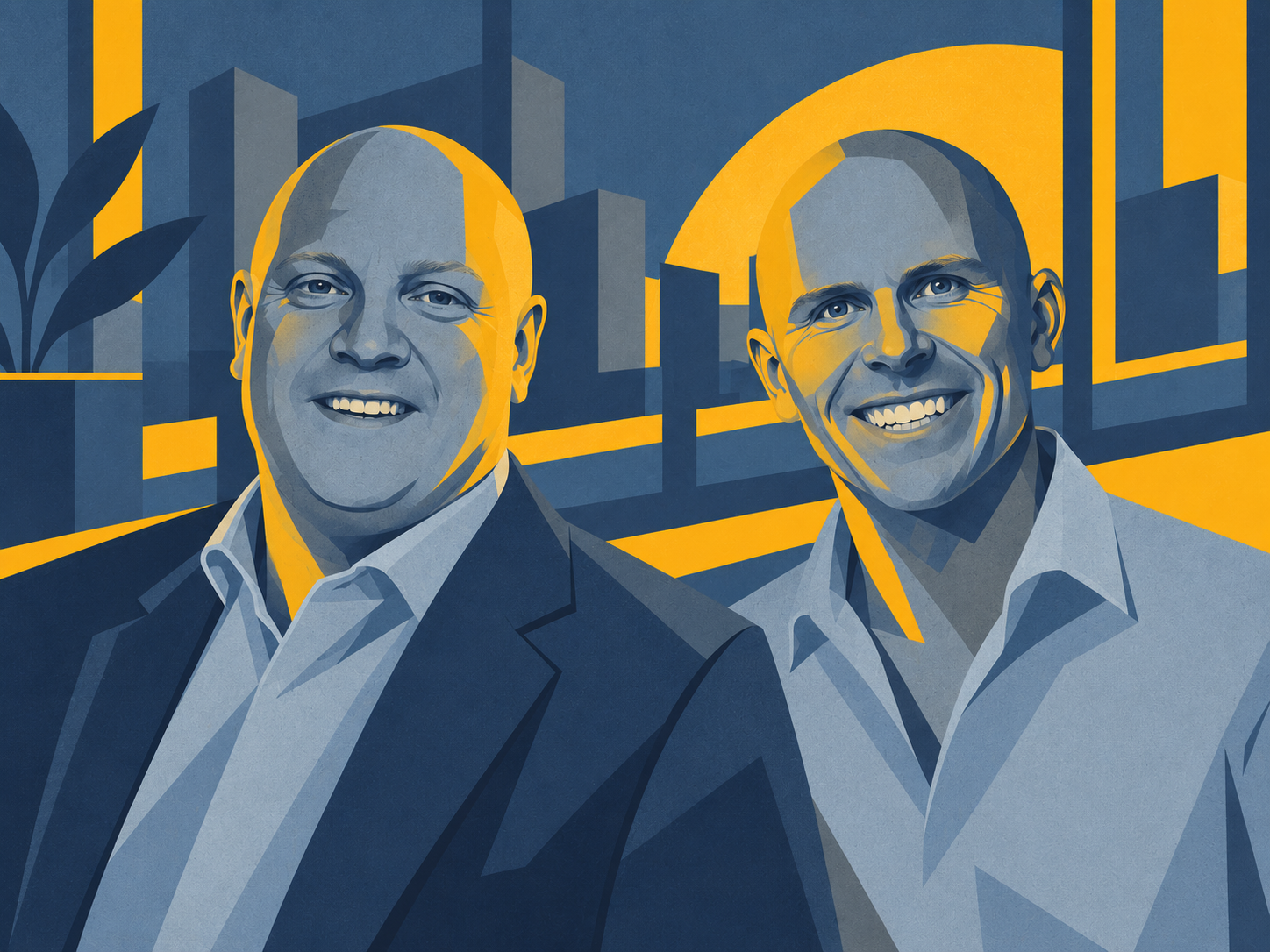
Teciem has appointed Stefano Maestri as chief technology officer and Strath Lanyon as chief customer officer as the financial software company builds its leadership team following its separation from Finastra.
Both executives will be based in London and report to chief executive Wissam Khoury. Maestri will lead global engineering and platform strategy, while Lanyon will oversee customer success, adoption, and client partnerships.
The appointments come during Teciem’s first year as an independent company after funds advised by Apax Partners acquired Finastra’s Treasury and Capital Markets business.
Khoury said: “Following the launch of Teciem just over six months ago, we are continuing to grow our leadership team and reshape the future of treasury and capital markets technology.”
Teciem entered the market with more than 340 financial-institution customers and around 1,300 employees. Its portfolio includes established treasury and capital-markets systems such as Kondor, Summit, Opics, Sophis, and Arc.
Those platforms operate inside environments where banks rely on long-lived systems for trading, liquidity management, risk, compliance, and settlement while simultaneously seeking faster upgrades, cloud deployment, APIs, automation, and AI capabilities.
Maestri will be responsible for global engineering, platform strategy, product innovation, cloud and AI development, security, resilience, and scalability.
His appointment puts those priorities under a single technology function at a point when financial institutions are trying to modernise core systems without creating additional operational risk.
Lanyon’s role addresses the other side of that process. Treasury and capital-markets software can sit deep inside a bank’s operating model, meaning adoption frequently involves data migration, integration, regulatory assurance, process redesign, and training rather than a straightforward software installation.
Customer-success teams are consequently becoming more closely connected with transformation programmes. Suppliers are increasingly expected to demonstrate that customers are using new capabilities and achieving operating improvements rather than simply delivering software licences.
Teciem’s independence gives it a more concentrated product remit than it had as one business within Finastra. Apax said when the company launched that additional investment would support products, technology, and talent.
The installed base gives Teciem scale but also creates constraints. Banks can be reluctant to replace systems that already support critical trading and risk processes, while older technology can become costly to operate and difficult to connect with newer data and automation platforms.
Cloud migration has therefore tended to progress at different speeds across financial institutions. Some workloads can move relatively quickly, while latency-sensitive, highly customised, or heavily regulated systems require more complex transition plans.
AI adds another layer to the modernisation agenda. Treasury and markets teams are examining automation in analytics, development, operations, and decision support, but the underlying systems contain commercially sensitive data and support transactions requiring strict controls.
Teciem’s latest appointments put technology development and customer adoption alongside each other within the post-carve-out leadership structure. The company’s next phase will depend on whether it can modernise mature products while maintaining the reliability expected by institutions that use them for mission-critical financial activity.

You must be logged in to post a comment.