
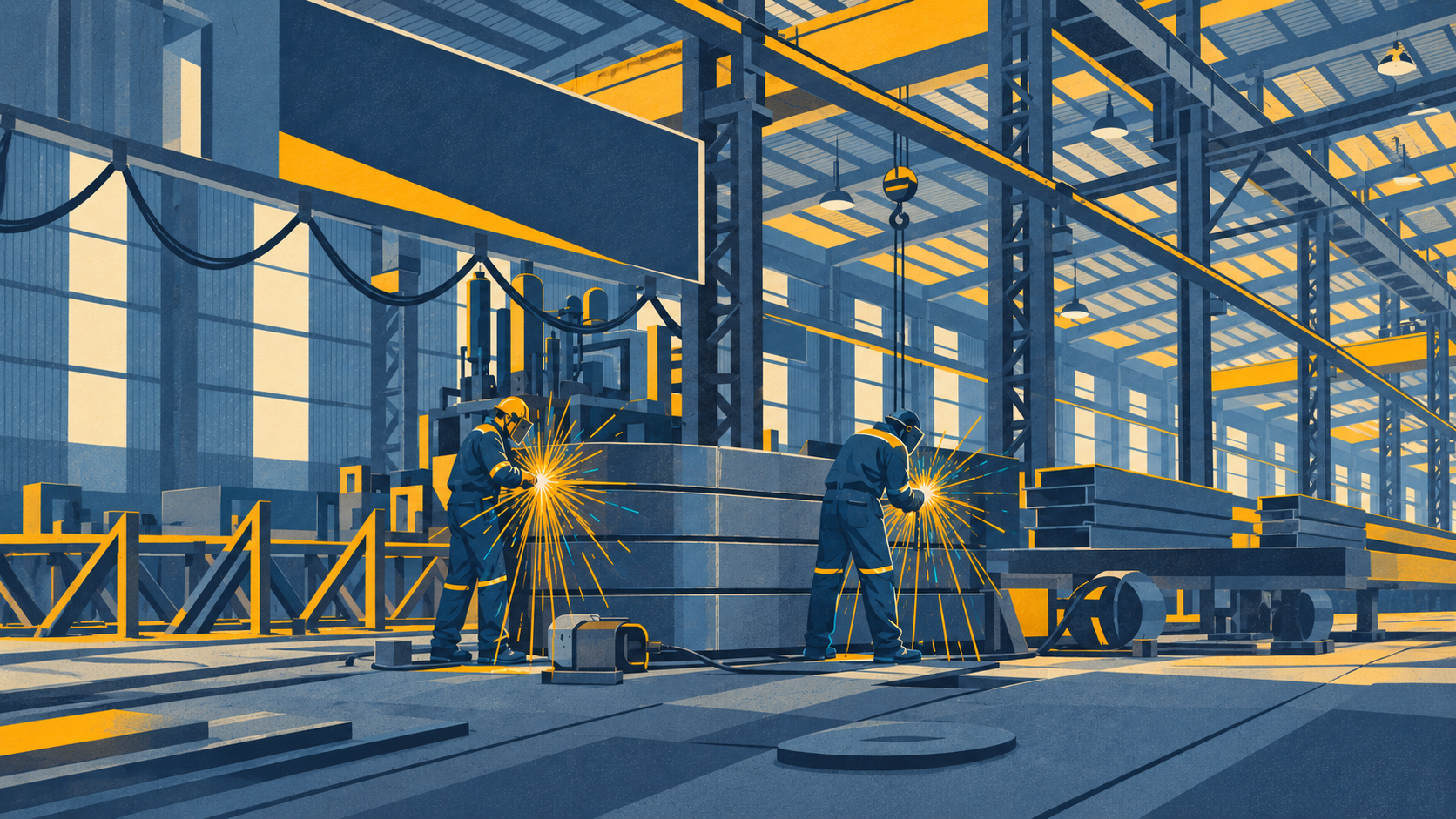
Large-calibre gun barrel manufacturing has restarted in Britain for the first time in around two decades, following the opening of a Rheinmetall UK production facility in Telford. The project is supporting approximately 100 skilled jobs and creating additional domestic capacity for defence equipment, under a broader push to strengthen industrial production and security of supply.
Rheinmetall‘s new gun hall will manufacture barrels and breeches for 120mm and 155mm weapon systems, including equipment associated with the RCH 155 artillery platform. The 11,500-square-metre facility establishes capacity for components requiring specialist machining and quality assurance. Rheinmetall expects peak output of up to 245 barrels and more than 50 breeches per year. These are capacity estimates, not production already delivered.
The Ministry of Defence presented the production start as a restoration of an important sovereign manufacturing capability. Domestic availability of selected components can reduce dependence on overseas supply chains, although production within Britain does not automatically mean that every material, machine tool or subcomponent is sourced locally.
The approximately 100 jobs are described as highly skilled positions linked to the gun hall. Industrial employment benefits can also extend to maintenance, logistics, tooling and the companies providing specialised services, but the number of indirect jobs supported has not been established in the announcement and should not be added to the confirmed employment figure.
Manufacturing large barrels is technologically demanding because finished products must meet exacting dimensional, metallurgical and durability requirements. Production involves a sequence of processes requiring specialist equipment and personnel. Such industrial capabilities are difficult to recreate quickly once they disappear, making the continuity of orders and workforce development important to their long-term sustainability.
The return of production also has implications for procurement policy. Defence programmes can run across many years, with contract conditions, delivery requirements and the timing of public spending influencing investment decisions. Manufacturers need sufficient visibility to justify expensive equipment and technical training, while government customers require value for money, reliability and an appropriate balance between domestic capability and international supply.
Telford’s industrial workforce and engineering supply base offer a platform for this type of specialist facility. Local firms may see opportunities in precision machining, industrial services and related supply chains where they can meet the technical requirements. Those possibilities should be distinguished from contracts already secured: no comprehensive list of local supplier awards was included in the announcement.
Defence manufacturing investment is part of a broader debate about reindustrialisation in Britain. Supporters argue that maintaining capability in strategic sectors can improve resilience and create long-term skilled employment. The economic effects still depend on export demand, production costs, skills availability and whether the facility maintains a competitive order book once its initial programmes mature.
British employees have completed training at Rheinmetall’s Unterlüß production facility in Germany, covering precision manufacturing and quality assurance. Rheinmetall says breech production began in May 2026 and barrel production followed in June, before the formal October opening. The company reported 35 people working in the gun hall at launch and expects to support more than 100 skilled positions as output expands.
Maintaining the production base will require more than initial recruitment. Specialist manufacturing depends on suppliers qualified to consistent standards, equipment maintenance and engineers able to transfer knowledge to new staff. Quality failures can be costly in any precision sector, particularly when components are subject to demanding service conditions. Sustained production orders will provide the clearest evidence that the investment has established an enduring capability rather than a short-lived revival.
For the region, the immediate development is a working production facility and a defined number of skilled roles, not merely a future investment promise. Continued activity will be shaped by customer programmes and manufacturing performance. The longer-term measure of success will be sustained output and an industrial base capable of supplying complex equipment reliably over successive production cycles.


You must be logged in to post a comment.