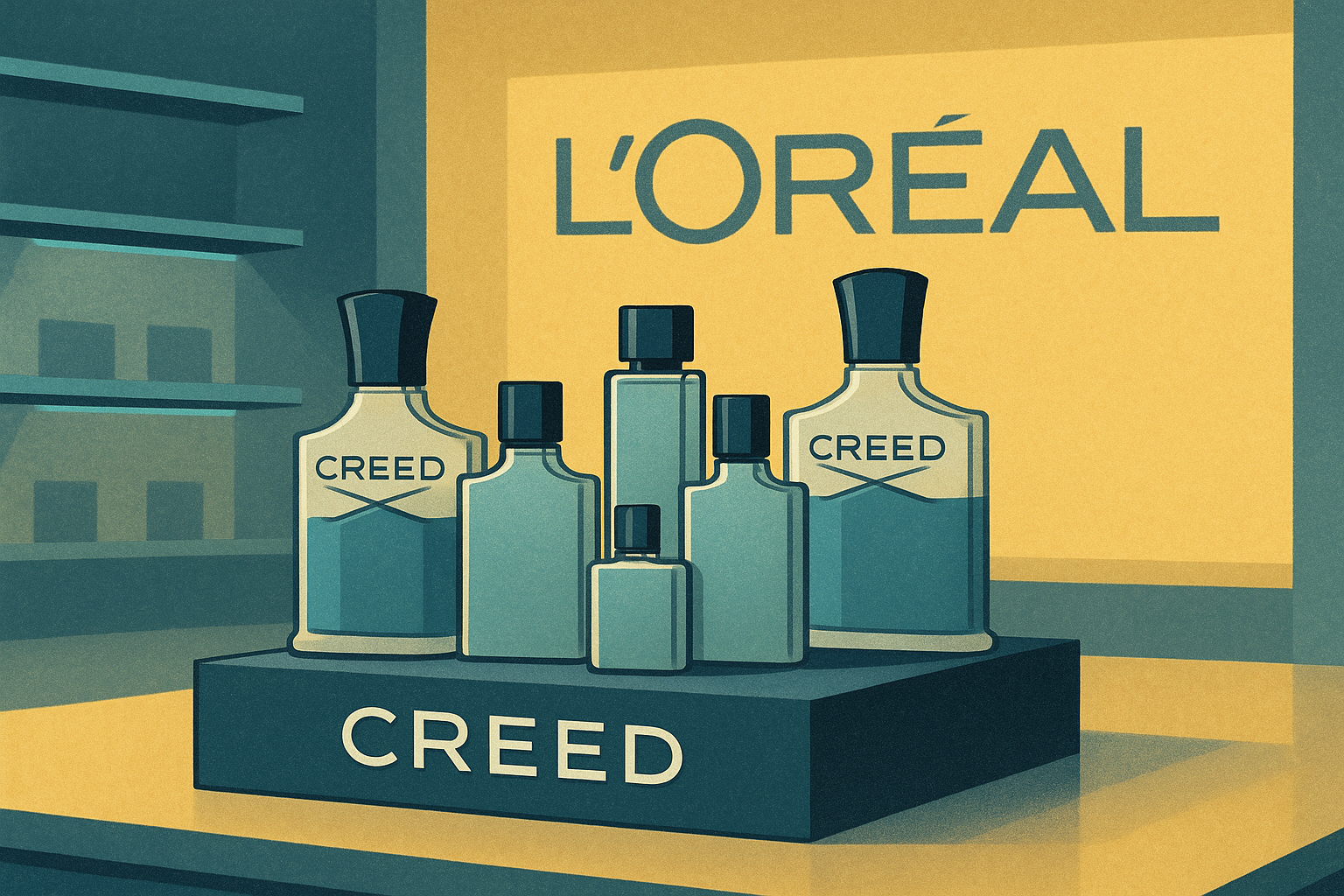
Kering has agreed to sell its beauty business — including its fragrance house Creed — to L’Oréal for €4 billion (US$4.66 billion) in cash, as the group moves to streamline its portfolio and reduce leverage after a period of heavy spending and weakening sales performance.
The agreement grants L’Oréal 50-year licences to develop and market fragrance and cosmetics for Gucci, Bottega Veneta and Balenciaga. Completion is expected in the first half of 2026, subject to regulatory approvals. L’Oréal described the transaction as its largest acquisition to date.
“This partnership allows our Houses to accelerate their fragrance and cosmetics strategies with the world leader in beauty,” said Kering’s chief executive, Luca de Meo, who took the role in September. “It also enables us to strengthen our balance sheet and focus resources where we have the greatest creative and financial potential.”
L’Oréal chief executive Nicolas Hieronimus said the purchase adds “exceptional couture brands with enormous potential for growth” to its luxury portfolio.
Debt overhang built through acquisitions and assets —
Kering’s debt position has grown rapidly over the past three years, climbing from near-zero net debt in 2021 to more than €10 billion by the end of 2024. The increase stemmed largely from the €3.5 billion acquisition of Creed in 2023, alongside a minority stake in Valentino and heavy spending on luxury real-estate assets in Milan and Paris.
Analysts have also cited under-performance at Gucci, Kering’s flagship brand, which has eroded cash flow and reduced capacity to self-fund expansion. At the end of June 2025, the group reported €9.5 billion in net debt and around €6 billion in long-term lease liabilities.
In recent months, the company postponed plans to acquire Valentino in full until 2028, reflecting investor pressure to stabilise its balance sheet. Rising interest rates have compounded the challenge, pushing up the cost of debt service and narrowing headroom for new investments.
Strategic reset under new leadership —
The sale marks a wider reset for Kering under de Meo, who succeeded François-Henri Pinault amid efforts to restore growth and investor confidence. The group is now concentrating on revitalising Gucci and improving performance at other houses such as Saint Laurent and Bottega Veneta.
For L’Oréal, the deal deepens its hold on the luxury-beauty segment and adds a suite of long-term licences that position it to expand into new high-end categories.
Analysts expect proceeds from the transaction to be used primarily for debt reduction, potentially lowering Kering’s net debt-to-EBITDA ratio below 2× by 2026. The company has not disclosed how it plans to deploy the funds, but investors are likely to monitor balance-sheet improvement closely.
The sale is scheduled to close in the first half of 2026, subject to customary approvals.