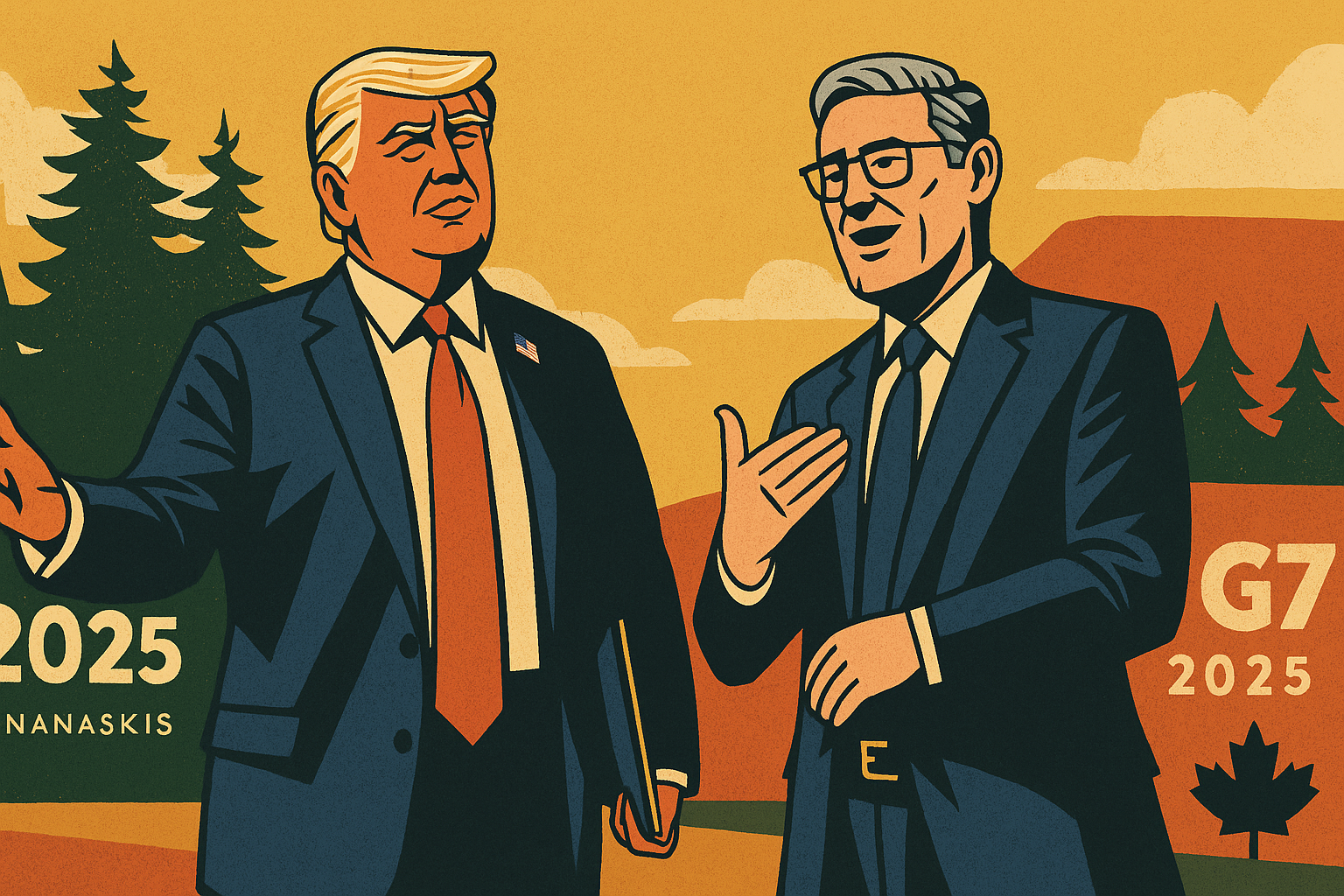
Britain has become the first country to secure tailored relief from the Trump administration’s sweeping tariff regime, after Prime Minister Keir Starmer and President Donald Trump signed a legally binding proclamation at the G7 summit in Canada.
The agreement, finalised on 16 June in Kananaskis, confirms that US tariffs on UK-built vehicles will fall from 25% to 10% before the end of June. Aerospace parts will be exempted entirely and carved out of any future duties under Section 232. In return, the UK will lower duties on US ethanol and permit 13,000 tonnes of tariff-free American beef — provided it meets UK food-safety standards.
However, there is no confirmed change yet for UK steel and aluminium exports. The US has pledged to introduce a duty-free quota for certain volumes of metal, but the quota tonnage and product scope have not yet been published. Without a confirmed quota in place, UK producers remain exposed to the threatened 50% tariffs due to take effect from 9 July.
The steel uncertainty casts a shadow over what is otherwise the most concrete bilateral trade move since the UK left the EU. Britain exported around £59.3 billion in goods to the US last year, narrowly ahead of £57.1 billion in imports, according to ONS data. The US is also the single largest destination for UK car exports, worth over £9 billion in 2024 — approximately 27% of total sector exports. UK steel shipments to the US totalled around 180,000 tonnes last year, valued at £370 million.
Prime Minister Starmer described the deal as “a real sign of strength” in the UK–US partnership. Speaking from the summit, he said the UK had shown it could “protect vital industries while also opening new trade.”
President Trump’s proclamation ensures the auto and aerospace relief will take effect this month. Aerospace exemptions are understood to be permanent and immune from future tariff rounds. For carmakers, the 10% rate must be in force by 30 June to avoid legal back-payments for importers — placing pressure on US Customs officials to publish implementation guidance within two weeks.
Trump also promised to shield the UK from broader tariffs, stating publicly that “the UK is very well protected… because I like ’em.”
The breakthrough follows weeks of diplomatic activity and builds on the “Atlantic Declaration” framework signed in 2023. Ministers confirmed that future discussions would aim to address pharmaceuticals and the broader steel and aluminium tariff structure, with the possibility of a revised Atlantic trade package later this year.
The signing comes amid wider unease at the G7 over the escalation of US trade barriers. Other leaders, including those from Canada and the EU, are understood to have raised concerns about the economic risk of further tariff hikes.
The breakthrough follows weeks of growing legal and political volatility surrounding Trump’s trade strategy. A US federal court ruling recently cast doubt over the administration’s sweeping tariff powers, triggering urgent bilateral talks. Today’s signing appears to be one of the first efforts to restore predictability for exporters on both sides of the Atlantic.
The White House and Department of Commerce are expected to issue the technical quota documents in the coming days. Until then, UK metals exporters remain in limbo.