
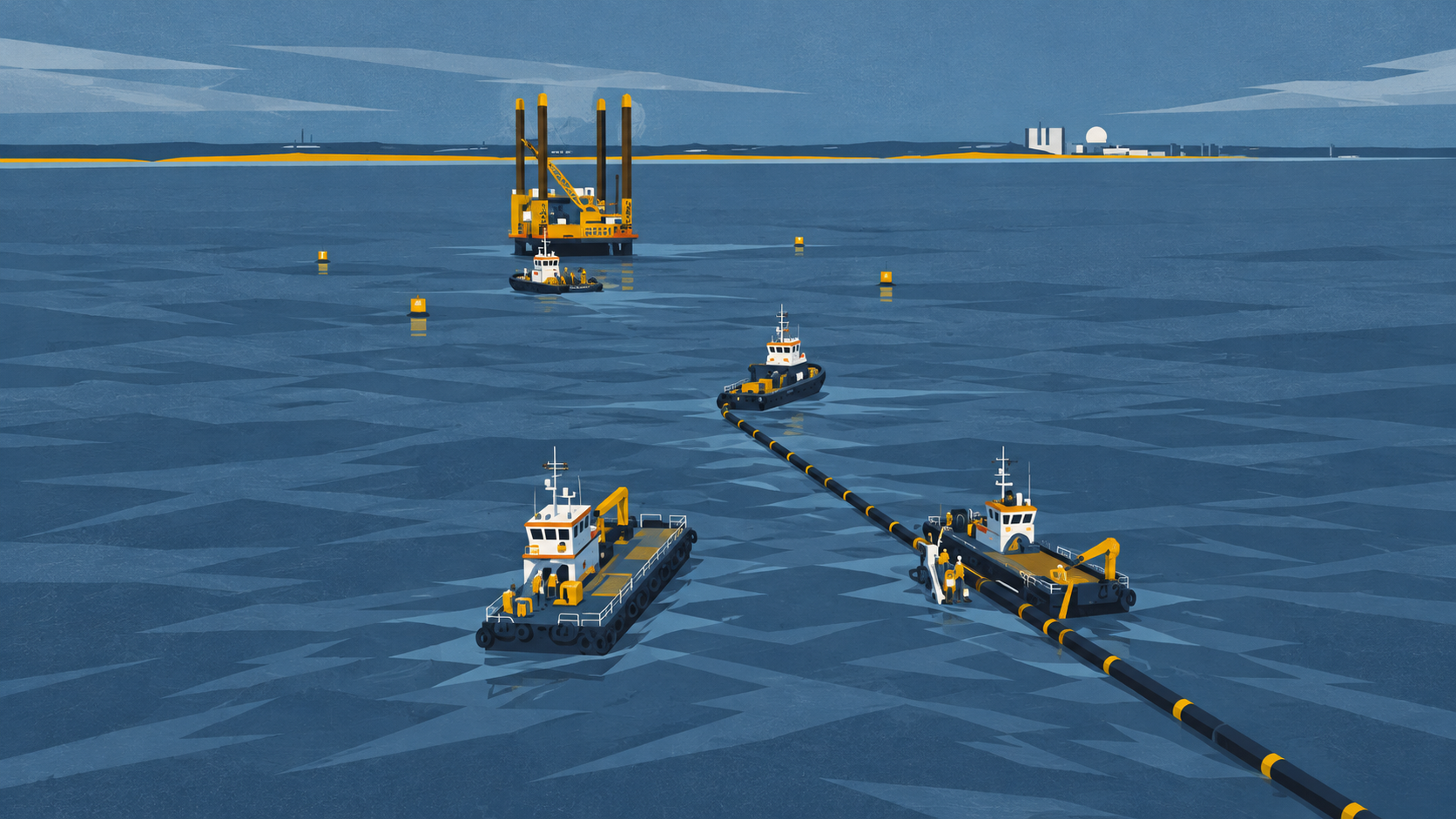
ScottishPower Renewables has completed a major subsea drilling and duct installation operation for the £4bn East Anglia TWO offshore windfarm, providing two protected pathways beneath the Suffolk coastline for the project’s future electricity export cables.
The completed operation involved horizontal directional drilling and the installation of two continuous polyethylene ducts, each just under 1,800 metres long and 800mm in diameter. ScottishPower describes the achievement as record-breaking, claiming the ducts are the world’s longest continuous extruded polyethylene sections installed for this type of engineering application.
The company also describes the installation as the UK’s largest electricity transmission landfall of its kind, based on the combination of duct length and diameter. Those records are ScottishPower’s claims and have not been independently certified in the evidence reviewed.
The ducts form part of the transmission connection for East Anglia TWO, a planned 960MW offshore windfarm in the southern North Sea. They provide routes through which high-voltage export cables will subsequently be installed, linking the offshore infrastructure with the onshore electricity system.
Completion of the drilling and duct pull-in is a construction milestone, rather than completion of the electrical connection. ScottishPower expects installation of the first export cable in summer 2027 and is targeting commercial operation of the windfarm in late 2028.
The horizontal directional drilling method creates underground passages without requiring a continuous trench across the coast. In this application, construction teams worked from onshore and offshore positions to install the ducts beneath the shoreline and seabed, avoiding extensive surface excavation through sensitive coastal areas.
The work forms part of the project’s civil engineering programme led by OCU Group, supported by its subsidiary Peter McCormack & Sons. ScottishPower says the relevant construction contract is supporting more than 80 jobs. That is an attributed project statement, not an independently audited employment figure.
The ducts were manufactured by Pipelife Norway at its facility in Stathelle. Pipelife’s project manager specified a continuous manufactured length of 1,793 metres and explained that the production process avoided the need to join pipe sections by welding.
Transporting the ducts was itself a specialist operation. The long polyethylene sections were towed from Norway to the construction site at Thorpeness, requiring coordination between the manufacturer and the engineering teams responsible for the offshore and onshore installation.
The manufacturing location illustrates the international supply chain involved in the project, even as ScottishPower emphasises its wider contribution to British suppliers. The developer states that East Anglia TWO has already injected more than £1.5bn into the UK supply chain. That figure refers to the overall windfarm programme, rather than the completed duct contract alone.
The project is located off the Suffolk coast, approximately 33 kilometres from Southwold at its nearest point and 37 kilometres from Lowestoft. ScottishPower estimates that the windfarm’s planned capacity could generate electricity equivalent to the needs of almost one million homes once fully operational.
Those generation figures are estimates associated with future capacity. The project has not entered commercial operation, and the infrastructure needed for export, commissioning and generation remains subject to subsequent construction stages.
The next major milestone for the completed landfall route is cable installation. The ducts now provide the physical pathway for that work, while the wider East Anglia TWO programme continues towards its targeted 2028 operating date.



You must be logged in to post a comment.