
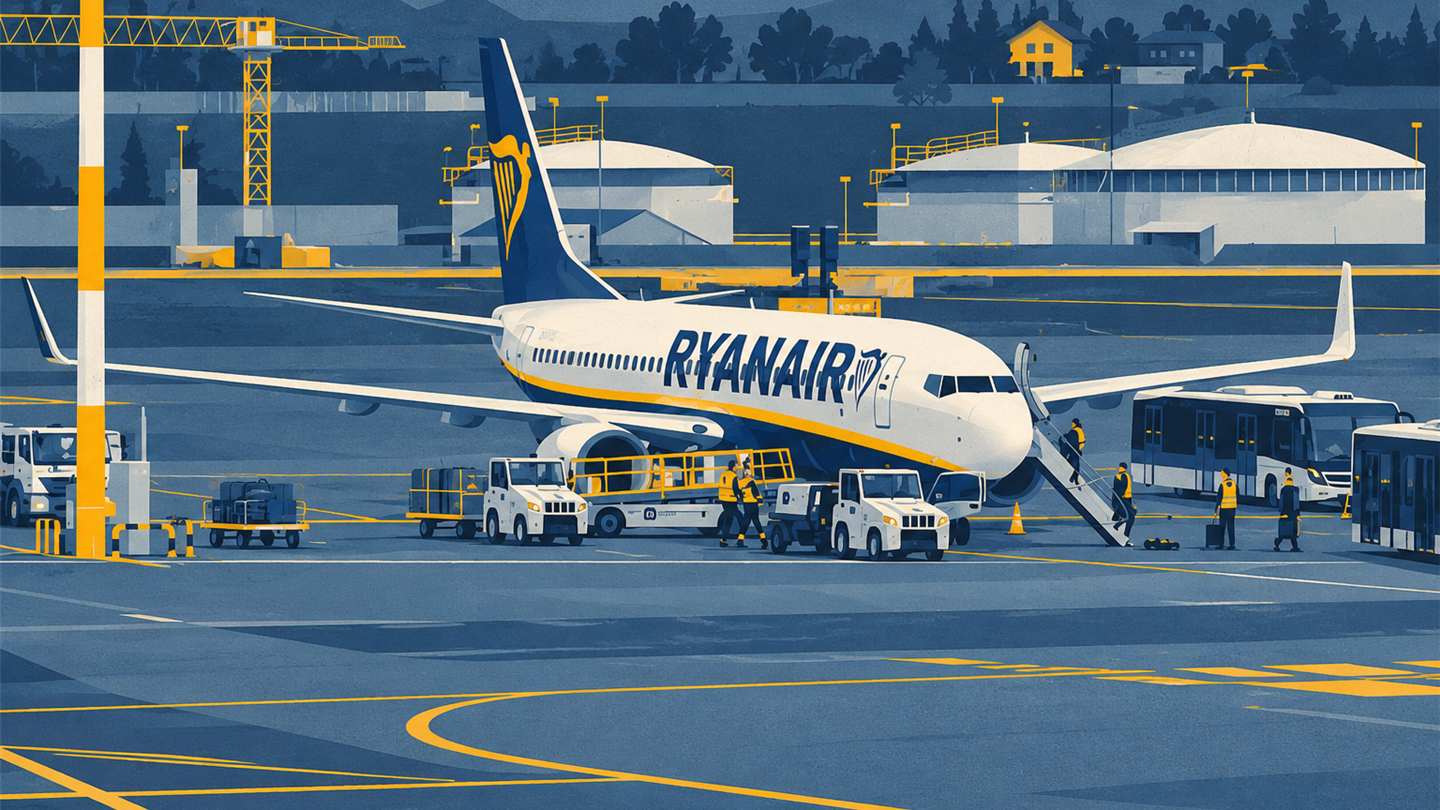
Ryanair chief executive Michael O’Leary has warned that European airfares could rise by between 10% and 20% in 2027 as higher jet fuel prices and pressure on airline capacity affect the industry.
The forecast was made on 20 October 2026 during comments in Brussels. O’Leary said the cost of fuel and a possible reduction in seats offered by struggling carriers could create unusually strong upward pressure on fares.
The figures are the executive’s prediction rather than a price increase announced for every Ryanair flight or an industry-wide change already applied to tickets.
Airlines manage exposure to fuel costs partly through hedging agreements, which fix or limit the price of a portion of the fuel they expect to purchase. The protection lasts for a specified period and does not cover all future consumption.
Ryanair had secured approximately 80% of its fuel requirements for the period to March 2027 at around $67 per barrel, according to the executive’s comments. Its position is materially less protected beyond that period.
For the subsequent financial period, only about 15% of fuel needs were hedged at approximately $85 per barrel, leaving a much larger share exposed to market prices that had risen sharply.
This change in hedging coverage provides one explanation for the company’s expectations. A carrier with lower contracted fuel prices can absorb market movements for a time, but protection diminishes as contracts expire.
Other airlines face differing fuel costs, hedging arrangements and routes. An estimate of 10% to 20% higher fares across Europe therefore depends on both industry conditions and the capacity individual businesses decide to offer.
O’Leary also raised the prospect of some airlines reducing schedules, consolidating or failing if operating costs remain elevated. Those are scenarios rather than corporate failures that can be counted as completed outcomes from his remarks.
Seat capacity affects pricing because fewer available services on particular routes can increase competition between customers for remaining flights. Airlines also respond to changes in demand, tax and airport charges when setting individual fares.
Ryanair separately outlined reductions to its Belgian winter programme involving 20 routes and more than a million seats, which it linked to changes in local aviation taxation. That action is distinct from the general 2027 fare forecast.
The chief executive expressed optimism about progress towards certification of the Boeing 737 MAX 10, but certification and future deliveries remain dependent on the relevant approval and production milestones.
Fuel is a major operating expense for airlines, but ticket prices also respond to capacity and passenger demand. A price forecast based on higher costs may not be realised on every route if demand weakens or other carriers introduce competing seats.
Ryanair’s hedging figures cover different periods: the current protection runs to March 2027, while the much smaller hedged share concerns the period thereafter. Comparing the two as if they applied to the same months would misstate the cost exposure.
O’Leary’s warnings about possible industry consolidation or airline failures are forecasts about the competitive environment. The remarks do not identify completed transactions or a verified number of companies expected to cease trading.
The separate reduction in Belgian flying was linked to tax changes in that market. It illustrates how aviation charges can affect scheduling, but it should not be presented as proof that the predicted Europe-wide fare increase has already materialised.
The forecasts are particularly dependent on the period after Ryanair’s current hedging coverage expires. A sharp change in fuel prices could alter the scale of the forecast before the next financial year, while individual fares will also be shaped by route competition.
The October comments provide a view of likely future pricing pressure in the aviation market. Actual fares will depend on fuel prices, competition, schedules and demand, and the forecast should not be reported as a confirmed increase.



You must be logged in to post a comment.