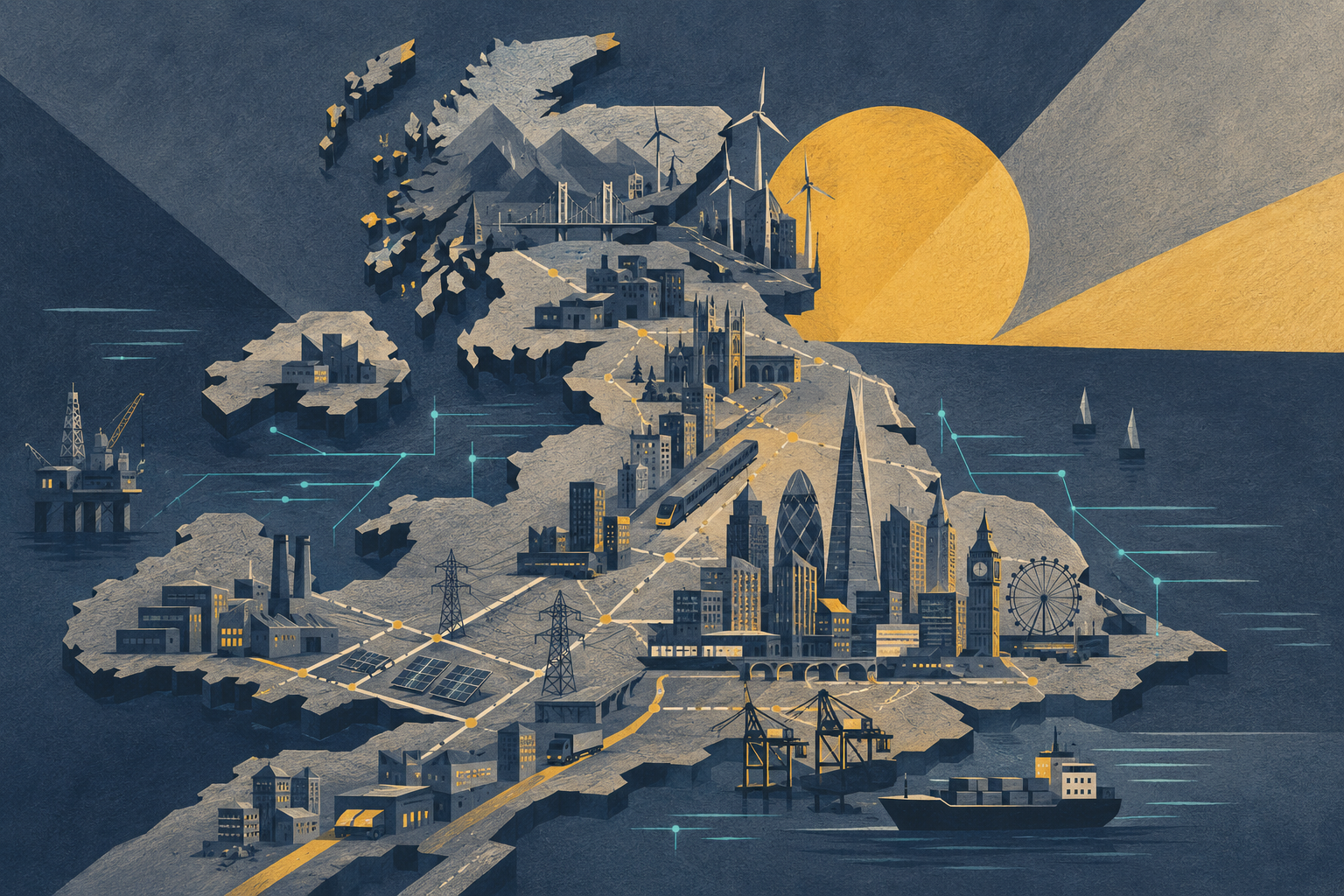
Renewable energy met a record 52% of UK electricity demand in 2025, according to newly published government data, marking a further shift in the country’s power mix as wind and solar output continue to rise.
The milestone reflects the growing role of renewables in electricity supply and the changing economics of energy procurement, infrastructure investment, and industrial planning. Offshore wind and solar generation were central to the increase, while the broader electricity system continues to adjust to more variable low carbon generation.
Electricity supply now affects competitiveness across data centres, manufacturing, transport, real estate, retail, and large service operations. The pace and reliability of the transition influence energy bills, power purchase agreements, carbon reporting, grid connection timelines, and investment location decisions.
Network capacity is already a commercial bottleneck, with Ofgem targeting speculative data centre grid applications as AI infrastructure, electrification, and industrial demand compete for connection access.
The renewables record carries two signals. The UK is generating a larger share of its power from low carbon sources, but the value of that generation depends on whether grid infrastructure, storage, planning, and market design can keep pace.
Variable generation changes how companies think about energy. Large buyers increasingly use power purchase agreements to secure long term renewable supply and reduce exposure to wholesale volatility. Those contracts can support new projects, but they also require legal, financial, and risk expertise that many mid sized businesses do not have in house.
Energy intensive sectors face a different challenge. Lower carbon electricity can help reduce Scope 2 emissions, but grid charges, connection delays, network constraints, and price volatility still affect competitiveness. Manufacturers, cold storage operators, logistics hubs, and data centres need dependable power as well as clean power.
The increase in renewables also affects carbon accounting. Companies reporting emissions must understand whether they are using location based or market based approaches, what certificates or contracts they hold, and how claims will be treated under evolving standards. The move to bring two major frameworks together in Carbon standards merge into single global framework shows how reporting expectations are becoming more structured.
The energy transition now reaches well beyond sustainability teams. It is tied to capital allocation, property strategy, technology deployment, supplier requirements, and investor expectations. Companies deciding where to expand facilities increasingly assess grid access, electricity cost, resilience, and carbon intensity together.
The growth of renewables also increases the value of flexibility. Batteries, demand response, interconnectors, smart grids, and flexible industrial loads can help balance supply and demand. Companies able to shift energy use away from peak periods may gain cost advantages, while those with rigid demand profiles may face higher exposure.
Government policy will remain central. Planning reform, auction design, grid investment, community consent, and transmission build out all affect whether renewable capacity translates into stable and affordable electricity. Delays in one part of the system can weaken the benefit of progress elsewhere.
The UK has strong offshore wind resources and an increasingly mature renewable project base, although investment conditions have become more demanding. Developers must manage supply chain costs, financing rates, planning risk, and equipment availability. A higher rate environment can affect the economics of capital intensive infrastructure projects.
Companies with net zero targets will welcome the record renewable share, but it does not complete the work of decarbonisation. Scope 2 reductions are only one part of corporate emissions management. Many organisations still face larger Scope 3 emissions from suppliers, logistics, product use, and capital goods. Clean electricity helps, but it does not remove the need for operational change.
The 52% figure shows that the electricity transition has passed a significant threshold. The harder test is whether the system can convert cleaner generation into lower risk, lower emissions, and more predictable costs across the economy.