
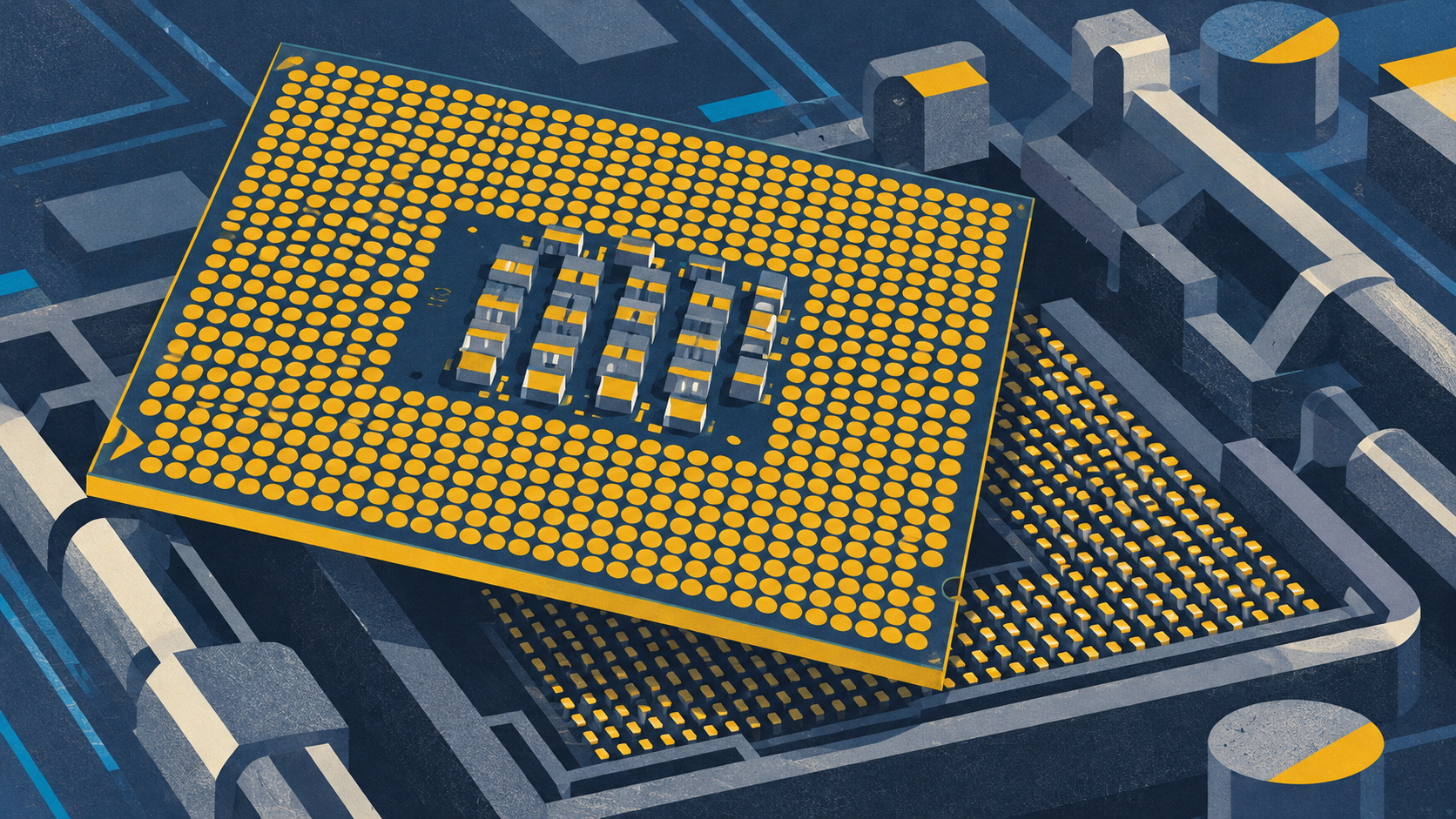
Oxford technology company Salience Labs has raised $125 million in Series B funding to expand the production and commercial deployment of optical switching technology designed for artificial intelligence data centres.
The round was led by Bullhound Capital, with strategic investment from AMD Ventures and Intel Capital. The British Business Bank contributed £10 million, providing public-backed capital alongside private investors.
Salience Labs develops photonic switching systems intended to address a growing constraint in large AI computing environments: the time and energy required to transfer information between processors.
Modern AI infrastructure increasingly relies on large groups of graphics processing units working together on complex workloads. The performance of those systems depends on communication between processors as well as the computing capacity of individual chips.
As infrastructure grows, moving data between components can become a significant source of delay and energy consumption. Expanding the number of processors does not automatically produce equivalent gains in useful computing performance if the network connecting them cannot keep pace.
Salience Labs is developing optical circuit switches that use photonics to establish communication paths between computing components. The company says its approach can reduce latency, power consumption and networking costs compared with conventional alternatives.
Those advantages remain technology and performance claims that will need to be demonstrated consistently in commercial operating environments. Results can vary according to system architecture, workload and the integration of optical equipment with other infrastructure.
The business was founded in 2021 and emerged from research involving the University of Oxford and the University of Münster in Germany. Its development illustrates the challenge of commercialising advanced hardware research, which often requires substantial capital before products can be manufactured and deployed at scale.
Unlike many software products, semiconductor and photonics technologies must progress through manufacturing qualification, component testing and integration with customers’ existing systems.
Increasing production volumes also requires suppliers to establish repeatable manufacturing processes capable of maintaining performance and reliability across large numbers of devices.
The new investment will support Salience Labs’ manufacturing expansion and international growth, including its plans to strengthen its commercial presence in Silicon Valley.
Establishing operations closer to major technology customers could help the company develop relationships with infrastructure providers and obtain feedback about the requirements of large AI installations. It may also introduce additional costs and competitive pressures associated with expanding into the US market.
The participation of AMD Ventures and Intel Capital is commercially relevant because their parent companies operate within the computing industry that Salience Labs intends to serve. Their investment does not, however, establish guaranteed customer contracts or future purchasing commitments.
The British Business Bank’s participation provides another example of public-backed capital supporting UK businesses whose technologies require substantial investment to reach international markets.
High-growth hardware companies can face particularly demanding funding needs. Manufacturing capacity, engineering staff, testing facilities and commercial qualification programmes may consume significant resources before revenues reach the levels associated with mature businesses.
Potential customers must also assess whether unfamiliar components can operate reliably alongside their existing infrastructure. Performance benchmarks are only one part of that process: buyers must consider maintenance requirements, integration costs and the consequences of equipment failure before they deploy new networking technologies across major computing installations.
Demand for more efficient data centre infrastructure is being driven partly by the expansion of AI systems, whose processing and networking requirements are placing increasing pressure on capital expenditure and electricity consumption.
Technologies that improve communication between processors could contribute to better infrastructure efficiency, but their commercial success will depend on independently demonstrable performance, compatibility and the willingness of major customers to adopt new equipment.
The funding gives Salience Labs additional resources to pursue those objectives. Its next challenge will be translating photonic technology into reliable, scalable manufacturing and sustained commercial demand.


You must be logged in to post a comment.