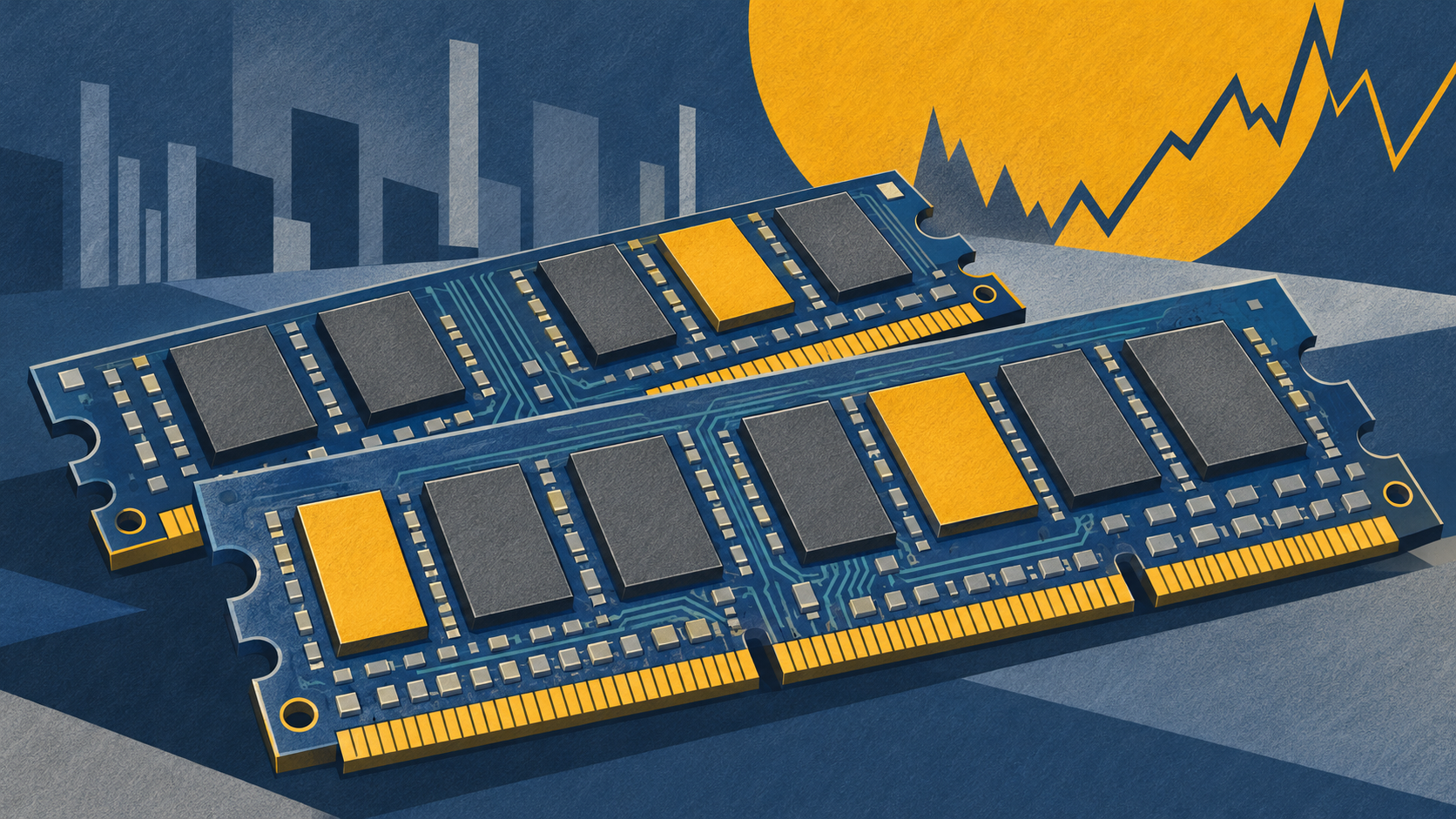
It’s now over 18 months since the memory chip shortages began, caused by rocketing demand for DRAM by the AI market and further fuelled by hyperscaler stockpiling and wafer capacity reallocation to high bandwidth memory (HBM). This unprecedented demand has turned Moore’s Law on its head, seeing the cost of desktops and laptops almost double while diversion to HBM production has starved the SSD market, hiking up the cost of peripherals too.
It’s a situation that’s unlikely to resolve itself anytime soon. AI companies have signed agreements spanning years, with Micron recently revealing it has signed strategic customer agreements (SCAs) with 16 customers to 2030 and SK Hynix has also cautioned that it expects the shortages to continue until then. And, while these providers are increasing their manufacturing capacity, those production lines are going to take months to come online.
With no real hope of a market correction, businesses face a real dilemma. They can no longer afford to wait it out but nor do they want to buy at a time when prices are at a premium. Instead, they have to become far more astute with how they manage their IT estate, rethinking architectures, refresh strategies and sourcing models to reduce the inevitable impact. The question is no longer, ‘Do I buy now or wait later’ but becomes ‘How can I determine what’s business critical and secure that supply?’
There are a number of ways the business can make that shift. Firstly, they need to identify workload priorities and map memory requirements to ensure the business can meet its organisational goals. This will require discussion with business leaders to determine where memory availability could delay project delivery such as in refresh waves, server builds or storage expansions.
Don’t wait for the deployment window. Critical builds should be moved up the queue and by segmenting users and workloads it’s possible to award higher memory resources where they are needed most, conserving spend. Creating a shared view of refresh timelines, supply risks and budget triggers as well as a runbook to decide what to accelerate, delay or standardise as the situation unfolds is one of the best ways to make this work.
Standardising and limiting the number of approved memory configurations across the fleet and server estate can also reduce exposure. Optimising server configuration, for instance, ensures the efficient use of memory. This can be achieved by identifying the most/least important workloads so that demand can be juggled with existing resources. In some cases, just shutting off one workload can give the business the capacity it needs to survive through into 2027.
Consider also diverting memory earmarked for one business case to another. GPU accelerated workloads could allow the organisation to reassign infrastructure that was earmarked for AI for non-AI use cases. Or there may be bandwidth that can be clawed back from the cloud or, conversely, workloads that could be sent to the cloud to free up capacity. The more options that are available, the better the decision-making process will be.
Once the business knows what it has and what it needs, as well as any capacity it can free up, it can explore how it’s going to meet those existing and future requirements. Does it need to purchase something new, or can it use what it has? Will this be a CAPEX purchase or does an OPEX model make more sense e.g. leasing or financing? If the former, consider alternative ways of provisioning such as capacity tiers, module types and OEM options; using alternative suppliers can help spread the risk.
It’s also important to right size this so that the business doesn’t unnecessarily stockpile. Keeping a buffer in the form of high-failure or high-urgency components makes sense but focus on critical services and peak deployment periods. Otherwise there’s risk of overspend and the business could even end up contributing to the problem by depleting the market. It can also be helpful here to leverage any relationships you may have with channel partners who may have an easier time securing inventory.
Finally, consider these decisions in the light of what might happen, so seek to understand some of the macro factors at play that could lead to a further shift in the market. The situation could worsen if providers continue prioritising HBM production, lead times lengthen, or DRAM remains in short supply or a new AI sprint fuels demand, for example. Or it could improve quicker than expected if manufacturers prevent panic buying, the price rises result in higher AI service costs, production improves, budgets are exhausted or the optimisation referred to above becomes more widespread, reducing demand. Right now, all bets are off, requiring businesses to think far more creatively about how they can minimise disruption and protect critical business functions.

Chetan Visrolia is Business Development Manager for Data Center at SHI.