
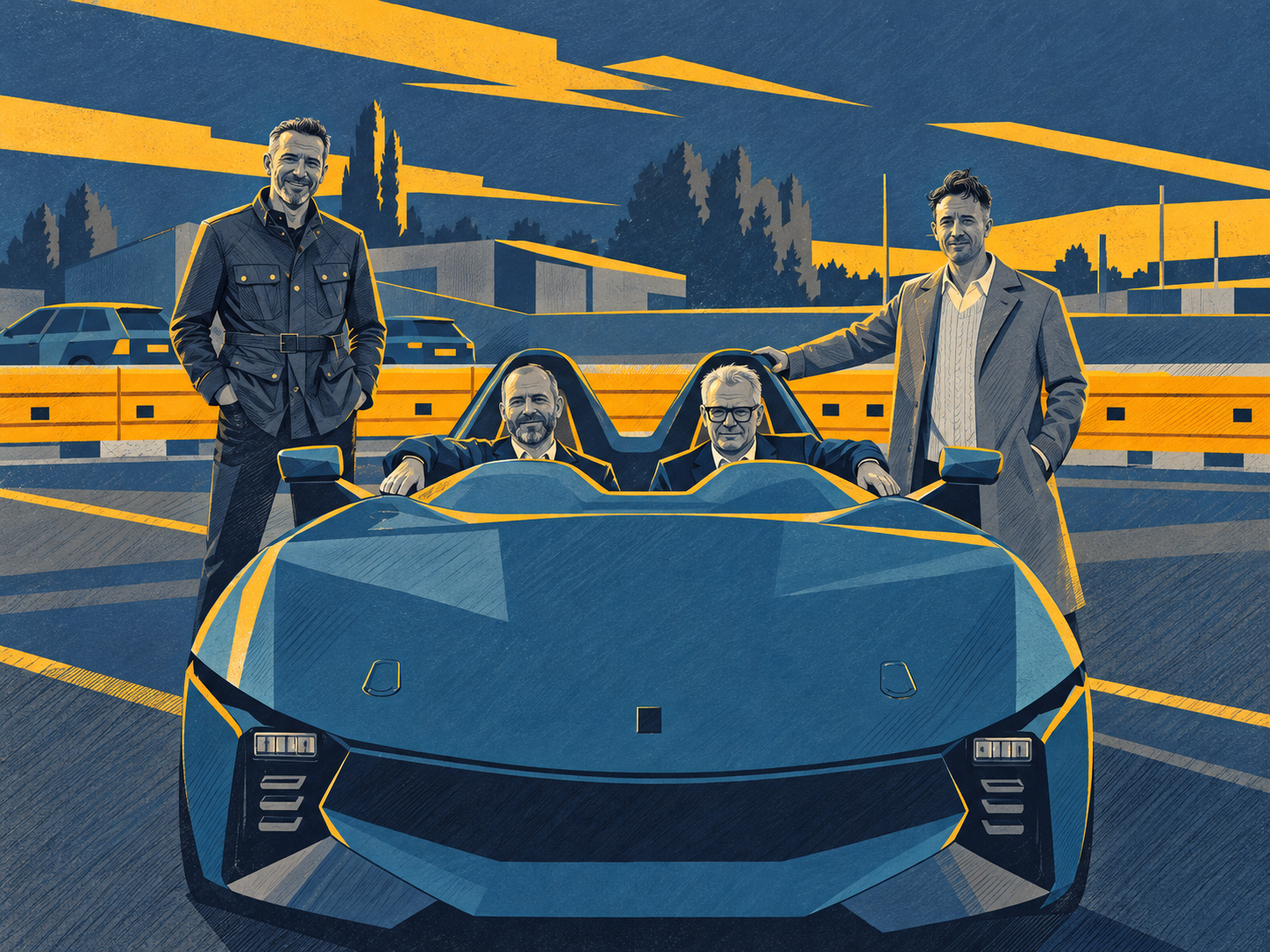
British electric sports-car manufacturer Longbow is preparing to begin production at MIRA Tech Park near Nuneaton with £3m of backing from the West Midlands Combined Authority, to be matched by the company.
The project, announced on 8 October, is expected to create more than 200 skilled jobs as the business moves from vehicle development towards manufacturing. Neither the full employment figure nor the proposed production capacity has yet been delivered.
Longbow expects its limited-edition Speedster to enter production at MIRA in 2027, followed by the Roadster. The company has set a longer-term ambition to manufacture more than 10,000 cars annually, although the mayoral announcement does not specify when that volume could be reached.
The £3m support comes from the £50m West Midlands Supplier Readiness and Transformation Fund, a government-funded four-year programme managed by the combined authority under the national DRIVE35 initiative. Longbow’s matching contribution means the public award should not be described as the full proposed investment.
The programme is designed to help manufacturers and suppliers develop the capabilities needed for electric vehicle supply chains. It can support companies producing components, providing specialist technical services or adapting existing processes for an evolving automotive market.
Longbow has already established a research and development centre at MIRA, providing a base for engineering work before the proposed manufacturing expansion. The company also plans to establish a training centre to help employees work towards Institute of the Motor Industry standards.
Founders Daniel Davey and Mark Tapscott are pursuing a strategy built around lightweight electric sports cars with substantial UK-sourced content. The company’s engineering approach uses a dedicated platform intended to avoid some of the weight associated with adapting conventional electric vehicle architectures.
Longbow’s published specifications describe an 895kg Speedster and a 995kg Roadster, with estimated electric ranges of 275 and 280 miles respectively. These are manufacturer-stated specifications and range estimates rather than independent measurements of customer vehicles in routine use.
The company currently presents the Speedster as a limited run of 150 cars, while the Roadster has an initial special edition followed by proposed series production. Such initial programmes are materially smaller than the stated long-term annual ambition and cannot be used as evidence that a five-figure production rate is established.
MIRA’s automotive engineering environment provides access to specialist testing, development and technical skills. However, establishing repeatable manufacturing requires different capabilities from building prototype or low-volume demonstration vehicles, including supplier quality management, tooling, assembly procedures and consistent component availability.
Using predominantly British components could create opportunities for regional suppliers, but the actual value retained in the UK will depend on procurement decisions and the origins of parts used in production. The October announcement expresses an intention rather than publishing audited local-content figures.
The West Midlands has an established automotive manufacturing base. The combined authority reports that approximately 1,000 companies and more than 46,000 people work in vehicle, component, engine and related electric vehicle or battery activities across the region.
Those existing capabilities could help smaller manufacturers find engineers and suppliers, although new entrants still face the cost of equipment, certification, working capital and securing sufficient orders to sustain operations.
The first funding round also includes Birmingham manufacturer Brandauer, which plans a specialist facility for tooling used in electric powertrain components, and Coventry-based PAB, which is investing in lightweight metal manufacturing. PAB anticipates 20 additional jobs and the safeguarding of 80 roles; those figures relate to a separate company project.
For Longbow, the immediate commercial decisions concern preparing the MIRA operation, training staff and establishing a supply chain capable of supporting its launch models. Its prospective customers will also require confidence in delivery schedules, product support and the company’s ability to sustain parts availability.
The public investment is intended to help the region retain more of the value created as vehicle technology changes. It does not guarantee that every manufacturing ambition described by recipients will be achieved.
Longbow’s first planned production run in 2027 will provide an initial test of progress. Its longer-term job creation and volume objectives will depend on successful commissioning, customer demand and the expansion of reliable manufacturing capacity.



You must be logged in to post a comment.