Product sampling occupies an uneasy place in the marketing budget. It can put a product directly into a household, but traditional campaigns have often offered limited evidence of who tried it, whether the same households were being reached repeatedly, or how trial affected purchase.
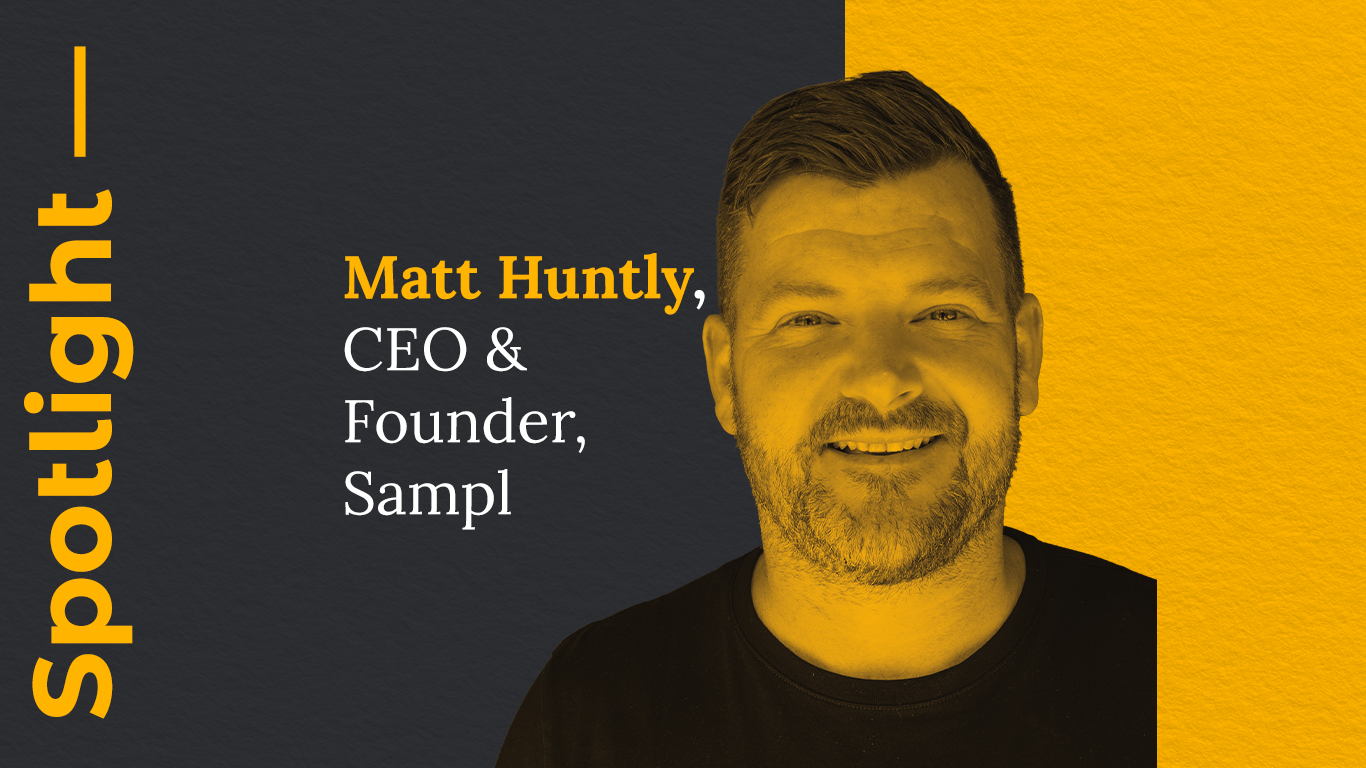
Matt Huntly, CEO and founder of Sampl, has built the business around that gap. The platform connects samples with people who actively request them, while capturing first party data, reviews, and engagement signals tied to subsequent action.
“My background has always sat somewhere between marketing, technology and growth,” Huntly says. Before founding Sampl, he spent around ten years as a director at a specialist workplace experience agency, working with brands on strategies designed to drive engagement and commercial impact.
That experience shaped his understanding of how brand interactions influence behaviour. The idea for Sampl took form during the Covid pandemic, when shopping moved further online and brands lost the confidence-building effect of in-store trial.
“The idea for Sampl really took shape during the Covid pandemic,” he says. “Overnight, people’s habits changed. Shopping moved online, discovery became digital-first, and brands lost one of their biggest confidence drivers: in-store trial – that moment where you can pick something up, touch it, try it, and decide if it’s right for you.”
With budgets under scrutiny, reach alone was no longer enough. Teams needed to know who received a product, what they did afterwards, and whether activity created value beyond distribution. Sampl was created to link product trial with declared interest, data capture, reviews, and online purchase behaviour.
Colour Catcher provided an early test. The brand had been investing significant budget in mass sampling, but trial rates were low, purchase conversion was modest, and recipient visibility was limited. After switching to Sampl’s requested sample model, distribution volumes fell sharply, but each sample went to a unique household with stated intent. The campaign delivered almost twice as many purchases from a fraction of the samples.
As Sampl grew, Huntly’s role changed. In the early phase, he was close to brand conversations, product decisions, and operational problems. That proximity gave the business speed, but could not remain the rhythm of a larger platform.
“As the business has grown, the challenge has been stepping back just enough,” he says. “My role now is much more about setting direction, being clear on priorities, and trusting the team to execute – while still staying close enough to the customer and the product to add value where it counts.”
Priorities had to be understood across the team, decisions had to be linked to outcomes, and the business had to retain the customer and product sensitivity that shaped its first stage of growth. “That shift isn’t always comfortable, but it’s essential if you want to build something that scales sustainably,” Huntly says.
Sampl’s approach to data follows the same discipline. Martech businesses often risk adding complexity in the name of insight, particularly when customers are dealing with budget pressure, fragmented channels, and limited time. Huntly argues that measurement only becomes useful when it helps teams act.
“There’s no doubt that expectations on performance are higher than ever, but adding layers of complexity rarely helps brands hit their targets,” he says. “Our view has always been that data should be an enabler of better decisions – not the end goal in itself.”
The platform focuses on a narrow set of signals: who received a product, who engaged with it, and whether trial led to a purchase, review, or opt-in. In a campaign with Lily’s Kitchen, Sampl saw strong engagement and 50%+ marketing opt-in, while also identifying price point as a barrier to purchase. That finding informed later positioning and promotional strategy.
Sampling has also had to overcome a perception problem. Huntly says one of the most difficult assumptions to challenge is that the channel is inherently soft: suitable for awareness and brand affinity, but held apart from performance channels measured against outcomes rather than impressions.
Sampl’s answer is clearer targeting, verification, data capture, and outcome measurement. Once brands ask performance-level questions of sampling, waste and poor targeting become design flaws, rather than unavoidable trade-offs.
International growth now puts that standard under pressure. Sampl is localising its services in the 35 markets where it already has customers and is delivering campaigns across three continents. Huntly’s focus is consistency and depth, rather than geographic reach alone.
“The question is not whether the model works internationally. It does. The question is how we maintain the same level of experience, data integrity and commercial clarity in every market we serve,” he says.
Retail dynamics, media ecosystems, and consumer behaviour differ by market. Huntly sees verification standards, data quality, and outcome measurement as non-negotiable, while local teams need flexibility to adapt to cultural and retail nuance.
As Sampl expands, the balance between control and local judgement will shape how the business carries its model into new markets. Its value depends on trust from brands, partners, and consumers who choose to engage with products before they buy.
“Scale only works if quality travels with it,” Huntly says.
This interview appeared in the Q2 edition of Business Quarter magazine. Subscribe for free to read the full magazine.