
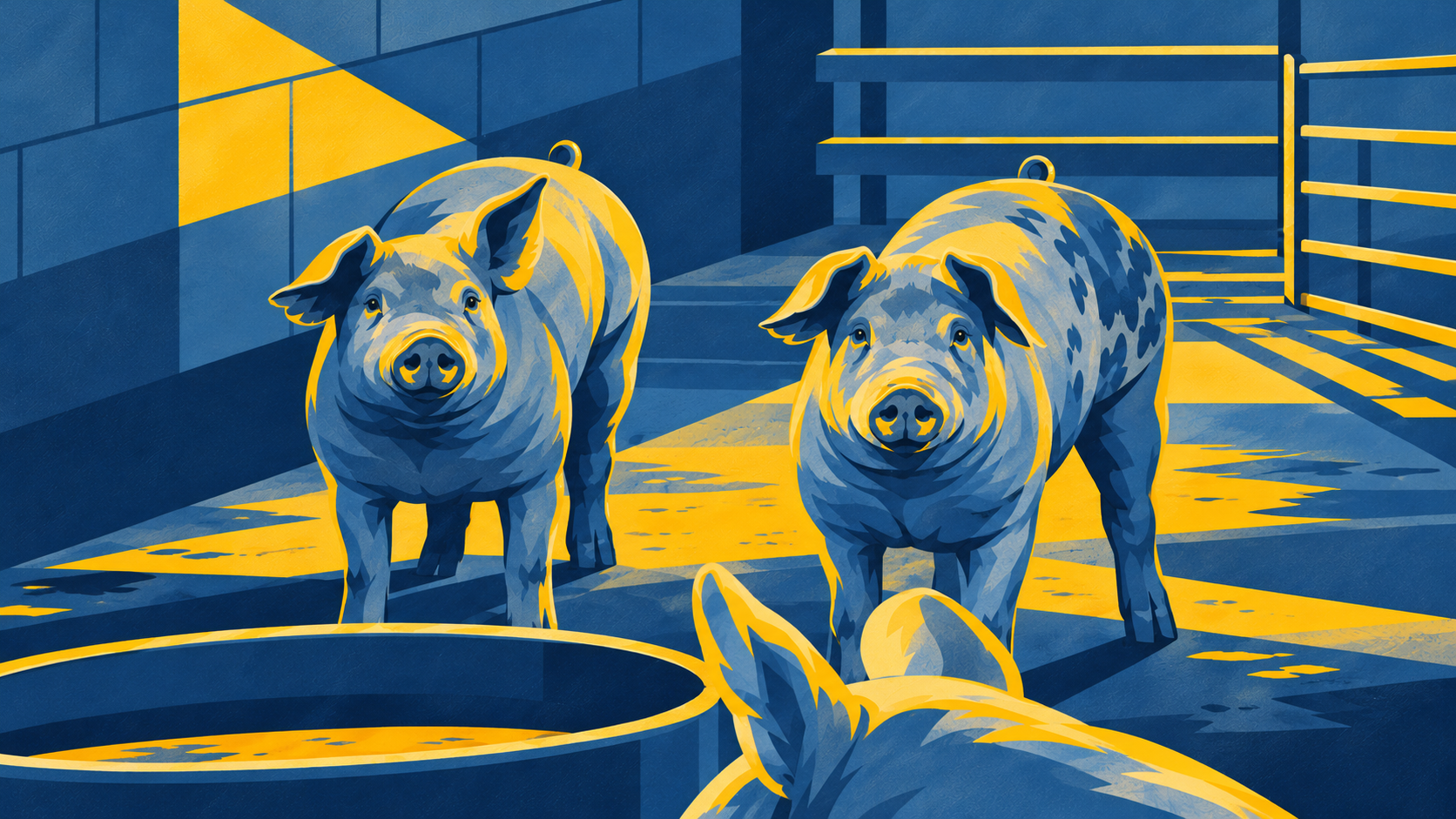
The UK government and the devolved administrations have opened a joint consultation on phasing out carbon dioxide stunning of pigs, a proposal that would require changes to equipment and operating methods across parts of the pork processing industry. Led by the Department for Environment, Food and Rural Affairs, the UK-wide exercise seeks evidence on costs, feasibility, welfare impacts and an appropriate transition period before any prohibition could take effect. Responses close on 21 December 2026.
High-concentration carbon dioxide is used to render pigs unconscious before slaughter. The proposal follows animal-welfare evidence that exposure to the gas can cause pain and distress before loss of consciousness. DEFRA describes alternative legally permitted systems, including inert-gas approaches, as potential routes to improved welfare. The consultation is not a ban already in force and does not yet establish the duration of any transition period.
The proposals are being taken forward on a UK-wide basis, with DEFRA acting on behalf of the UK Government and devolved administrations. Views are being sought from processors, farmers, equipment manufacturers, industrial gas businesses, veterinarians, retailers, welfare organisations and consumers. Responses will inform decisions about whether and how to introduce a ban, including the practical implications for existing slaughterhouse operations and the timetable required to adapt them.
For pork processors, the implications can extend well beyond the cost of replacing a single machine. Stunning systems sit within a broader production line that includes animal handling, movement, slaughter and hygiene operations. A new process may require changes to building space, ventilation, gas storage, process controls, maintenance schedules, staff training and production throughput. The extent of disruption will vary between sites depending on current equipment, available space and the technology ultimately permitted or selected.
DEFRA says it has been engaging with pig processors, equipment manufacturers, gas suppliers and animal-welfare organisations since April 2024 to investigate the practicality of alternatives. The government wants to minimise the eventual effect on consumers while improving welfare. That aim leaves important commercial questions unresolved. Capital requirements, downtime during conversion, operating costs and any effect on line capacity will all influence how businesses assess a realistic transition period.
The proposal also has a supply chain resilience dimension. Carbon dioxide supplies can be vulnerable to disruption because industrial production depends in part on gas recovered from other manufacturing processes and wider energy-market conditions. DEFRA refers to concerns over potential shortages linked to international events earlier in 2026. Replacing the gas for stunning might reduce one category of exposure, although alternative systems would bring their own supply, maintenance and safety requirements.
The Animal Welfare Committee has recommended ending the use of carbon dioxide gas mixtures to stun pigs on welfare grounds, while government is now seeking practical evidence about implementation. It also asks businesses to assess the available alternative techniques against existing operations, rather than assume that one design can be transferred unchanged between facilities. Processors need evidence of how proposed alternatives operate across different plant sizes and line speeds, while equipment suppliers need enough certainty to plan engineering development and production capacity. A short transition could place pressure on procurement and installation resources; a longer one would delay the intended welfare improvements. Ministers have not settled that balance. Responses from industry and welfare organisations should help establish what can be deployed reliably, what specialist skills are needed, and how costs could be distributed through the pork supply chain.
Processors will need detailed technical evidence before committing to equipment procurement. Government and industry must distinguish methods that work under trial conditions from those that can be introduced reliably at the scale of commercial plants. Welfare outcomes, operator safety, production capacity and implementation costs all require evaluation. The consultation’s closing date establishes the immediate policy timetable; the final requirements, funding implications and transition arrangements remain undecided pending the evidence received.



You must be logged in to post a comment.