
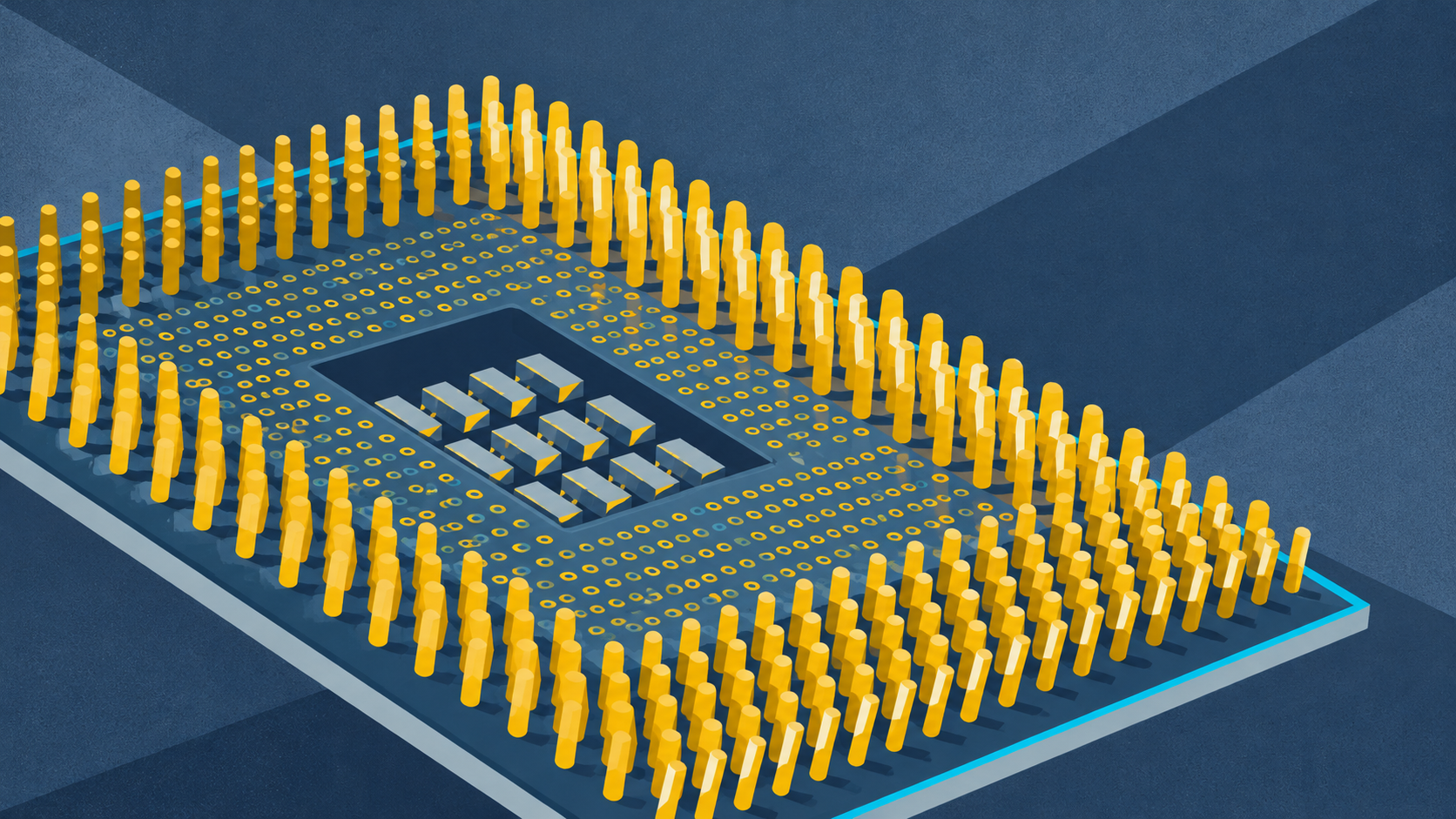
British semiconductor developer Fractile has issued approximately £577.4m worth of Series C preferred shares, according to an analysis of Companies House filings, as it develops specialist processors intended to accelerate artificial intelligence workloads.
Corporate filings lodged during October identify nine allotment statements covering three classes of preferred shares issued between September and October. The reported quantities and issue prices indicate a total value of approximately £577.4m across the transactions.
The largest allocation comprises 270,045 Series C-3 preferred shares at £1,452.35 each, representing approximately £392.2m. Another 184,412 Series C-1 shares were issued at £801.54, representing £147.8m, while 52,877 Series C-2 shares were priced at £707.25, representing £37.4m.
The transactions involve 507,334 preferred shares in total. The different issue prices indicate distinct financing terms across the three classes, although Fractile has not publicly detailed the rights attached to each class or identified all of the investors participating in them.
The allotments follow a $220m funding round completed in May, led by Accel, Factorial Funds, and Founders Fund. That earlier investment was intended to accelerate the development of Fractile’s first generation of inference processors and associated computing systems.
Fractile was founded in 2022 by Walter Goodwin, an Oxford-trained robotics researcher. The company is developing hardware for AI inference, the computational process through which trained models generate responses and other outputs.
Its architecture is designed to reduce the movement of data between memory and processing components. Conventional AI systems must repeatedly retrieve information from memory during inference, creating constraints on speed, electricity consumption, and the cost of running large models.
Fractile is pursuing processors that place static random-access memory close to computing elements, enabling more of the relevant data to be accessed directly during computation.
The company is developing both specialised chips and the supporting systems required to deploy them. Its engineering operations include teams in London and Bristol, with additional activities associated with semiconductor manufacturing and system development overseas.
The approach places Fractile within a growing market for AI processors designed around particular workloads. Existing graphics processing units are widely used for training and inference, but newer architectures are being developed to address memory bandwidth, energy requirements, and the cost of generating model outputs.
Commercial success will depend on more than the performance of individual chips. Customers also require compatible software, reliable manufacturing, appropriate data centre infrastructure, and evidence that alternative hardware can operate effectively at scale.
Fractile’s latest financing records follow reports that it was seeking substantial investment at a multibillion-dollar valuation. However, the public share allotments do not establish a definitive company valuation, and the highest price paid for one preferred share class cannot be applied directly to every share in the business without considering the different rights involved.
The aggregate allotment value also requires careful interpretation. Although the records identify substantial equity issuance, they do not by themselves establish the amount of unrestricted new cash available to the company after any financing arrangements, costs, or related transactions.
Earlier reports placed the financing at approximately £540m, below the £577.4m total calculated from the filed allotments. The company has not provided a public reconciliation explaining that difference.
The Companies House records nevertheless demonstrate a substantial increase in Fractile’s issued equity following its earlier funding round. The business is continuing development of its inference hardware, with commercial delivery and customer deployment remaining the next stages of its expansion.



You must be logged in to post a comment.