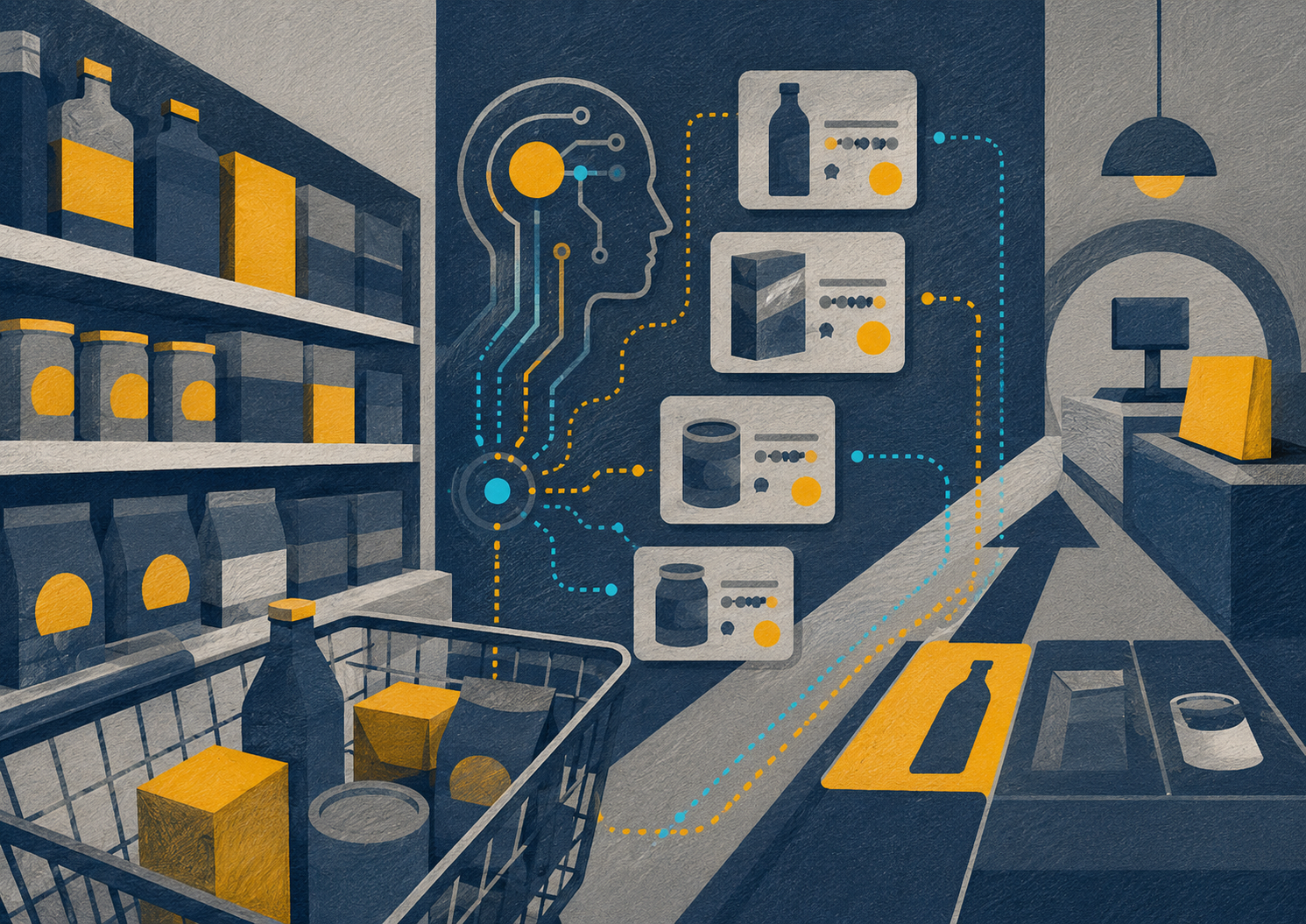
Rithum has released new research indicating that more than a third of consumers have used artificial intelligence tools or large language models to help buy groceries, as everyday retail decisions begin to move beyond supermarket apps, retailer websites, and traditional search.
The commerce operations platform said 36% of shoppers had used AI tools or LLMs to support grocery purchases in the past six months. Among those shoppers, 66% said they used AI to compare prices or weigh up different options before buying, making price discovery the most common reported use case.
Nearly half, at 47%, said they used AI to research product information, while 28% said they had already used AI tools to complete a grocery purchase.
The findings point to a shift in how consumers are assessing routine purchases. AI-assisted shopping has often been associated with higher-consideration purchases, where consumers compare specifications, reviews, delivery terms, and prices. Rithum’s research suggests the behaviour is moving into lower-margin, high-frequency categories where convenience, price sensitivity, availability, and speed are central to the buying decision.
That creates a new challenge for grocers and consumer goods suppliers. If shoppers ask an AI tool where to find the best-value basket, whether a substitute product is suitable, or which retailer can deliver fastest, product visibility may depend increasingly on the accuracy, completeness, and accessibility of pricing, promotions, stock, fulfilment, and product information.
Sam Griffin, VP, strategy and engagement at Rithum, said: “Consumers are increasingly using AI as a personal grocery comparison tool, forcing retailers to compete in entirely new discovery environments,”
“When shoppers ask AI where they can find the best deal, the most suitable product, or the fastest delivery option, retailers need to ensure their pricing, promotions, and product information are accurate enough to surface in those recommendations.”
The grocery sector is already under pressure from tighter household budgets, volatile input costs, and changing expectations around online fulfilment. AI discovery adds another layer to that competition, because the consumer’s first point of comparison may no longer be a retailer-owned channel.
For large grocers, this places greater operational weight on product data governance and real-time commercial execution. Pricing errors, outdated promotional information, missing product attributes, weak substitutions, or limited delivery data could affect whether a product is presented by AI tools before a shopper reaches a retailer platform.
The same pressure applies to brands selling through retail partners. Grocery manufacturers have long competed for shelf position, search ranking, retail media placement, and promotional visibility. AI-mediated discovery introduces a different kind of shelf, one shaped by machine-readable product information, availability signals, consumer intent, and external comparison prompts.
Retailers are unlikely to cede customer relationships deliberately, but consumer behaviour can move faster than channel strategy. If AI tools continue to become part of routine shopping, grocers will need to treat product content, fulfilment data, and pricing feeds as commercial infrastructure rather than back-office maintenance.
The research reinforces how quickly AI is becoming embedded in everyday consumer activity. In grocery, where small differences in price, delivery timing, and product suitability can shift behaviour at scale, the competitive battleground is expanding from checkout and search results to the recommendation layer that precedes them.