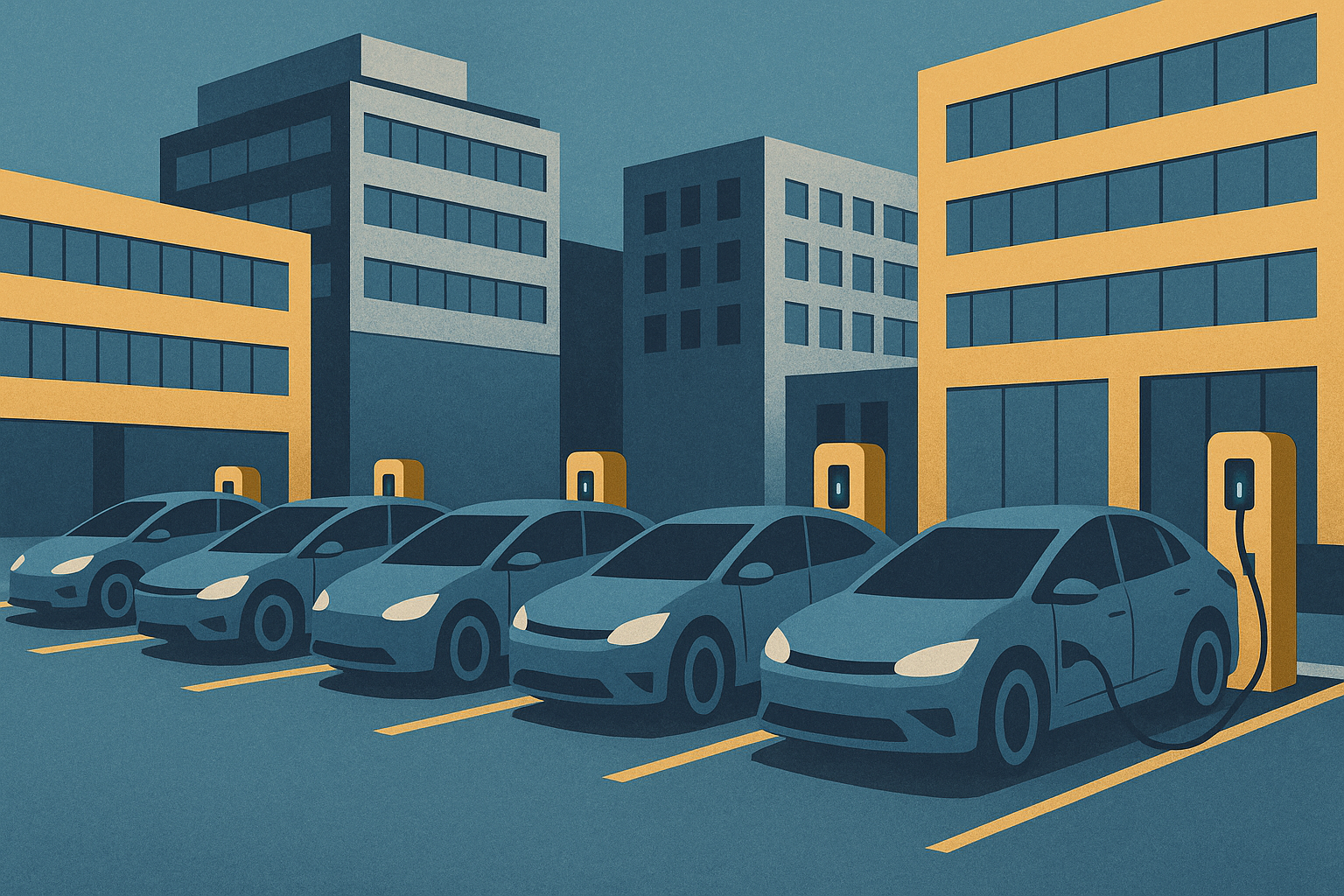
More than three-quarters of new electric vehicles registered in the UK now go to business and fleet buyers, rather than private drivers. As manufacturers face rising zero-emission vehicle (ZEV) quotas, and the government’s net zero targets loom, it is the country’s corporate sector — not consumers — that is shaping the future of the UK’s electric car market.
This year, 77 percent of all new battery electric vehicle (BEV) registrations have come through company channels, building on a trend seen throughout 2023. The reasons are clear: firms benefit from targeted manufacturer discounts, tax breaks, and the reputational value of leading on climate action. At the same time, salary sacrifice schemes and flexible fleet options are making electric cars more accessible to employees in both the private and public sectors.
Market leaders are setting the tone. Tom Middleditch, Head of Electric Mobility at Europcar Mobility Group UK, says, “97% of Europcar’s company car drivers drive electric. And electric cars and e-bikes are used to carry out vehicle deliveries and collections for customers, delivering significant CO₂ savings.” Meanwhile, employee demand is surging.
Alison Argall, business development and customer retention director at Tusker, reports, “82% of Tusker car orders in June were for EVs – showing a massive majority are choosing to drive electric. Another key statistic is that 71% of renewals are for electric vehicles too, which is incredibly high, showing that people want to stay electric once they’ve experienced it.”
Infrastructure and communication challenges remain, but the direction of travel is clear: UK businesses are not only driving up BEV numbers, but also transforming how electric vehicles are used across operations and workforces.
For a deeper analysis, expert insights, and practical lessons for leadership teams, read the full feature now on BQ Executive.