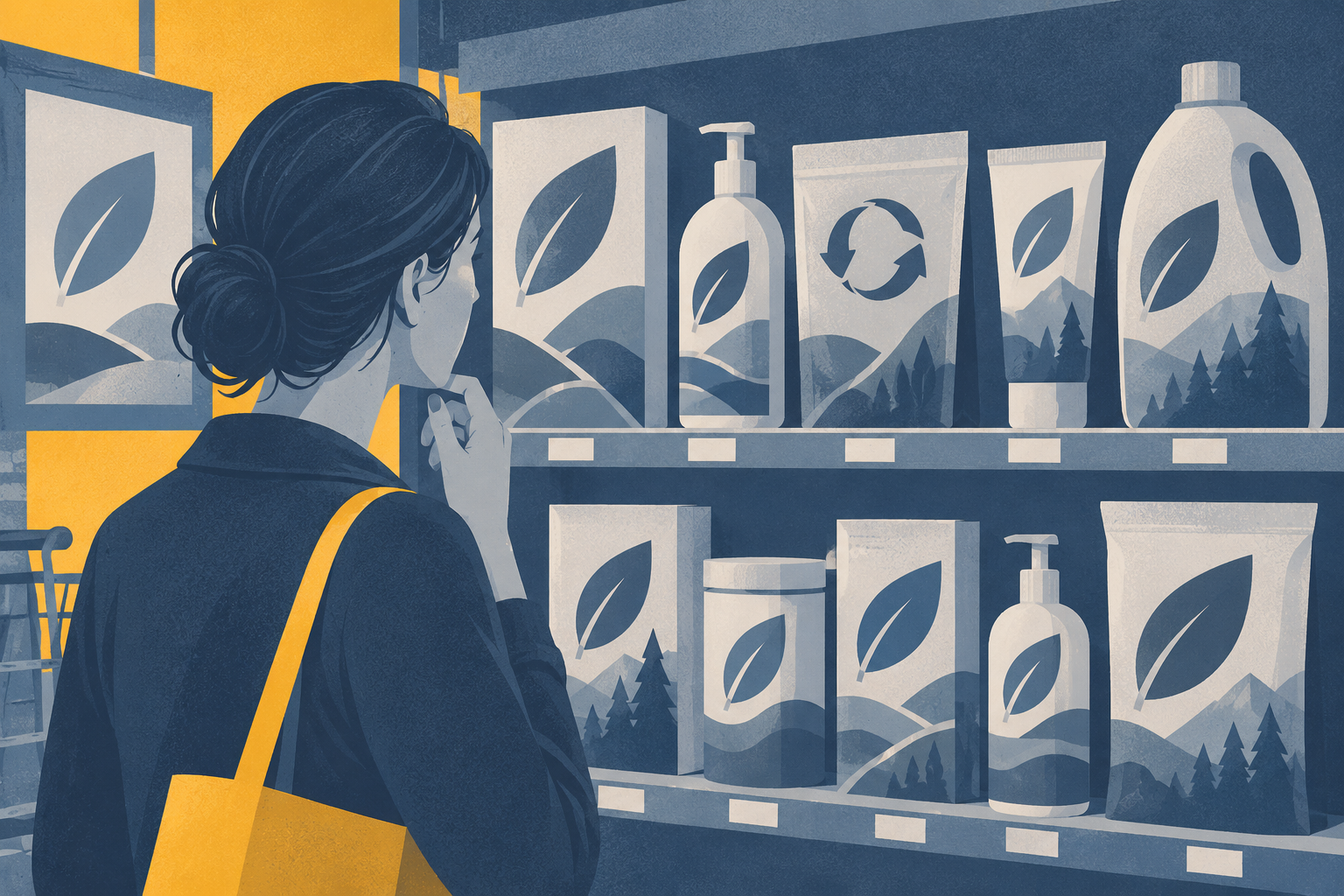
Sustainability marketing has spent years developing an instantly recognisable visual language. Leaves, forests, recycling symbols, natural textures, and immaculate landscapes became shorthand for environmental responsibility, giving brands a way to communicate a complex idea almost at a glance.
Consumers have learned that language too. Familiar cues can still signal environmental intent, but recognition no longer guarantees credibility. Increasingly, the question is whether the imagery shows anything meaningful about what a business is actually doing.
Research published by customer experience platform Emplifi in April, based on more than 1,600 consumers in the UK and US, found that 93% said authentic brand engagement builds trust. Some 66% identified search engine results as a leading source of authenticity, while 63% pointed to user-generated content.
The figures suggest that credibility is increasingly tied to material people can verify, encounter independently, or recognise as grounded in real experience. Sustainability communications sit squarely within that shift.
Jacqueline Bourke, Senior Director of Creative EMEA at iStock, says brands still too often reach for familiar “green” cues when trying to establish trust quickly.
“One of the biggest mistakes brands make when trying to build trust at speed is relying on shortcuts that consumers recognise, and increasingly distrust, when communicating their sustainability claims.
“In marketing, this often shows up as vague, generic ‘green’ symbols, such as leaves, recycling icons or nature imagery, instead of showing real, practical actions. Our VisualGPS research shows that consumers are looking beyond green labels; 75% of Brits now believe products and services labelled as ‘green’ are merely a marketing ploy, while 65% want to see visuals that show exactly how companies are actually addressing climate change, rather than just symbolising it.”
The distinction between symbol and evidence is becoming harder to ignore. A forest can establish an environmental theme, but it says little about where materials came from, how a product was made, or whether packaging is genuinely being reused.
More concrete proof may be found elsewhere: in production processes, repair services, refill systems, material sourcing, packaging loops, and the people responsible for putting environmental commitments into practice.
“Proof isn’t about badges or bold sustainability claims – it’s about showing real actions people can see and understand,” Bourke says. “Customers want to know what’s happening behind the scenes to make a business more sustainable, not just what brands say is happening.”
That places greater demands on everyday marketing content. If a sustainability claim is intended to influence a purchasing decision, the evidence behind it cannot remain confined to an ESG report or corporate responsibility page. It may need to appear across ecommerce, product pages, packaging, social content, and customer communications.
Photography and video can therefore serve a different purpose. Instead of simply creating an environmental mood around a claim, they can help document the activity beneath it.
Generative AI adds another layer to the credibility problem. Canva’s State of Marketing & AI research, published in May with The Harris Poll, surveyed 3,547 consumers across seven countries including the UK. It found that 78% would rather see advertising made by people even if AI could produce better work, while 70% said they could usually spot AI-generated advertising because it felt as though something was missing.
The picture is more nuanced than a simple rejection of AI. Some 68% said they did not mind its use in advertising when it made the result more helpful or relevant. Acceptance appears to depend less on the technology itself than on whether the finished work retains qualities people associate with usefulness, relevance, and authenticity.
“Trying to move quickly by relying on AI-generated content can also backfire. Six in 10 British consumers say they distrust advertising because they believe it is AI-generated or inauthentic,” Bourke says. “If your messaging looks like everyone else’s, people are less likely to believe it is genuine. When it comes to building trust, clarity and honesty matter.”
Marketing teams are consequently working with a growing contradiction. Producing polished visual content has become faster and more accessible, while audiences are becoming more alert to imagery that feels generic, synthetic, or detached from observable reality.
VisualGPS findings cited by Bourke also indicate that 71% of British consumers prefer real imagery over polished, generic advertising. That does not mean every campaign needs to resemble documentary photography, nor that established sustainability cues have lost all value. It does mean imagery is being asked to do more than establish an environmental atmosphere.
A leaf can suggest intent. A photograph of a repair process, refill system, recovered material, or production change can show what that intent looks like in practice.
The creative task is shifting accordingly. Making a brand look sustainable is no longer enough on its own; the stronger communications are increasingly those that make the underlying activity visible. As consumers become more practised at recognising green shorthand and synthetic polish, credibility rests more heavily on what can be seen, understood, and connected to something real.