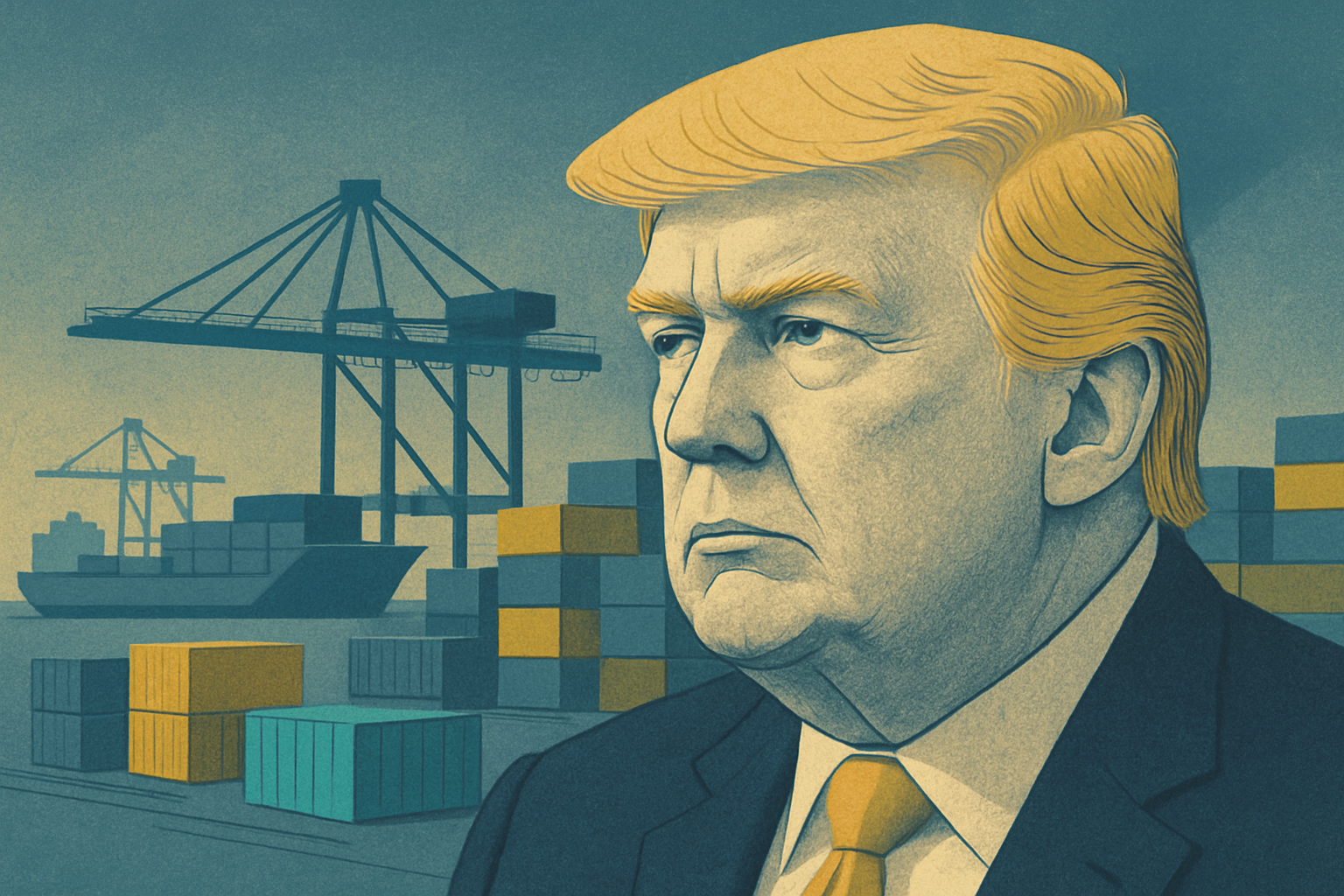
The United States has proposed a fresh round of tariffs targeting 14 major trading partners, including China, the European Union, Japan, and India, intensifying global trade tensions and sending further uncertainty through financial markets and international supply chains.
The measures, unveiled by the Trump administration on Wednesday, follow an eight-month investigation by the Office of the United States Trade Representative (USTR) into industrial overcapacity across some of the world’s largest manufacturing economies. Proposed duties reach 20%, with the measures potentially coming into effect as early as January 2027.
China and Vietnam face proposed tariffs of 20%, although existing duties on certain Chinese imports could bring combined rates to approximately 45%. Washington intends to respect tariff ceilings established through existing trade agreements, including the 15% limits negotiated with the European Union, Japan, South Korea, and Taiwan, and Malaysia’s 19% ceiling.
Bangladesh, Cambodia, Indonesia, Singapore, Switzerland, and Thailand are also among the economies targeted. Mexico and Norway, both included in the original investigation, remain under review but are not subject to the latest tariff proposals.
Financial markets came under further pressure on Wednesday as investors assessed the prospect of renewed trade restrictions. By early afternoon in London, futures tracking the S&P 500 had fallen 2.1%, while Nasdaq 100 futures were down 3.2%. The developments compounded an existing sell-off in technology stocks amid concerns over valuations and returns on artificial intelligence investment.
The proposed tariffs will be subject to public consultation and hearings before implementation, leaving the final rates, product coverage, and effective dates open to revision.
Washington targets industrial overcapacity —
The investigation, launched on 11 March under Section 301 of the Trade Act of 1974, examined whether foreign economic and industrial policies were encouraging manufacturing output beyond levels justified by market demand, placing American producers at a competitive disadvantage.
US trade officials have identified industrial subsidies, subsidised lending, restrictions on market access, and the activities of state-controlled enterprises among the practices contributing to excess production capacity.
China has been a particular focus of Washington’s efforts, with its manufacturing expansion across industries including steel, electric vehicles, solar technology, and consumer appliances drawing scrutiny from governments concerned about the competitiveness of their domestic industries. Beijing has previously rejected accusations that its industrial development constitutes unfair competition.
The proposed measures also reflect Washington’s concerns over Chinese investment in Southeast Asian manufacturing operations, particularly where production has been relocated to serve the US market while avoiding existing duties on Chinese goods.
The latest proposals follow February’s US Supreme Court ruling that struck down sweeping tariffs introduced by President Donald Trump under emergency economic powers. Section 301 provides a separate statutory mechanism through which the administration can impose trade restrictions in response to practices it considers detrimental to US commerce.
The duties would not be added to certain existing sectoral tariffs or the 10% and 12.5% levies introduced in July against 60 trading partners over alleged shortcomings in the enforcement of forced labour restrictions.
Britain avoids latest tariff proposals —
The United Kingdom is absent from the latest list of targeted economies, potentially preserving a relative competitive advantage for British exporters in certain product categories.
Figures published this month by the Department for Business and Trade show that the United States accounted for 22.3% of British exports in 2025, making it the UK’s largest overseas market. Bilateral trade reached £338.5bn in the 12 months to the end of June 2026.
Britain has secured a series of tariff concessions through its Economic Prosperity Deal with Washington, including preferential arrangements for automotive exports and the removal of tariffs on products in several industries.
However, British businesses with manufacturing operations across Europe and Asia remain exposed to changes in US import duties. The geographical origin of goods, rather than the nationality of their manufacturer, is central to determining applicable tariffs.
The proposals also raise the prospect of increased competition in European markets if overseas manufacturers redirect exports previously destined for American customers.
Meanwhile, the existing trade truce between Washington and Beijing, which limits tariffs introduced on Chinese goods during Trump’s second presidency to 20%, is due to expire on 10 January 2027, adding another deadline to negotiations between the world’s two largest economies.