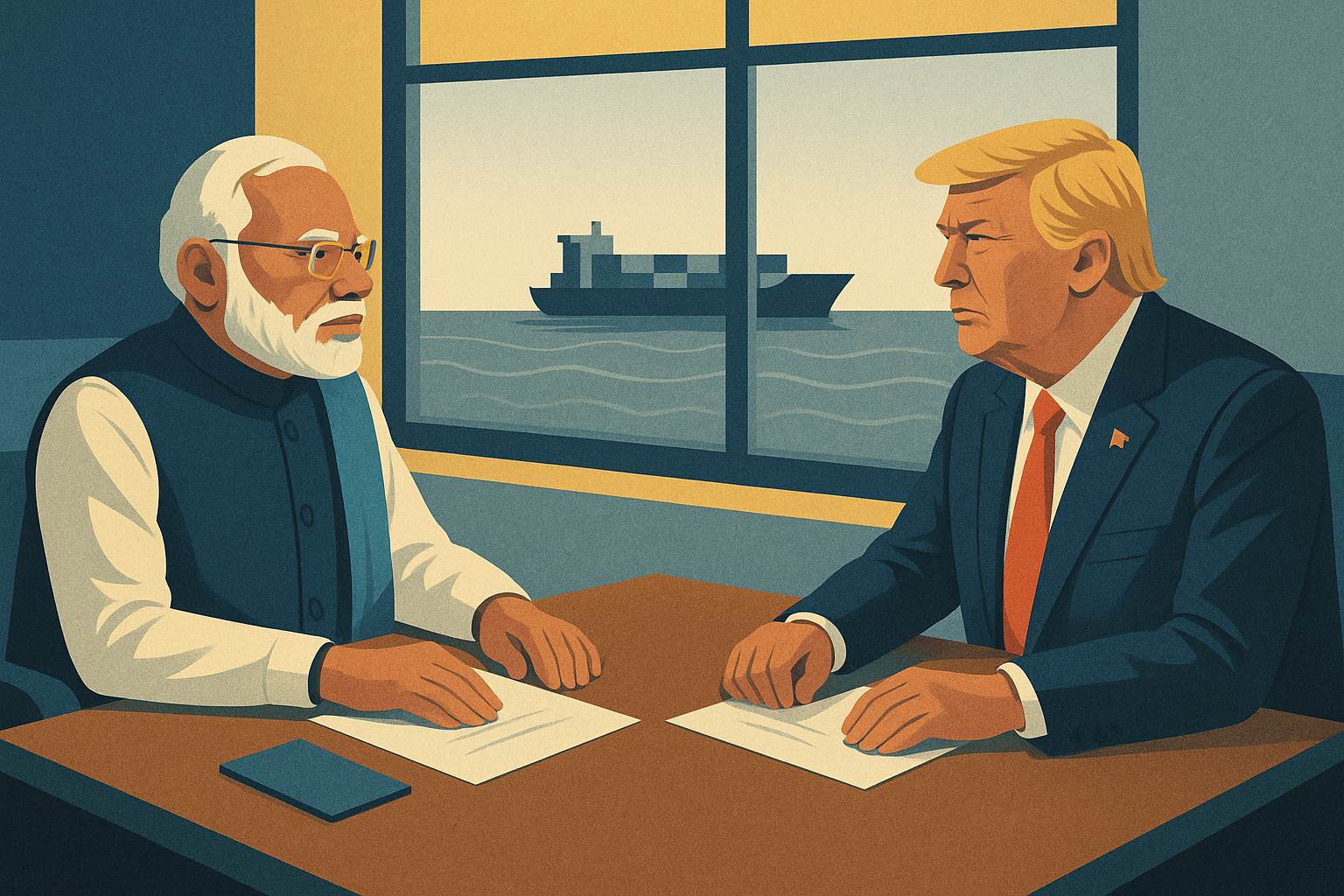
The United States and India have reached a trade agreement that sharply reduces tariffs and realigns energy sourcing, marking one of the most consequential shifts in the bilateral relationship in recent years. Under the deal, the US will lower tariffs on Indian exports to 18%, down from levels that had risen as high as 50%, while India has agreed to halt purchases of Russian crude oil and expand imports of US goods.
The agreement was announced following discussions between Donald Trump and Narendra Modi, ending months of trade friction that had weighed on exporters, investors, and diplomatic ties between Washington and New Delhi.
For markets, the immediate response was positive. Indian equities rose following the announcement, with US-listed Indian companies among the strongest performers. The Indian rupee also strengthened modestly, reflecting expectations of improved export competitiveness and steadier trade relations with the US, India’s largest single-country export market.
At the centre of the agreement is a rollback of US tariffs that had been imposed in stages. These included a so-called reciprocal tariff as well as additional punitive duties linked to India’s continued purchases of Russian oil. Combined, the measures had pushed effective tariffs on some Indian goods to around 50%, prompting warnings from exporters about lost orders and supply chain disruption. The new 18% rate places India closer to other major Asian trading partners in terms of US market access.
India’s commitment to end purchases of Russian crude represents a significant shift in global energy flows. Since 2022, India had become one of Russia’s largest oil buyers, taking advantage of discounted supplies amid Western sanctions. For Indian refiners, the pivot will require sourcing alternative barrels, with US producers expected to be among the beneficiaries. Washington has indicated that the broader deal includes expanded Indian purchases of US energy, alongside agricultural, technology, and industrial goods.
For businesses, the implications extend beyond tariffs alone. Lower duties are expected to improve margins for Indian exporters in sectors such as pharmaceuticals, automotive components, and manufactured goods, while offering US importers more predictable pricing. At the same time, companies reliant on Russian crude discounts may face higher input costs as supply chains adjust, particularly in energy-intensive industries.
Energy markets are also watching closely. A reduction in Indian demand for Russian oil could put downward pressure on Moscow’s export revenues, while redirecting trade flows toward the US and other producers. Analysts note that even a partial shift by India — one of the world’s largest oil consumers — can influence global pricing dynamics and shipping routes.
Despite the market optimism, key details remain unresolved. Neither government has published a full legal text of the agreement, and timelines for both the tariff reductions and the cessation of Russian oil purchases have not been formally set out. Businesses on both sides are awaiting clarity on implementation dates, sector-specific provisions, and compliance mechanisms.
Even so, the agreement underscores the growing use of trade policy as a strategic tool, linking market access to geopolitical alignment. For companies operating across the US–India corridor, the deal signals a more stable near-term environment — but one increasingly shaped by the intersection of commerce, energy security, and global politics.