Prime Minister Keir Starmer has expressed gratitude to UK businesses for shouldering the financial impact of his government’s £23 billion national insurance increase, while facing increasing pressure from industry leaders not to implement further tax rises in the upcoming autumn budget.
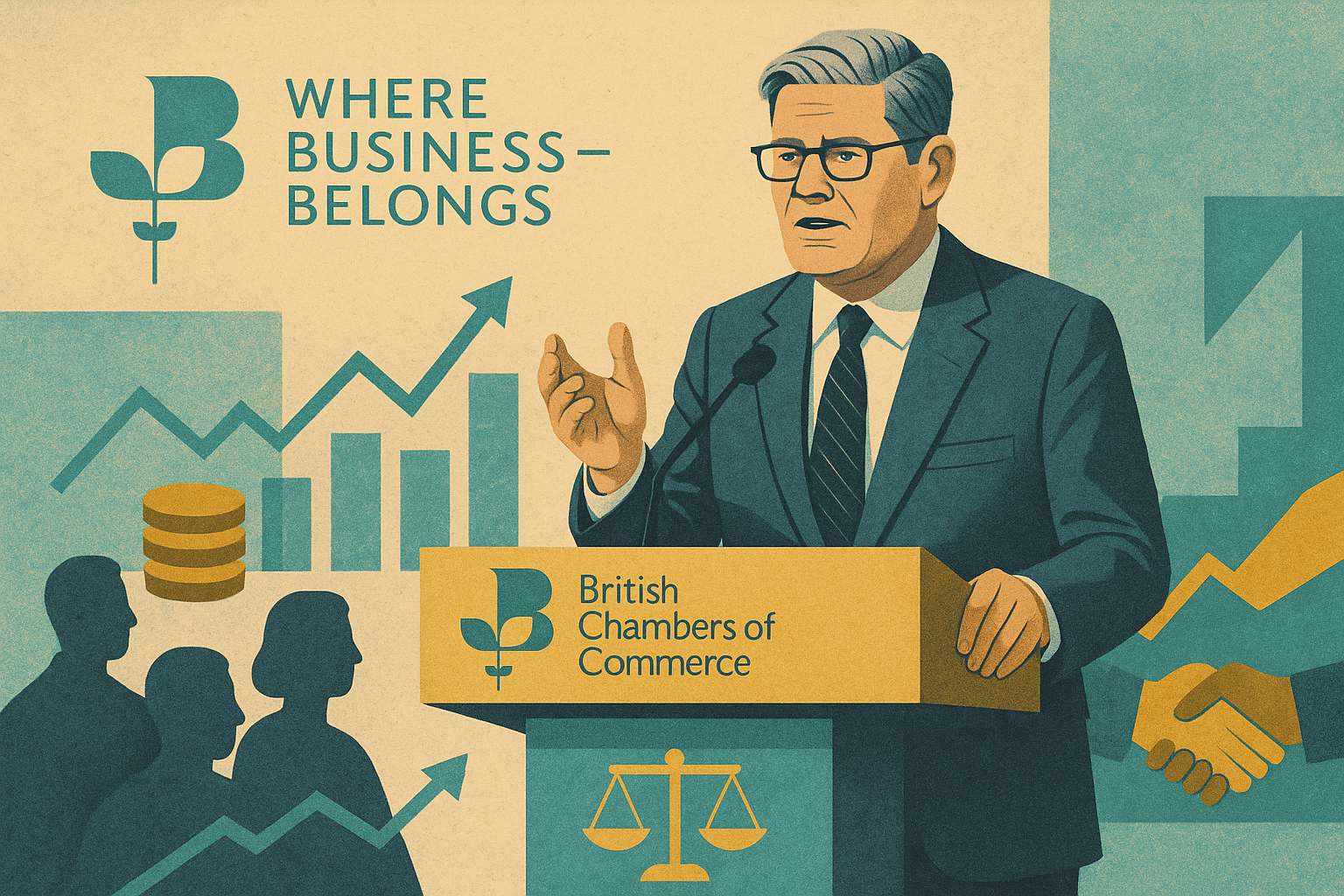
Speaking at the British Chambers of Commerce (BCC) annual conference, Starmer recognised the significant demands placed on companies during his first year in office, describing them as pivotal in strengthening the “foundations of the country”. He acknowledged, “I fully acknowledge that this year, as we’ve had to fix the foundations… we’ve asked a lot of you. I want to acknowledge that it has made a huge difference. Because of it, the money has gone into the NHS and waiting lists are coming down. We’ve put investment into the skills… new homes [and] new roads.” He added, “I want to say thank you.”
Starmer’s comments are the clearest indication yet that his government recognises the financial pressure it has placed on employers, following the surprise increase in employer national insurance contributions (NICs), part of a £23 billion tax-raising package aimed at funding public service investment and reducing the deficit.
However, his gratitude was swiftly met with a clear message from the business community: no more tax hikes. BCC Director General Shevaun Haviland used her speech to urge ministers to maintain the current tax levels in the next fiscal event, warning that businesses cannot continue to bear increasing cost pressures. “If there is one message I want government to take away, it is this: there must be no further tax increases at the autumn Budget,” she said. “We cannot keep asking businesses to pick up more of the tax burden.”
In addition to higher NICs, businesses are also facing increased minimum wage obligations, ongoing uncertainty around business rates, and the impending costs of the government’s forthcoming workers’ rights legislation, estimated by some in government to cost firms £5 billion.
While Starmer did not rule out further tax rises in the autumn, he attempted to reassure the audience that the government is working to rebalance the economy through growth. He highlighted the government’s newly announced post-Brexit trade strategy as a means to unlock new international opportunities. “Trade isn’t just about goods. We’re a services superpower,” he said, outlining plans to streamline red tape for smaller exporters, expand export credit funding, and improve mutual recognition of UK professional qualifications abroad. Starmer added that the government would prioritise “faster, smaller” trade deals alongside traditional free trade agreements to expedite market access for UK firms.
Despite Starmer’s positive rhetoric and a series of new initiatives, many in the business community remain cautious. Employers are managing elevated wage bills, inflation-linked input costs, and narrowing margins, with little assurance of policy stability in the coming months.
The Prime Minister’s speech represents a delicate balancing act: trying to demonstrate fiscal discipline and investment delivery while maintaining the confidence of a private sector still reeling from tax hikes and regulatory uncertainty. Whether Starmer’s gratitude will translate into lasting goodwill remains uncertain, but the message from business was unequivocal: enough is enough.