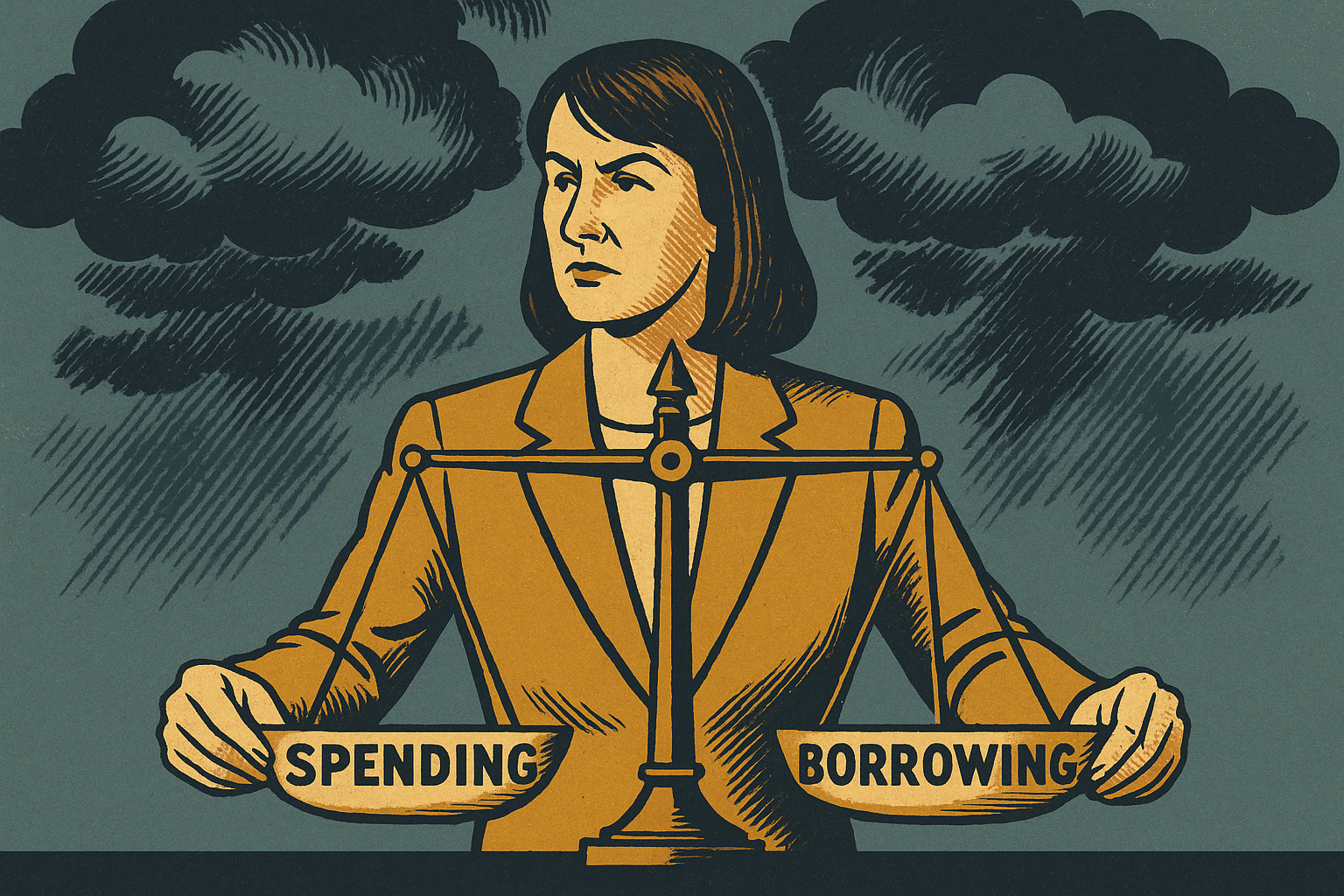
The UK is “one adverse shock” away from breaching its own budget rules, according to the OECD, which has downgraded Britain’s economic growth outlook and urged the Treasury to broaden its tax base.
In its latest Economic Outlook, the Paris-based organisation cut its forecast for UK GDP to 1.3 per cent in 2025 and just 1 per cent in 2026 — leaving Britain level with Germany at the bottom of the G7 growth table. The report warns that Chancellor Rachel Reeves has little room for manoeuvre, with public debt projected to hit 104 per cent of GDP by 2026 and market yields pushing borrowing costs higher.
The OECD calculates that Reeves has just £10 billion in “headroom” — around 0.4 per cent of GDP — before breaching her fiscal rule to see debt falling by the end of the forecast period. That margin, it notes, could be “wiped out” by a modest growth shortfall or an external shock, raising the risk of renewed austerity or unplanned tax rises.
Investors appeared to respond to the report with concern. Ten-year gilt yields rose nine basis points to 4.46 per cent, while sterling slipped below $1.25 as markets reassessed the Bank of England’s ability to cut rates in the short term. Analysts at Citi said the OECD’s warning “ratifies concern” that the Treasury’s autumn tax-and-spend package left “too little fiscal ballast” at a time of global uncertainty.
In response, Reeves said the report was “broadly supportive” of the government’s growth agenda, which includes a new National Wealth Fund and supply-side reforms. But she gave no firm commitment on tax policy, saying only that “everything remains under review” ahead of the September Budget.
The OECD stopped short of recommending specific tax hikes but suggested a broader revenue base would improve fiscal resilience. Its options included updating council-tax bands, closing inheritance and capital-gains tax loopholes, and reassessing universal subsidies such as the bus-fare cap.
Although inflation is expected to ease to 2.3 per cent by 2026, the report warned that further trade or energy shocks could derail that outlook. For Reeves — less than six months into office — the message is clear: political capital may be strong, but fiscal firepower is already running low.